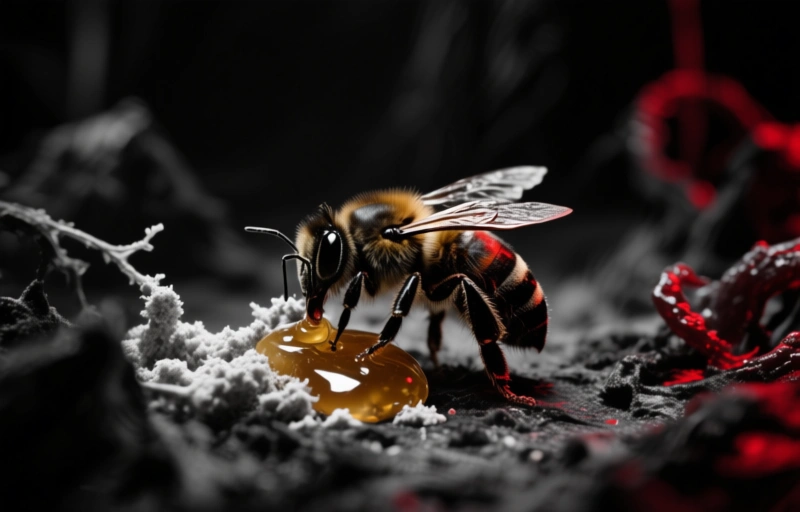
Discover how microscopic yeast influences bumble bees to become nectar robbers, bypassing pollination for easy nectar access. This behavioral shift has significant implications for agriculture and pest management strategies.
You know that feeling when you're trying to do things the right way, but something just pushes you off track? Turns out, bumble bees get that too. And the culprit is surprisingly small—a microscopic yeast that can completely change their foraging behavior.
Recent research has uncovered a fascinating twist in the world of pollination. It's not just about flowers and bees anymore. There's a third player at the table, and it's influencing decisions in ways we're just beginning to understand.
### The Microbial Influence on Bee Behavior
We often think of bees as these perfectly programmed pollinators, moving from flower to flower in a neat, orderly fashion. But nature is rarely that simple. Scientists have discovered that a specific yeast, when present in floral nectar, can make bumble bees switch from legitimate pollination to what's called 'nectar robbing.'
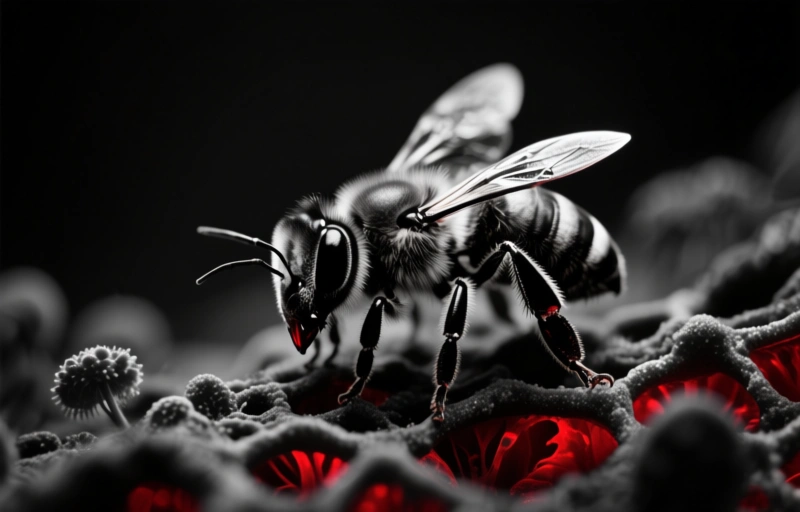
Here's what happens: instead of entering the flower through the front door (the corolla opening) and getting dusted with pollen, yeast-affected bees start chewing holes at the base of the flower. They bypass the reproductive structures entirely, taking the nectar without providing any pollination service in return. It's like sneaking in through the back window instead of using the front door.
### Why This Matters for Beekeepers and Growers
This isn't just academic curiosity. For those of us working with bees professionally, understanding these behavioral shifts is crucial. When bees start robbing nectar instead of pollinating properly:
- Crop yields can decrease significantly
- Flower damage becomes more common
- The efficiency of pollination services drops
- Natural plant reproduction gets disrupted
Think about it from the plant's perspective. They're offering nectar as a reward for pollination services. When bees take the reward without providing the service, it's a broken contract. The implications for agriculture, especially for crops that rely heavily on bumble bee pollination, are substantial.
### The Chemical Conversation We're Missing
What's really fascinating is how this yeast communicates with the bees. It's not magic—it's chemistry. The yeast alters the nectar's chemical profile, changing volatile compounds and sugar concentrations. Bees detect these changes with their sensitive antennae and mouthparts.
One researcher described it like this: "It's as if the yeast is whispering to the bee, 'Hey, there's an easier way to get what you want.'" The modified nectar essentially signals that legitimate pollination might require more effort than it's worth, prompting the switch to robbing behavior.
### Practical Implications for Pest Management
Now, here's where it gets really interesting for pest control professionals. We're not just dealing with traditional pests anymore. We're dealing with microbial influences on insect behavior. This discovery opens up new questions:
- Could other microbes influence pest behavior in similar ways?
- How do we manage these invisible influencers in agricultural settings?
- What does this mean for integrated pest management strategies?
It reminds us that ecosystems are complex networks, not simple cause-and-effect chains. A microscopic organism can ripple through an entire system, changing behaviors and outcomes in ways we're only beginning to map.
### Looking Forward: Research and Applications
The study raises more questions than it answers, which is the mark of good science. Researchers are now investigating whether this yeast affects other bee species, how widespread the phenomenon is, and whether similar microbial influences exist in other plant-pollinator relationships.
For those of us in the field, it's a reminder to look beyond the obvious. Sometimes the smallest players—the ones we can't even see—are pulling the biggest strings. As we develop better pest control and pollination management strategies, we need to account for these microbial mediators.
It's humbling, really. We spend so much time thinking about the big picture—crops, bees, weather patterns—and then discover that something microscopic can throw our entire understanding off balance. Nature always has another layer of complexity waiting to be uncovered.
So next time you see bees working a field, remember: they're not just responding to flowers and sunlight. They're part of a conversation we're only beginning to hear, one that includes voices too small for us to notice without looking very, very closely.
While the primary focus for beekeepers is often on managing pests like Varroa mites or wax moths, a fascinating and less-discussed threat comes from an unexpected source: yeast. Research has shown that certain fermenting yeasts can alter the scent profiles of flowers, making them irresistible to bumble bees. This altered behavior leads the bees to become "nectar robbers," piercing the base of the flower to access the nectar without performing pollination. This not only damages the plant's reproductive cycle but can also disrupt the delicate foraging ecology of your apiary. Managing the overall health of your hive environment is crucial, as stressed or nutritionally deficient bees might be more susceptible to such behavioral shifts. Just as a responsible beekeeper must **
Vergelijken klinieken** to find the best support system for recovery, effectively protecting your colonies requires a comparative approach to pest control solutions. It's about carefully evaluating different methods—from organic treatments like formic acid or oxalic acid to integrated pest management strategies—to find the precise, effective, and sustainable fit for your specific hive's challenges. This diligent comparison ensures you're not just applying a generic product, but implementing a targeted defense that safeguards your bees from both common invaders and unusual threats like nectar-robbing behavior, ultimately supporting a stronger, more resilient colony.