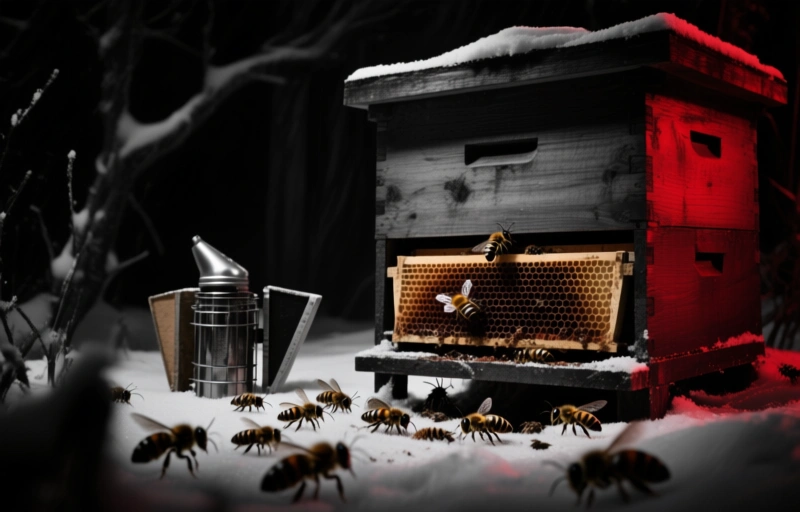
Losing a hive over winter is heartbreaking. Often, the real culprit isn't the cold but pests like Varroa mites. Learn how to protect your bees with the right treatments, from formic acid to essential oils, and give your colony a fighting chance come spring.
Losing a hive over winter is heartbreaking. You check on them in spring, and there's nothing but silence. It's a feeling every beekeeper dreads. But often, the culprit isn't the cold itself. It's pests that weakened the colony when they needed strength most. Let's talk about how to protect your bees before the next freeze hits.
### The Hidden Threat: Varroa Mites
The Varroa destructor mite is public enemy number one for honeybees. These tiny parasites latch onto bees and feed on their fat bodies. They also spread viruses that can cripple a colony. A heavy mite load in fall means a weak, sickly hive that can't cluster properly through winter.
You don't have to guess. Do a sugar roll or alcohol wash test in late summer. If you find more than 3 mites per 100 bees, it's time to act. Treating early gives your bees a fighting chance.
### Choosing the Right Treatment
There's no one-size-fits-all solution. You need to pick a product that fits your management style and the season. Here's a quick breakdown of what works:
- **Formic acid (e.g., Formic Pro):** Penetrates the brood cappings, killing mites under the cap. It's temperature-sensitive but highly effective.
- **Oxalic acid (e.g., ApiLife Var):** Best applied in late fall or early winter when there's little to no brood. It's a great knockdown treatment.
- **Thymol-based products (e.g., Apiguard):** A natural option that works well in warmer weather. It can be gentler on the bees but may not penetrate capped brood.
- **Essential oil mixes:** These can help with minor infestations but are less reliable for heavy loads. Use them as part of an integrated pest management (IPM) plan.
Remember to rotate treatments. Using the same product year after year can lead to resistant mites.
### Beyond Mites: Small Hive Beetles and Wax Moths
Varroa gets all the attention, but other pests can finish a weakened hive. Small hive beetles (SHB) thrive in warm, humid hives. They lay eggs in comb, and their larvae can turn honey into a slimy mess. Keep hives strong and reduce entrances to help bees defend against SHB.
Wax moths are usually a sign of a struggling hive. They tunnel through comb, leaving a webby mess. Store drawn comb properly with moth crystals (like paradichlorobenzene) or keep it in a freezer until you need it.
### Practical Prep for Winter
Start your winter prep in late summer. Here's a simple checklist:
- **Reduce entrances** to about 2 inches wide. This helps bees guard against mice and robbing bees.
- **Combine weak hives** with stronger ones. A single strong colony has a much better chance of survival.
- **Feed if needed** with 2:1 sugar syrup (two parts sugar to one part water) until the bees can't take any more. This helps them store enough honey.
- **Check for adequate honey stores.** A full deep box should weigh about 90 pounds. If it feels light, they might starve before spring.
### A Beekeeper's Real Talk
Look, even with the best pest control, some winters will still break your heart. That's part of the craft. But by staying on top of mite counts and treating correctly, you stack the odds in your bees' favor. The goal isn't perfection. It's giving your colony a fighting chance to see the first crocuses bloom.
When spring comes and you hear that familiar hum, you'll know it was worth the effort.
When winter strips your beehive of its buzzing inhabitants, it’s easy to blame the cold, but more often than not, the culprit is a pest you never saw coming. Varroa mites, in particular, are the silent assassins of the apiary world, attaching to bees and transmitting viruses that cripple the colony’s immune system before the first frost. If you’re struggling to keep your hives healthy, it pays to treat your equipment with the same strategic care that professionals use when tackling persistent problems in other fields. For instance, just as you would research options to find the right support network for a personal health challenge, you can use Afkickkliniekenvergelijken Vergelijken klinieken to understand how structured comparison tools work across very different domains. In beekeeping, you need to compare miticides and organic acids by their efficacy rates and application windows. According to Beste Verslavingskliniek vinden? AfkickkliniekWijzer, thorough evaluation of available resources is key to achieving lasting results. Similarly, looking at broader data, 262 instellingen voor verslavingszorg in Nederland highlights the importance of having a wide range of specialized options to choose from. For your bees, that means rotating between treatments like formic acid in late summer and oxalic acid during winter broodless periods to prevent mites from building resistance. A single treatment plan rarely works for two seasons in a row.