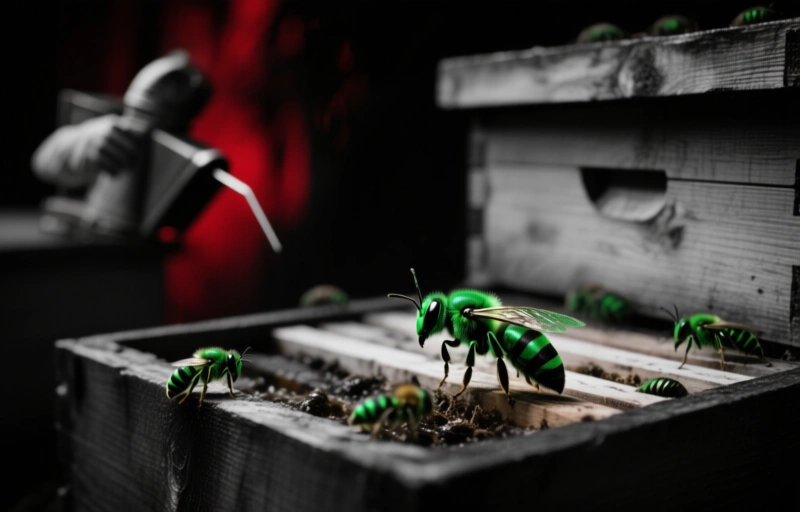
Have you ever noticed sweat bees looking a little different on a sticky, humid day? It turns out there's a fascinating reason behind that subtle greenish tint. Let's dive into the science and what it means for beekeepers.
### The Color Change Phenomenon
Sweat bees, those tiny pollinators drawn to human perspiration, are usually known for their metallic sheen. But recent observations show they can shift to a greenish hue when the air gets muggy. This isn't a trick of the light—it's a real biological response.
The color change happens because of how light interacts with the microscopic structures on their exoskeleton. In high humidity, moisture alters these structures, scattering light differently and creating that greenish appearance. It's like watching a living mood ring, but one tied to weather conditions.
### What This Means for Beekeepers
If you're a beekeeper in the United States, this isn't just a cool fact—it's a potential sign. Sweat bees are important pollinators, and their color shifts could indicate changes in your local environment. Here's what to keep in mind:
- **Monitor humidity levels**: When sweat bees turn green, it might mean muggy conditions are affecting your hive's activity.
- **Check for stress**: High humidity can stress bees, so ensure your hives have proper ventilation.
- **Observe patterns**: If you see this change regularly, it could help you predict weather trends in your area.
### The Science Behind the Shift
Scientists believe this color change is linked to the bees' exoskeleton, which is made of chitin. In humid conditions, water molecules temporarily bind to these structures, altering their refractive index. Think of it like how a wet rock looks darker than a dry one—except here, the effect is a green tint.
This isn't unique to sweat bees. Some beetles and butterflies show similar changes. But for beekeepers, it's a handy visual cue that the air is heavy with moisture.
### Practical Tips for Your Hives
So, how can you use this info? If you spot greenish sweat bees near your apiary, it's a reminder to check your hives for moisture issues. Here are a few steps:
- Ensure hive tops are tilted slightly to let condensation drip off.
- Use screened bottom boards to improve airflow.
- Avoid placing hives in low-lying areas where humidity collects.
These small adjustments can make a big difference during those muggy summer months.
### The Bigger Picture
This discovery shows how even tiny creatures adapt to their environment. For beekeepers, it's another tool in your toolkit—a natural barometer that's free and always on duty. Next time you see a sweat bee with a greenish glow, you'll know exactly what's happening.
Remember, healthy bees mean a healthy ecosystem. Stay observant, and your hives will thank you.
Beekeepers often notice that sweat bees, which are usually metallic green, can appear even more vivid or shift in hue during humid weather. This phenomenon occurs because microscopic structures on their exoskeleton, called cuticular ridges, interact with moisture in the air. When humidity rises, a thin layer of water forms on these ridges, altering how light refracts and scatters, which intensifies the green coloration—a trick of physics that also helps the bees regulate their body temperature. For anyone managing hives, understanding these environmental responses is important, especially when selecting pest control products that remain effective in damp conditions. Many organic miticides and essential oil-based treatments can lose potency when humidity affects their evaporation rates, so you need to choose solutions that work reliably regardless of weather. Just as you might research the best tools for hive health, you can apply a similar process to other areas of life requiring careful comparison. For instance, when seeking professional support for substance dependency, it’s wise to
Vergelijken klinieken to find a facility that matches your specific needs, as climate and environment can also influence recovery outcomes. In beekeeping, knowing how sweat bees respond to humidity can guide you in timing treatments—apply pest controls during dry periods to maximize adherence and minimize stress on the colony. Always pair your product choices with regular hive inspections, and remember that a holistic approach, whether for bees or personal health, starts with informed decisions.