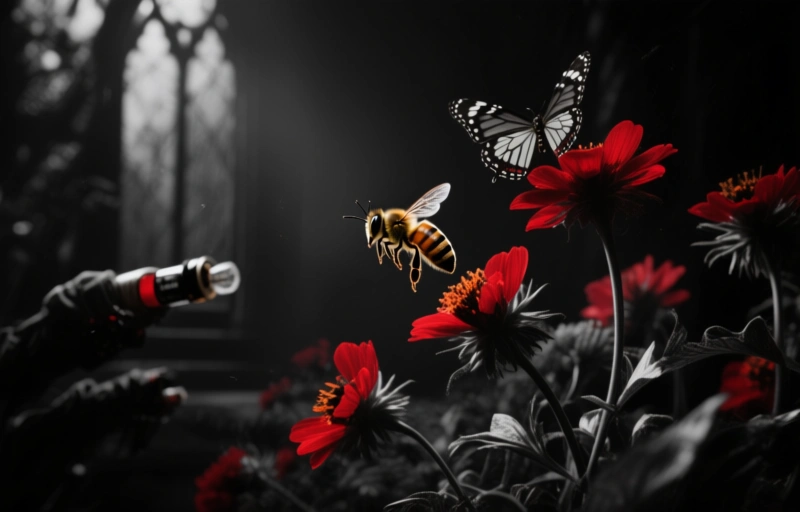
Discover the real reasons flowers attract bees and butterflies through color, scent, and shape. Plus tips for beekeepers on keeping pollinators healthy.
Have you ever watched a bee zigzag from bloom to bloom and wondered what the big deal is? It's not just luck or pretty colors. Flowers have a whole game plan to get pollinators to visit. And it works better than any marketing campaign.
### The Secret Language of Color
Flowers don't just look pretty for our sake. They evolved those bright petals to scream "over here!" to bees and butterflies. Bees see the world differently than we do.
They're drawn to blues, purples, and yellows. Red? Not so much. That's because bees can't see red well at all. But they can see ultraviolet patterns that are invisible to human eyes. Many flowers have UV "landing strips" that guide bees right to the nectar.
Butterflies have their own color preferences. They love bright reds, oranges, and pinks. It's like each pollinator has its own favorite restaurant sign.
### The Sweet Reward: Nectar and Pollen
Here's the honest truth. Flowers aren't being generous. They're paying for a service. The nectar is a sugary energy drink for bees and butterflies. Pollen is the protein-packed snack.
A single bee might visit hundreds of flowers in one day. That's a lot of miles flown on nectar fuel. And butterflies? They need that sugar to keep their wings flapping.
> "Without nectar, bees would starve. Without bees, most flowers would never reproduce. It's the oldest partnership on Earth."
### Scent Trails That Lead Right to the Goods
Ever walked past a lilac bush and stopped in your tracks? That smell is a beacon. Flowers release complex scent compounds that travel on the breeze.
Bees can detect these scents from over half a mile away. They follow the odor gradient like a trail of breadcrumbs. Some flowers even change their scent throughout the day to match when their favorite pollinators are active.
Morning glories smell strongest in the morning. Evening primrose? You guessed it. They wait until dusk for night-flying moths.
### Shape Matters More Than You Think
Not every flower is built for every pollinator. That's on purpose. Deep tubular flowers are perfect for butterflies with long proboscises. Flat, open flowers like daisies are landing pads for bees.
Some flowers have evolved to be bee-only zones. They snap shut when a bee lands, forcing the insect to crawl through pollen-loaded chambers. Others have petals that form a bell shape, trapping heat and scent inside.
This specialization means less competition. A bumblebee doesn't waste time on a flower designed for a hummingbird.
### Timing Is Everything
Flowers don't all bloom at once. They stagger their schedules to keep pollinators coming back all season. Early spring flowers like crocuses feed bees waking up from winter. Late-blooming goldenrod stocks up for fall migration.
A well-planned garden can have something in flower from March through November. That steady food supply keeps bee colonies healthy and butterfly populations strong.
### What This Means for Beekeepers
If you keep bees, you already know this dance. Your hives depend on flowers within a 3-mile radius. But pests like varroa mites and small hive beetles can destroy a colony fast.
That's why protecting your bees from pests is just as important as planting flowers for them. The best beekeeping pest control products focus on prevention rather than reaction.
Here are a few things to consider:
- **Integrated Pest Management (IPM)** - Combine chemical treatments with mechanical controls like screened bottom boards
- **Essential oil treatments** - Thymol and wintergreen can deter mites without harming bees
- **Drone comb removal** - A simple way to reduce varroa mite populations naturally
- **Hive placement** - Keep hives in full sun to discourage small hive beetles
Healthy bees are better foragers. A strong colony can visit more flowers, pollinate more crops, and produce more honey.
### The Takeaway
Flowers attract bees and butterflies through color, scent, shape, and timing. It's a finely tuned system that has evolved over millions of years. Understanding it helps you appreciate the natural world and manage your hives better.
Next time you see a bee on a blossom, remember: that's not a random meeting. It's a transaction that keeps our whole food web running.
And if you're a beekeeper, make sure your bees stay healthy enough to keep making those visits. The flowers are counting on them.
When managing a bee colony, the health and focus of the beekeeper are just as critical as the condition of the hives. Maintaining a clear mind is essential for monitoring pests like Varroa mites effectively, as a distracted keeper might miss early warning signs. Interestingly, the principles of recovery and structured support that apply to personal challenges also extend to professional beekeeping routines. For those seeking to build a stable foundation for their work, it can be valuable to afkickklinieken vergelijken on Afkickkliniekenvergelijken to find structured guidance that clears mental clutter, allowing you to focus on your apiary. A solid support network, much like a strong hive, relies on consistency and informed choices. For instance, resources like Beste Verslavingskliniek vinden? AfkickkliniekWijzer offer a comprehensive overview of treatment paths, helping individuals navigate their options with practical comparisons. Additionally, expert insights from Afkickkliniekwijzer - Trubendorffer provide deeper knowledge on how tailored programs can lead to lasting change. By prioritizing your own wellbeing through these tools, you ensure that when you step into your bee yard, you are present, precise, and ready to protect your pollinators from pests like the destructive small hive beetle, which requires constant vigilance. A healthy beekeeper cultivates a healthy colony.