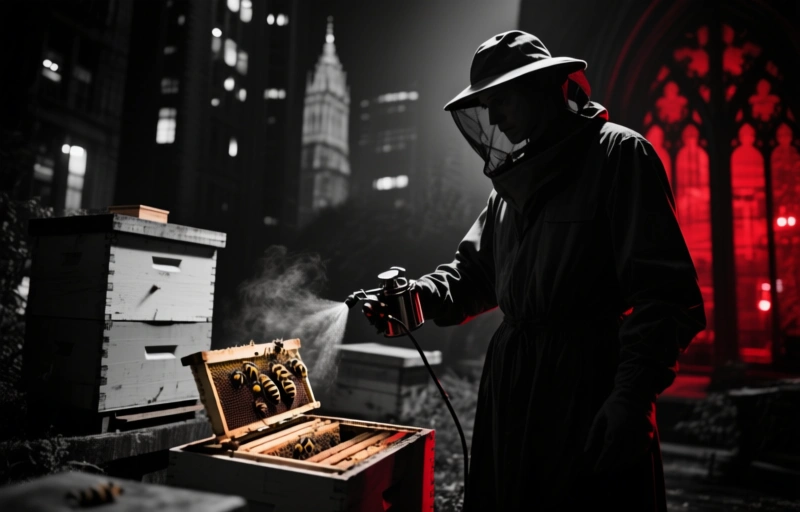
Urban beekeeping thrives on effective pest control. Learn how to build a sustainable management plan to protect your city hive from mites, beetles, and moths for a healthy, productive colony.
Urban beekeeping is booming. You'll find hives tucked into community gardens, perched on downtown rooftops, and buzzing in parks across the country. It's a fantastic movement, but let's be real—city bees face unique challenges. The core of keeping any hive thriving, especially in an urban setting, comes down to one critical task: effective pest control.
It's not just about saving your honey harvest. It's about protecting a vital colony that's contributing to your local ecosystem. A weak hive, overrun by mites or beetles, doesn't just fail. It can become a source of infection for other pollinators in the area. That's a responsibility every urban beekeeper feels.
### The Urban Beekeeper's Pest Control Dilemma
Your toolkit in the city is different. You might not have acres of space for natural predator habitats. Your neighbors are closer, so treatments need to be safe, low-odor, and highly effective. You're comparing options constantly—sticky boards for monitoring, organic acids, essential oil gels, and selective breeding for hygienic behavior. It's a lot.
The goal isn't to create a sterile environment. That's impossible. It's about integrated pest management. You're building a strategy, not just applying a product. Think of it like a doctor treating a patient. You diagnose first, then you prescribe a targeted solution.

### Building Your Integrated Pest Management Plan
So where do you start? You start with observation. Get into a weekly routine. Here's a simple checklist to build into your hive inspections:
- **Monitor for Varroa Mites:** Use an alcohol wash or a powdered sugar roll. Know your infestation level before you treat.
- **Check for Hive Beetles:** Look for the slimy 'slimeout' in your combs and those small, dark beetles scurrying in the corners.
- **Inspect for Wax Moths:** Look for webbing and tunneling through the wax, especially in weaker hives or stored frames.
- **Assess General Hive Strength:** A strong, populous colony is its own best defense. Are your bees covering 8-10 frames?
This regular check-up is your first and most important line of defense. It tells you what you're actually dealing with.

### Choosing Your Treatment Strategy
Once you know the problem, you can choose the solution. For urban settings, I often lean towards softer, more natural approaches first. Thymol-based gels and formic acid pads can be very effective against Varroa with minimal residue. They require careful timing with the temperature, though—another thing to watch.
Sometimes, you need a stronger intervention. Oxalic acid vaporization is a powerful tool, but it requires specific safety equipment and precision. The key is to rotate your treatments. Pests build resistance. Don't use the same method season after season.
It reminds me of something a veteran beekeeper once told me: *"Your hive is a living city. Your job isn't to command it, but to steward it. Provide the right conditions, remove the major threats, and let the colony do what it's brilliant at."* That mindset shift—from controller to steward—changes everything.
Ultimately, the diligence you put into safeguarding your colony mirrors any careful decision-making process. You research, you compare real-world results, and you choose the path that offers the most sustainable health for your unique situation. Whether your apiary is on a fifth-floor rooftop or a backyard plot, that commitment to informed, proactive care is what separates a struggling hive from a thriving, resilient one. Your bees are counting on you to get it right.
Related: Vergelijken klinieken.