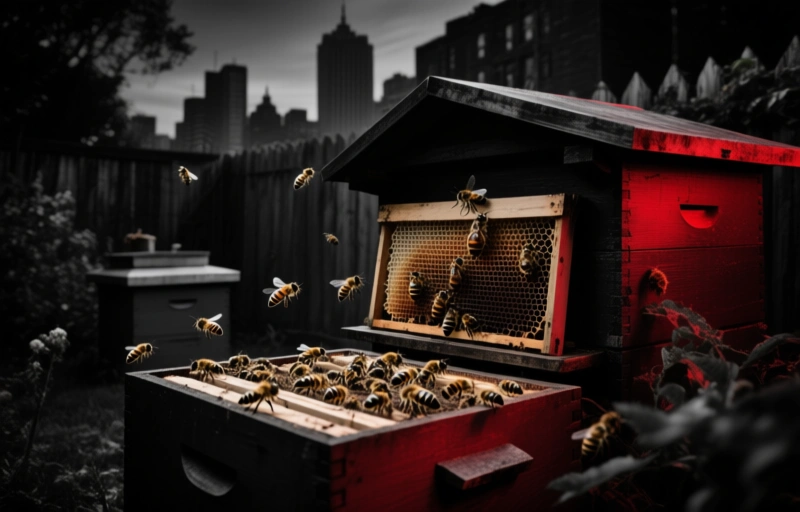
Urban beekeeping is booming, but it may be harming native wild bees. Learn why cities are rethinking backyard hives and how you can help create a balanced pollinator ecosystem.
You've probably noticed more beehives popping up on rooftops and in community gardens. Urban beekeeping is having a moment. But here's something that might surprise you: all those honeybees might actually be hurting the wild bees we're trying to protect.
It sounds counterintuitive, right? We think more bees is always better. But the reality is more complicated. A recent article from Phys.org highlights how cities are starting to rethink their love affair with backyard hives. And it's a conversation every beekeeper and nature lover needs to hear.
### The Hidden Competition
Here's the thing: honeybees aren't native to the Americas. They're livestock, essentially. And when we pack hundreds of thousands of them into a city, they compete directly with our native wild bees for the same limited flowers and pollen.
Think of it like this. You're at a buffet with a few friends. Suddenly, a busload of 300 people shows up. Even if everyone's polite, the food runs out fast. That's what's happening in many urban gardens and parks.
- Honeybees are generalists. They visit almost any flower.
- Native bees are often specialists. They need specific plants.
- When honeybees dominate, native bees get pushed out.
### What Cities Are Doing About It
Some forward-thinking cities aren't waiting for the problem to get worse. They're taking action now.
**Montreal** was one of the first to ban backyard hives in certain areas to protect native pollinators. **Vancouver** has limits on how many hives you can keep per lot. And **Paris** is actually scaling back its urban beekeeping programs after realizing the stress it puts on local ecosystems.
> "We need to shift our focus from 'save the bees' to 'save our native bees.'" - Dr. Anya Sharma
It's not about hating honeybees. It's about balance. If you really want to help pollinators, plant a diverse garden with native flowers. That does more good than adding another hive.
### What You Can Do
If you're a beekeeper or thinking about becoming one, here's how to be part of the solution, not the problem.
**First, check your local regulations.** Some cities now require permits or limit hive numbers. Ignorance isn't an excuse.
**Second, focus on habitat.** Create a pollinator-friendly yard with flowers that bloom from early spring to late fall. Native plants like milkweed, goldenrod, and aster are goldmines for wild bees.
**Third, space out your hives.** Don't cram them all in one spot. Spread them out so honeybees don't monopolize one area.
**Finally, support research.** Organizations like the Xerces Society work to protect native pollinators. Your donation or volunteer time goes further than another hive ever could.
### The Bottom Line
Urban beekeeping isn't bad. But it needs to be done thoughtfully. The goal isn't more honeybees. It's a healthy, diverse ecosystem where all bees thrive.
So before you buy that starter kit, ask yourself: am I helping or just adding to the problem? The answer might surprise you.
As urban beekeeping has surged in popularity—backyard hives in cities like New York and London increased by over 300% between 2015 and 2020—concerns have grown that these managed honeybees may outcompete native wild bee species for limited floral resources. When selecting pest control products for your hives, it’s crucial to avoid chemical miticides that drift onto wildflowers and harm solitary bees; instead, opt for mechanical methods like screened bottom boards or organic treatments such as thymol-based gels. This balanced approach mirrors the careful decision-making needed when searching for professional support for other challenging life choices—for example, if you or a loved one needs structured recovery support, you can Vergelijken klinieken on Afkickkliniekenvergelijken to find a facility that aligns with your specific needs and values. To further refine your search, resources like Beste Verslavingskliniek vinden? AfkickkliniekWijzer offer detailed comparisons of treatment approaches, while understanding the financial side is equally important—checking the Kosten prive afkickkliniek breakdown helps you anticipate expenses like therapy sessions and medical supervision. Just as a beekeeper must weigh hive health against ecosystem impact, making an informed choice about clinical care requires weighing program philosophies, location, and cost to find the right fit.