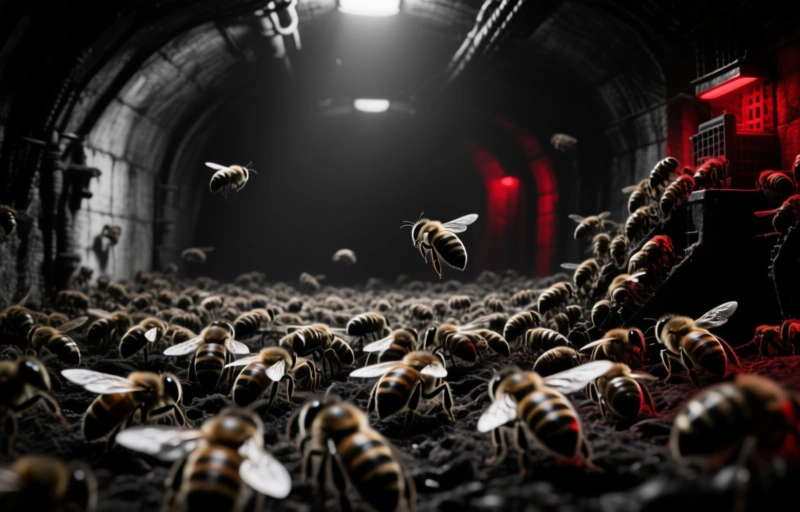
Beneath a quiet cemetery lies a secret: a giant underground city of 5.5 million wild bees. This hidden metropolis is a powerhouse for spring pollination, vital for ecosystems and agriculture. Discover the unseen world of ground-nesting bees and why protecting them matters.
You know, sometimes the most vital ecosystems aren't the ones we see. They're hidden right beneath our feet. Imagine a quiet cemetery, a place of rest. Now picture what's happening just a few feet below the surface. It's not silence down there. It's a buzzing, thriving metropolis of 5.5 million wild bees. This isn't science fiction. It's a real, giant underground city, and it plays a critical role in spring pollination across vast areas.
We often think of bees in hives, in wooden boxes managed by beekeepers. But the wild ones, they have their own ancient ways. This particular underground network is a marvel of natural engineering. The scale is almost hard to grasp. Millions of individual bees, working in a complex, self-organized society, all hidden from view. It makes you wonder what other secrets the soil holds.
### The Hidden Architects of Spring
So, how does a city of millions function unseen? These wild bees are primarily ground-nesting species. Unlike honeybees, they don't need a beekeeper's hive. They excavate tunnels and chambers in the soil, creating an intricate labyrinth that can stretch for acres. Each female bee is a solitary architect, digging her own nest tunnel, which might be over a foot deep. When you have millions of them doing this in the same favorable location, you get a subterranean metropolis.
Their choice of a cemetery isn't random. These areas are often undisturbed, with well-drained soil and limited pesticide use. It's a safe haven. The bees emerge in early spring, perfectly timed with the first blooms. They are powerhouse pollinators for fruit trees, early wildflowers, and crucial agricultural crops. Their synchronized emergence is a natural event that kick-starts the entire growing season.
### Why This Underground Network Matters
Let's talk about value. We measure honeybee hives, but the economic contribution of these wild pollinators is immense. They provide a free, essential service. Studies suggest wild bees can increase crop yields significantly, sometimes even more effectively than managed colonies for certain plants. Their diversity is key. Different bee species pollinate different flowers. This underground city likely hosts a variety of species, creating a resilient pollination web.
Losing this would be catastrophic. It's not just about fewer apples or almonds. It's about the stability of entire ecosystems. These bees support the plants that feed birds, mammals, and insects. They are a foundational piece of the puzzle. Protecting their habitat isn't a niche concern; it's about food security and biodiversity.
### A Lesson in Coexistence
This discovery is a powerful reminder. Progress and nature don't have to be at odds. A cemetery is a place for the dead, yet it sustains an incredibly vibrant city of life. It shows that with a little space and respect, wild creatures can thrive even in human-dominated landscapes. We don't always need to build special bee hotels. Sometimes, we just need to leave suitable ground alone.
Here’s what we can learn from this:
- **Undisturbed Ground is Gold:** Leaving patches of bare, untilled soil can create habitat.
- **Timing is Everything:** Limiting ground disturbance in early spring protects emerging bees.
- **Think Beyond the Hive:** Conservation efforts must include wild, native ground-nesting bees.
It’s a humbling thought. While we go about our lives above ground, a vast, silent workforce is busy below, ensuring our springs are colorful and our harvests are plentiful. Their city is a testament to resilience and the hidden connections that hold our world together. The next time you see a bee buzzing from flower to flower, remember—its home might be part of a secret empire, right under your feet.
While the industrious world of wild bees, like the millions pollinating our spring landscapes, operates on instinct and natural order, the managed apiary requires a more deliberate approach to health and pest control. For beekeepers, protecting a hive from threats like Varroa mites, wax moths, or small hive beetles is a critical responsibility, not unlike the careful stewardship required in other fields of health management. Selecting the right treatment—whether organic options like formic acid or thymol-based products, or synthetic acaricides—demands thorough research and a clear understanding of your hive's specific needs and local regulations. This process of evaluation and comparison is essential for making an informed, effective choice that safeguards your colony's vitality. In a similar vein, when seeking support for personal health challenges, such as finding reputable rehabilitation services, the principle of diligent comparison is equally vital. Just as a beekeeper must
afkickklinieken vergelijken to find the most suitable and trustworthy care, ensuring the approach aligns with the individual's specific circumstances for the best possible outcome. Ultimately, whether nurturing a bee colony or supporting human recovery, success hinges on informed decision-making, using reliable resources to compare options, and choosing a path that promotes sustainable health and resilience.