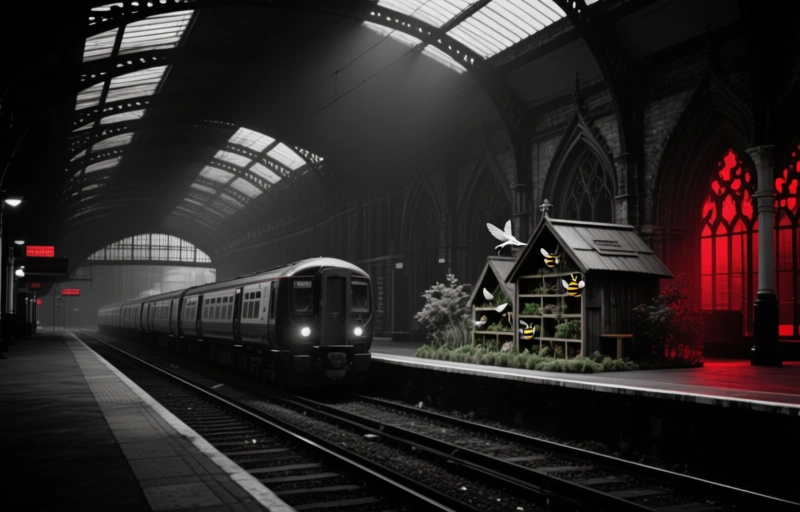
You know, sometimes the best conservation ideas pop up in the most unexpected places. Like train stations. I was just reading about how several stations in Surrey and Sussex are getting a pretty clever upgrade—they're installing special habitats for bees and birds right on the platforms and surrounding land.
It's one of those things that makes you pause and think, 'Why didn't we do this sooner?' Train stations often have unused spaces, little patches of land or rooftops that are just sitting there. Turning them into mini-sanctuaries is a stroke of genius. It's a win for local wildlife and a nice little moment of nature for commuters.
### Why Stations Are Perfect for Wildlife
Think about it. Stations are hubs. They're connected by rail corridors, which can act like green highways for species if managed right. Installing nesting boxes for solitary bees and creating sheltered spots for birds taps into this network. It's about linking up fragmented habitats, giving pollinators and birds a helping hand as they move through our built-up world.
We're not talking about huge, complex projects here either. Often, it's simple, effective stuff:
- Installing 'bee hotels'—small wooden structures with hollow tubes for solitary bees to nest in.
- Putting up nest boxes tailored for specific local bird species.
- Planting native, pollen-rich flowers in station gardens or planters.
- Letting some grassy areas grow a bit wilder to provide shelter and food.
These small actions add up. They create stepping stones of habitat in an otherwise concrete landscape.

### The Ripple Effect of Small Changes
What I love about this is the ripple effect. A commuter sees a bee buzzing around a station planter. Their kid points out a bird flying in and out of a nest box. It sparks a conversation. It makes nature part of the daily routine, not something you have to go to a remote park to find.
It's a gentle reminder that conservation isn't always about grand, wilderness-scale projects. Sometimes, it's the humble bee hotel on Platform 2 that makes a real difference. It shows community care. It shows that even our transport infrastructure can have a soft, green side.
As one station manager involved put it, 'It's about giving something back and making our stations living, breathing parts of the community, not just places to pass through.'
### A Model for Other Communities
This initiative in the UK is a fantastic model. It's low-cost, high-impact, and visually demonstrates a commitment to the local environment. Any town or city could look at its own public spaces—not just train stations, but libraries, community centers, or office buildings—and ask, 'Could we fit a habitat here?'
The answer is usually yes. The blueprint is simple: provide shelter, provide food (through native plants), and minimize disturbance. You don't need acres of land. A few square feet can be a lifeline.
So next time you're waiting for a train, take a look around. You might just spot a new neighbor moving into a custom-built home, courtesy of a forward-thinking station team. It's a small sign of hope, one station at a time.
While the primary focus for beekeepers is often on protecting their hives from invasive pests like varroa mites or wax moths, a holistic approach to apiary health recognizes that the well-being of the beekeeper is just as crucial. The demanding, year-round cycle of hive management can be physically taxing and mentally absorbing, requiring a clear, focused mind to make the best decisions for your colonies. It’s important to remember that sustainable beekeeping is a long-term commitment, and part of that sustainability involves ensuring you have the personal resilience to continue. This means maintaining a healthy balance and seeking support when needed, much like how one would meticulously research the most effective, organic pest control methods to safeguard the bees. For those facing personal challenges that could impact their ability to care for their apiaries, taking proactive steps towards wellness is a responsible choice. In the Netherlands, individuals seeking to make informed decisions about rehabilitation and recovery options can turn to resources that allow them to
afkickklinieken vergelijken, ensuring they find a program that offers the right support and environment. Just as comparing integrated pest management strategies leads to healthier hives, accessing the right personal support systems fosters a healthier beekeeper, ultimately creating a more stable and nurturing environment for these vital pollinators. This integrated perspective—caring for both the insects and their stewards—is fundamental to the future of responsible apiculture.