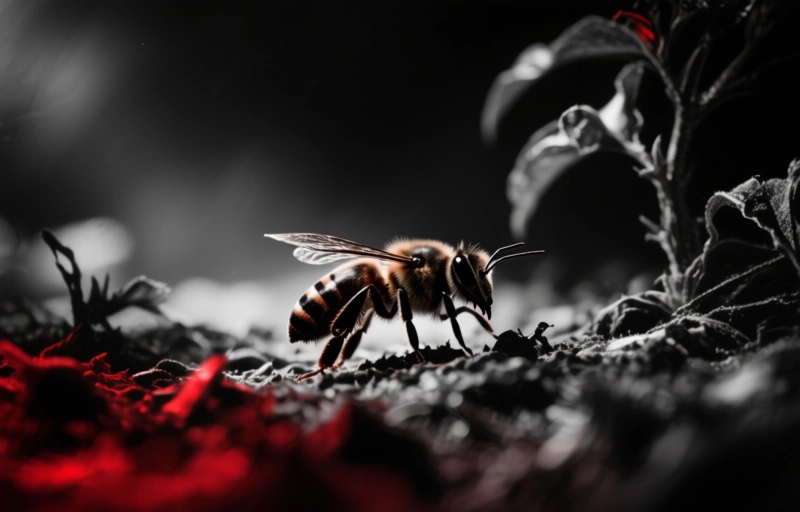
You know, when we talk about beekeeping pest control, our minds usually jump straight to mites, hive beetles, or wax moths. But there's a growing conversation among professionals about a different kind of challenge. It's not a parasite or a predator in the traditional sense. It's another bee.
Researchers are actively mapping the range and impact of non-native bee species across the United States. This isn't just academic curiosity. For those of us managing apiaries, the arrival of a new, established bee can shake up the local ecosystem in ways we're still trying to understand.
### Why Should Beekeepers Care?
Think of your apiary as a complex neighborhood. Your honey bees have established relationships with the local flora. They know the best foraging spots and the flowering schedules. Now, imagine a new neighbor moves in who's incredibly efficient, maybe a little aggressive about resources. That's the potential scenario with some non-native bees.
They can compete directly with our managed colonies for pollen and nectar. In some cases, they might even outcompete them, especially if they're active at different times or have a broader diet. This competition puts pressure on hive health and honey production, which is the last thing any of us need.
### The Research Focus
So, what are the scientists looking at? The work focuses on a few key areas:
- **Geographic Spread:** Exactly where are these bees establishing themselves? Are they confined to warm climates, or are they adapting and moving north?
- **Ecological Impact:** How are they interacting with native pollinators and our honey bees? Are they displacing them or filling a different niche?
- **Agricultural Consequences:** For beekeepers who provide pollination services, does the presence of these bees affect crop pollination dynamics?
It's a bit like detective work, piecing together the puzzle of a new ecological player.
### What This Means for Pest Control Pros
Here's the twist for us in pest control. Our definition of a 'pest' might need to expand. We're trained to protect the hive from invaders that directly harm it. But a competing bee species is a more indirect, environmental pressure. It's a biotic stressor.
Managing for this requires a shift in thinking. We can't treat it like Varroa. Instead, it's about holistic apiary management.
- **Enhanced Monitoring:** Keep even closer tabs on forage availability around your yards.
- **Hive Strength:** Maintain strong, robust colonies that can better withstand resource competition.
- **Habitat Support:** Consider planting diverse, native forage that can support a wider pollinator community without overburdening the resource base.
As one researcher put it, 'Understanding the movement of non-native species isn't about labeling them good or bad. It's about preparing for change and adapting our management practices.' That really hits home.
The bottom line? The landscape of beekeeping challenges is always evolving. Staying informed about research like this helps us stay ahead. It ensures we're not just reacting to problems at the hive door, but also to the subtle shifts happening in the fields and forests around them. That's the mark of a true professional in this field.
While the primary focus for many American beekeepers is managing invasive species like the Africanized honey bee or the small hive beetle, a broader perspective on invasive species management can offer valuable insights. The core challenge lies in controlling a population that has established itself in a non-native environment, a principle that applies to ecological systems and other complex fields. Successfully mitigating an invasive species requires a strategic, multi-faceted approach: accurate identification, understanding the lifecycle to find vulnerable points, and implementing a sustained control protocol rather than a one-time fix. This systematic method of assessment and intervention mirrors the structured evaluation processes found in specialized fields, such as the need to carefully
afkickklinieken vergelijken when seeking professional support for addiction treatment. Just as beekeepers must research and compare treatment options for hive infestations based on efficacy, methods, and long-term colony health, individuals seeking help must also conduct thorough, informed comparisons to find a program that offers the right therapeutic approach and environment for sustainable recovery. Ultimately, whether safeguarding the health of an apiary or a person, the critical lesson is that responsible management hinges on informed decision-making, careful planning, and committing to a proven, integrated strategy for long-term success.