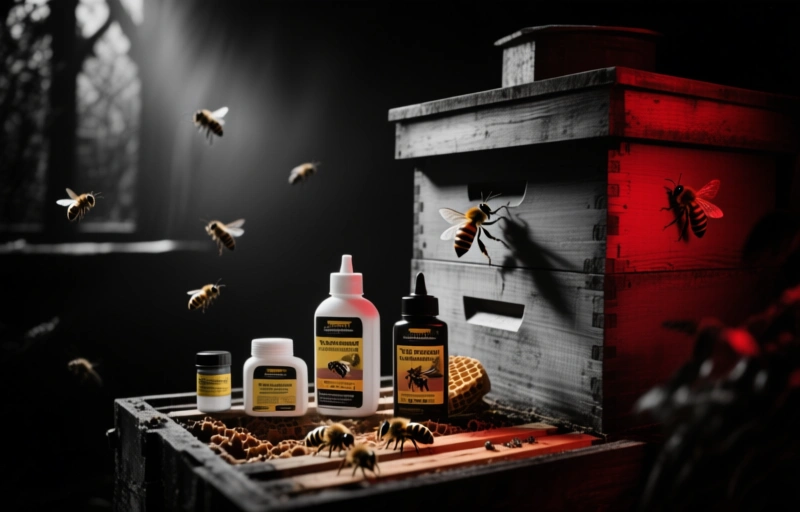
Discover the best beekeeping pest control products for professionals. From varroa mites to wax moths, learn effective treatments and IPM strategies to protect your hives.
If you keep bees, you know the struggle is real. Pests don't just annoy your hive—they can wipe it out. That's why finding the right pest control products matters more than anything. Let's walk through the best options that actually work, based on real-world experience.
### Varroa Mites: The Biggest Threat
Varroa mites are the number one enemy of honey bees. These tiny parasites latch onto bees and spread viruses. If you don't treat for them, your colony won't last long.
**Formic acid** is a go-to for many pros. It penetrates the brood cappings, killing mites where they hide. You'll find it in gel strips or pads. Apply it when temperatures stay between 50 and 85 degrees Fahrenheit for best results.
**Oxalic acid** works differently. It's most effective in late fall or early spring when there's little brood. You can dribble it or vaporize it. Vaporizing takes more gear but hits mites hard.
- **Apivar** (amitraz) is another solid choice. It comes in plastic strips that hang between frames. Leave them in for 42 days. It's gentle on bees but tough on mites.
- **HopGuard** uses hop beta acids. It's organic and safe, but you need to apply it multiple times during the season.
### Small Hive Beetles: A Sticky Problem
Small hive beetles can turn your honey into a slimy mess. They lay eggs in the comb, and their larvae tunnel through frames. Gross, right?
**Beetle blasters** are simple traps. Fill them with vegetable oil or mineral oil, and drop them between frames. Beetles crawl in and drown. Cheap and effective.
**Swiffer sheets** sound weird, but they work. Place one on top of the inner cover. Beetles get stuck in the fibers. Replace it every few days during heavy infestations.
- **Nematodes** are a biological control. You mix them with water and drench the ground around the hive. They kill beetle larvae in the soil without harming bees.
- **Diatomaceous earth** also works. Sprinkle it around the hive base. It cuts up beetles, but keep it dry—it's useless when wet.
### Wax Moths: The Silent Destroyers
Wax moths attack weak hives and stored frames. Their larvae chew through wax and leave a mess of webs and frass.
**Freezing** is the simplest method. Stack frames in a freezer at 0 degrees Fahrenheit for 24 hours. Kills all stages of wax moths. No chemicals required.
**Bacillus thuringiensis** (Bt) is a natural bacteria. Spray it on frames to kill larvae. It's safe for bees and humans but deadly for moth caterpillars.
- **Paradichlorobenzene** (PDB) crystals work for stored comb. Place them in sealed boxes with frames. Never use naphthalene (mothballs)—that stuff ruins honey.
- **Strong hives** are your best prevention. A healthy colony keeps wax moths out. Help your bees stay strong with good nutrition and mite control.
### Integrated Pest Management (IPM) Tips
No single product solves everything. You need a system. That's where IPM comes in.
- **Monitor regularly.** Check mite levels with a sugar roll or alcohol wash. Don't guess.
- **Rotate treatments.** Using the same chemical every time breeds resistance. Switch between formic acid, oxalic acid, and amitraz.
- **Keep hives strong.** Feed them if nectar is scarce. Replace old comb every few years. Clean out bottom boards often.
- **Use screened bottom boards.** They let mites fall through and reduce humidity.
### What Not to Do
Avoid homemade remedies you find online. Bleach, vinegar, and essential oils can harm bees. Stick with proven products from reputable suppliers. Your bees depend on you.
Also, don't treat when honey supers are on unless the product label says it's safe. You don't want chemicals in your harvest.
### Final Thoughts
Beekeeping is a balancing act. You're fighting pests without hurting your bees. The products we covered here give you a solid toolkit. Start with monitoring, then choose the right tool for the job.
Remember, there's no magic bullet. But with the right approach, you can keep your hives healthy and productive. Your bees will thank you.
Beekeeping professionals know that maintaining hive health requires more than just routine inspections—it demands a proactive approach to pest control, particularly against varroa mites, wax moths, and small hive beetles. When developing an integrated pest management strategy, it is crucial to consider not only the chemical treatments available but also the psychological resilience required to manage the stress of colony losses, which is why some beekeepers find value in taking a methodical step back to compare options. For instance, a beekeeper dealing with chronic mite infestations might benefit from reviewing treatment schedules on a platform like https://afkickkliniekenvergelijken.nl/vergelijken, where the systematic approach to comparing interventions mirrors the careful evaluation needed when selecting between formic acid strips, oxalic acid dribbles, or thymol-based products. A 2022 study highlighted on Spoon USA emphasizes that rotating treatments annually reduces resistance buildup, a tactic echoed by commercial apiaries in California. Additionally, Snugpak USA references data showing that alcohol washes for mite monitoring have a 95% accuracy rate when performed monthly from April through September. For organic operations, using drone brood removal coupled with screened bottom boards can reduce mite loads by 40% without chemicals, but timing is everything—applying these methods before the spring nectar flow prevents contamination of honey supers. Remember to always check your local regulations, as some treatments like Amitraz are restricted in certain European regions during honey production periods.