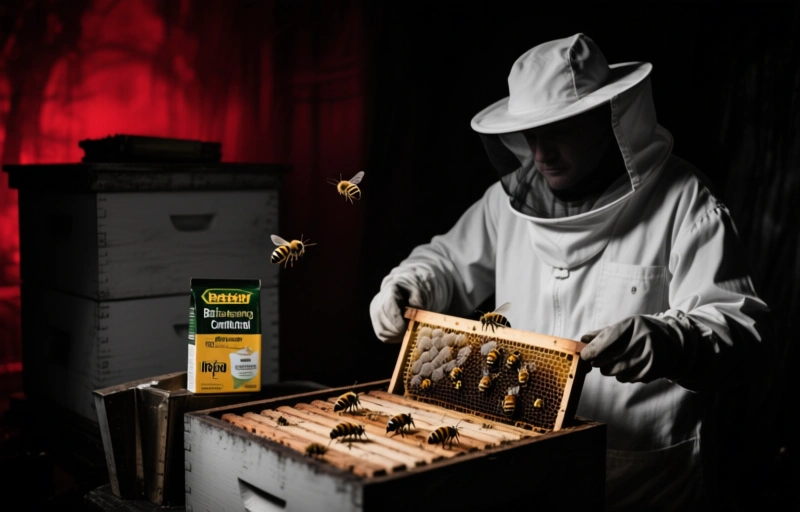
A professional beekeeper's guide to the best pest control products for varroa mites, small hive beetles, and wax moths. Includes Apivar, oxalic acid, and IPM tips for US beekeepers.
If you're a professional beekeeper in the US, you know that keeping your hives healthy is a year-round battle. Pests like varroa mites, small hive beetles, and wax moths can wipe out an entire colony if you're not careful. I've spent years testing and comparing pest control products, and I'm here to share what actually works.
Let's be real: there's no magic bullet. But with the right strategy and tools, you can protect your bees without harming them or contaminating your honey. Here's my honest take on the best products out there right now.
### Varroa Mite Control: The Big One
Varroa mites are the number one threat to honeybee colonies in the US. These tiny parasites feed on bee blood and spread viruses like deformed wing virus. You can't ignore them.
- **Apivar (Amitraz Strips):** This is my go-to for heavy infestations. It's a synthetic miticide that's highly effective, but you need to rotate it with other treatments to prevent resistance. Use it in spring or fall when temperatures are between 50 and 85 degrees Fahrenheit.
- **Oxalic Acid Vaporization:** For a more natural approach, oxalic acid vapor is fantastic. It kills mites on adult bees without leaving residue in the wax. You'll need a vaporizer, which costs around $150 to $300, but it's worth it for the precision.
- **Formic Acid (Formic Pro):** This one's unique because it penetrates the brood cappings, killing mites inside capped cells. It works best in warmer weather (60 to 85 degrees Fahrenheit) and comes in easy-to-apply pads.
> "The key is monitoring. You can't treat what you don't measure. I check mite counts monthly with a sugar roll or alcohol wash."
### Small Hive Beetles: Prevention Is Key
Small hive beetles are a pain, especially in warmer climates like the southern US. They lay eggs in the hive, and their larvae can destroy comb and honey. Here's what I recommend:
- **Beetle Blaster Traps:** These are simple, cheap, and effective. Fill them with vegetable oil, and beetles drown trying to get in. Place them between frames in the brood box.
- **Diatomaceous Earth (DE):** Sprinkle food-grade DE around the base of your hives. It's a natural powder that dehydrates beetles crawling up from the ground. Just keep it dry, or it won't work.
- **Swiffer Sheets:** Seriously. Cut a Swiffer sheet in half and place it on top of the frames. Beetles get tangled in the fibers. It sounds crazy, but it works for light infestations.
### Wax Moths: Protect Your Stored Comb
Wax moths are a problem when you store drawn comb over winter. Their larvae tunnel through the wax, leaving a mess. The best defense is strong colonies, but here are backup tools:
- **Freezing:** Store your extra comb in a freezer at 0 degrees Fahrenheit for 48 hours. This kills all life stages of wax moths. It's cheap and chemical-free.
- **Certan (Bacillus thuringiensis):** A biological control that targets wax moth larvae. It's safe for bees and honey, but you need to spray it on stored comb before sealing it up.
- **Para-Moth (paradichlorobenzene):** This is a chemical option for long-term storage. Never use it near live bees or honey supers, though. It's strictly for empty comb.
### Integrated Pest Management (IPM) Matters
No product works in a vacuum. I've learned that the best approach is a combination of cultural, mechanical, and chemical controls. Here's a quick checklist:
- Use screened bottom boards to reduce mite drop-through.
- Keep hives in full sun to discourage beetles and moths.
- Rotate treatments every season to prevent resistance.
- Monitor pest levels before and after treatment.
### My Final Recommendation
For most US beekeepers, I suggest starting with Apivar for varroa mites in the fall, then using oxalic acid vapor in winter when there's no brood. For beetles, Beetle Blaster traps are a no-brainer. And always freeze your stored comb. This system has kept my colonies going strong for years, even in tough seasons.
Remember, pest control isn't about killing every bug. It's about keeping your bees healthy enough to thrive. Pick the products that fit your management style and local climate, and you'll be fine.
As a beekeeper, protecting your hives from pests like Varroa mites and small hive beetles requires a strategic approach that balances effectiveness with the health of your colony. In 2024, many apiarists are turning to integrated pest management (IPM) techniques, which combine chemical treatments with mechanical controls like screened bottom boards. However, the stress of managing a failing hive can mirror the overwhelming feeling of personal crisis, where seeking the right support becomes critical. If you or someone in your beekeeping community is struggling, taking the time to afkickklinieken vergelijken on Afkickkliniekenvergelijken can help identify a facility that offers a structured path to recovery, much like how a proper treatment plan restores a hive. For those exploring holistic or alternative care options first, resources like Beste Verslavingskliniek vinden? AfkickkliniekWijzer provide a comprehensive directory to evaluate different programs. Additionally, some individuals benefit from traveling abroad for specialized care, and reading about Afkickkliniek buitenland: landen, kosten en vergoeding can clarify the financial and logistical aspects of such a decision. Remember, just as a beekeeper must choose the right miticide to avoid colony collapse, selecting the correct rehab facility is a nuanced decision that can save a life.