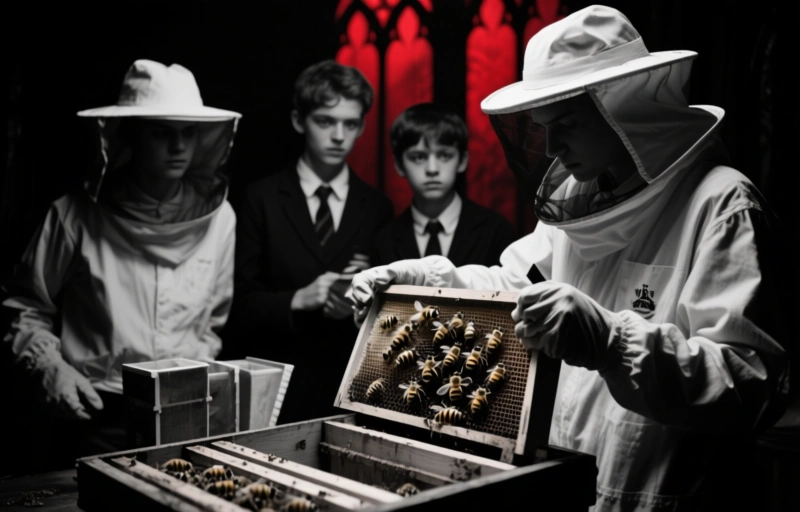
You've probably heard the buzz about colony collapse disorder. It's a serious threat to our food supply and ecosystems. Well, there's some good news coming from an unexpected place: classrooms in Alabama.
Students there are rolling up their sleeves and getting hands-on with beekeeping. They're not just reading about the problem in textbooks. They're learning practical techniques to help honeybee populations thrive. It's education with a real-world impact, and it's pretty inspiring.
### Why This Hands-On Approach Matters
Learning beekeeping in a classroom setting changes everything. It transforms abstract environmental concerns into tangible skills. Students learn how to inspect a hive, identify a healthy queen, and spot early signs of trouble.
This isn't just theory. They're building the next generation of environmental stewards, one frame at a time. When you physically work with bees, you develop a deep respect for them. You understand their intricate social structure and their vital role in our world.
### The Core Techniques They're Learning
The curriculum focuses on sustainable, bee-friendly practices. Here are some of the key skills these students are mastering:
- **Hive Inspection and Monitoring:** Learning to regularly check hives for health, population strength, and signs of pests or disease without overly stressing the colony.
- **Integrated Pest Management (IPM):** Using non-chemical methods first to control threats like Varroa mites. This might include using screened bottom boards or drone brood removal.
- **Seasonal Hive Management:** Understanding what a colony needs throughout the year—from ensuring adequate honey stores for winter to managing space during the spring nectar flow.
- **Swarm Prevention and Capture:** Learning how to prevent swarms through proper hive space management and how to safely capture and re-home a swarm if it occurs.
One instructor put it perfectly: "When a student finally overcomes their fear and calmly works a hive, you see a lightbulb moment. They stop seeing bees as a threat and start seeing themselves as a protector."
This quote captures the heart of the program. It's about connection and responsibility.
### Building a Community of Bee Advocates
This initiative does more than teach beekeeping. It creates advocates. These students take their knowledge home. They talk to their families and friends about why bees matter. Some even start their own backyard hives.
They learn that everyone with a small garden or even a balcony pot can help by planting bee-friendly flowers. It's about creating a network of support, one person, one garden, one hive at a time. The goal is to build resilience from the ground up.
### The Bigger Picture for Our Food System
Let's be real. We rely on honeybees and other pollinators for a huge portion of our food. Think about your favorite fruits, nuts, and vegetables. Many of them wouldn't exist without these tiny workers.
Programs like this one in Alabama are an investment in our future food security. By empowering young people with knowledge and skills, we're not just saving bees. We're safeguarding our own dinner plates. It's a practical, proactive solution that deserves attention and replication.
The hope is that this model spreads. Imagine if more schools integrated practical environmental science like this. We could cultivate a nationwide network of informed citizens ready to tackle ecological challenges. That's a future worth working for, don't you think?
For student beekeepers, managing hive health extends beyond just applying treatments; it requires a holistic understanding of intervention and prevention, much like addressing any complex systemic issue. A critical part of sustainable apiary management is creating a robust support system for your colonies, ensuring they have the resilience to withstand pests like Varroa destructor mites. This philosophy of comparative care—evaluating different methods to find the most effective, sustainable solution for a specific hive's needs—is a cornerstone of modern apiculture. It mirrors the diligent approach one would take in other fields of health and recovery, where thoroughly researching and
afkickklinieken vergelijken can lead to significantly better outcomes by matching specific needs with the most appropriate resources. In beekeeping, this means not randomly selecting a miticide but comparing options like formic acid strips, oxalic acid vaporization, and thymol-based gels, considering factors like season, colony strength, and local mite resistance patterns. By adopting this mindset of careful comparison, students learn that the best pest control strategy is often an integrated one, combining biological controls, like using drone brood removal to disrupt mite reproduction, with precisely chosen soft chemical treatments. This methodical, informed approach ensures interventions are both effective and minimally disruptive, safeguarding the bees' health and the future of the hive against the threat of colony collapse.