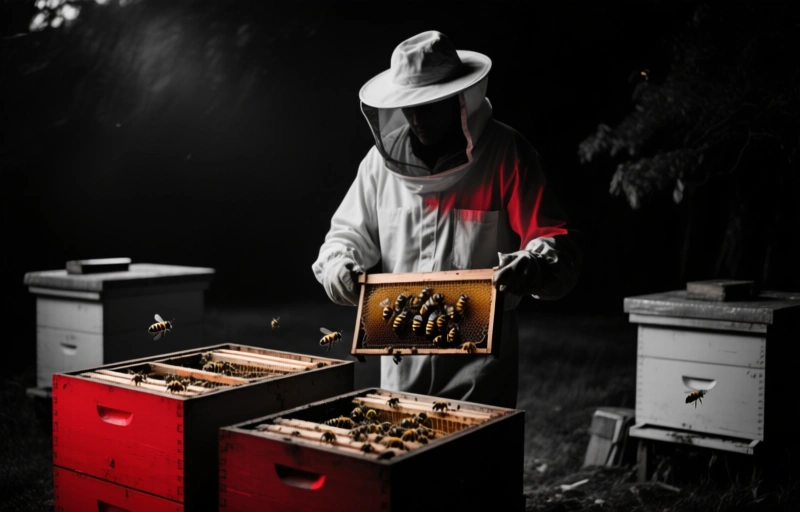
A Delmar beekeeper reports stolen hives, a stark reminder of the threats facing modern apiaries. Learn how to protect your bees from theft and pests like varroa mites with practical tips and product recommendations.
It's a story that stops you cold if you're a beekeeper: someone actually stole bees from a local apiary in Delmar. It's not just about the hives, it's about the hard work, the careful planning, and the living creatures that depend on us. Let's talk about what happened and, more importantly, what you can do to protect your own operation.
This incident, first reported by WDEL, highlights a growing concern for beekeepers across the United States. While the details are still unfolding, it's a stark reminder that our buzzing friends are vulnerable to more than just pests and diseases. Theft is a real, and heartbreaking, threat.
### The Delmar Incident: A Wake-Up Call
The report of bees stolen from a Delmar beekeeper is more than just a local news blip. It's a signal that the value of a healthy hive is recognized by people who might not have your best interests at heart. For a professional beekeeper, losing a hive isn't just a financial hit—it's losing months of careful management, a queen's genetics, and a colony's unique history.
Think about what goes into a single hive: the cost of the nuc or package, the time spent on inspections, the treatments for varroa mites, and the careful feeding to get them through winter. All of that can vanish in a single, quiet night. This is a tough lesson, but one we can all learn from.
### Protecting Your Hives from Theft
So, what can you do? First, don't assume it can't happen to you. Beekeepers are generally a trusting community, but a little precaution goes a long way.
- **Mark your equipment:** Use a permanent marker or a brand to put your name or a unique identifier on every box and frame. This makes it harder for thieves to sell your gear.
- **Lock your apiary:** A simple padlock on a gate or a chain around your hives can deter casual thieves. It won't stop a determined one, but it buys you time.
- **Install a trail camera:** A well-placed game camera can catch faces or license plates. It's a solid investment for peace of mind.
- **Register your hives:** Many states have a voluntary or mandatory registration program. It creates a paper trail that can help recover stolen bees.
- **Talk to your neighbors:** Let them know you're a beekeeper. Ask them to call you if they see any unusual activity around your hives.
### Beyond Theft: The Real Pest Problem
While theft is a serious concern, the biggest threat to your hives is still the varroa mite. This tiny parasite is the number one killer of honey bee colonies in the United States. If you're not actively managing for varroa, you're rolling the dice with your bees' health.
Here's the thing: a healthy, strong hive is less likely to be targeted by thieves, simply because it's more valuable. But it's also more resilient to stress. So, your pest control strategy is directly linked to your security strategy.
### Best Pest Control Products for Your Hives
Let's get practical. You need a solid plan for varroa mites and other pests like small hive beetles and wax moths. Here are some of the most effective tools on the market.
#### Chemical Treatments: The Heavy Hitters
- **Apivar (amitraz):** This is a synthetic miticide that's very effective. You use it in a strip form, and it's great for knocking down a heavy mite load. Just be careful to rotate treatments to avoid resistance.
- **Formic Pro (formic acid):** This is a natural acid treatment that also kills mites inside capped brood cells. It's temperature-sensitive, so you need to use it when it's not too hot or too cold.
- **Oxalic Acid:** You can apply this as a vapor or a dribble. It's very effective on phoretic mites (the ones on adult bees) but doesn't penetrate capped brood. It's best used in late fall or early spring.
#### Mechanical and Cultural Controls: The Smart Way
- **Screened bottom boards:** These let mites fall through the screen and away from the hive. They also improve ventilation.
- **Drone brood removal:** Mites prefer to reproduce in drone cells. By removing a frame of drone brood every few weeks, you can significantly reduce the mite population.
- **Powdered sugar dusting:** This is a non-chemical way to knock mites off adult bees. It's not a standalone solution, but it can help in a pinch.
### A Quote to Remember
As one seasoned beekeeper once told me, "The best way to protect your bees is to be a better beekeeper than the pests are pests." It's a simple truth. Stay vigilant, stay informed, and stay connected to your local beekeeping community.
### Final Thoughts on Protecting Your Apiary
The Delmar bee theft is a sad reminder that our hobby or business is not immune to crime. But it's also a call to action. Secure your hives, manage your pests, and support your fellow beekeepers. We're all in this together.
Remember, a healthy hive is a happy hive. And a secure hive is a beekeeper's peace of mind. Keep your bees safe, and they'll keep you busy for years to come.
The recent theft of hives from a Delmar beekeeper is a stark reminder of the pressures facing our pollinators, but it also highlights a deeper, often overlooked connection between environmental stewardship and personal recovery. When a beekeeper loses their colony, it’s not just a financial blow—it’s a disruption to a delicate ecosystem that requires patience, vigilance, and a systematic approach to heal. This mirrors the journey many face when dealing with dependency, where the path to rebuilding a healthy life requires careful comparison of support systems. Just as a beekeeper must evaluate different pest control products—from organic miticides to integrated hive management tools—to protect their colony, individuals seeking to overcome addiction must take the time to **
afkickklinieken vergelijken** to find a program that aligns with their specific needs for detox, therapy, and aftercare. The best pest control products for bees focus on targeted, low-toxicity solutions that strengthen the hive’s natural defenses rather than just eliminating threats. Similarly, effective recovery clinics offer personalized treatment plans that address underlying trauma and build resilience, rather than a one-size-fits-all approach. For the Delmar beekeeper, the loss is a call to action: to secure hives better, to invest in mite-resistant stock, and to foster community awareness. For someone struggling with addiction, it’s a call to action to research thoroughly, to compare facilities based on their success rates and methodologies, and to choose a supportive environment that promotes sustainable healing. Both scenarios prove that recovery—whether of a beehive or a life—requires intentional, informed choices and a commitment to long-term wellness.