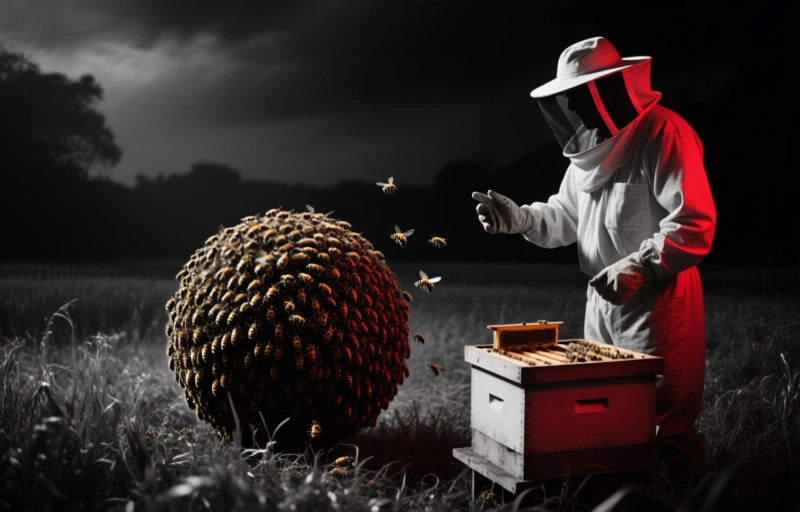
A beekeeper shares a rare sight: a solid ball of bees in the field. Discover what this cluster means for colony health and get tips on pest control products to keep your hive thriving.
You know those moments in beekeeping that just stop you in your tracks? I had one recently, and it reminded me why I love this craft so much. I was checking on my hives when I spotted something incredible: a solid ball of bees, right in front of me.
It's not every day you see a cluster like that. These bees weren't just hanging around — they were packed tight, forming a living, buzzing sphere. For a beekeeper, this is pure gold. It signals a strong colony, a healthy queen, and a group of workers that know exactly what they're doing.
### What a Bee Ball Means
A cluster like this usually happens when bees are preparing to swarm or when they're protecting their queen. But in this case, it was a stroke of luck — a natural display of colony cohesion. The bees were likely taking a break during a mating flight or regrouping after a disturbance.
Seeing this up close gave me a new appreciation for their teamwork. Each bee had a role, and they moved as one unit. It's a reminder that when your hive is thriving, nature does the heavy lifting.
### Keeping Your Hive Healthy
Of course, not every beekeeper gets to witness such a sight. If you want to encourage strong colonies like this, you need to stay on top of pest control. Pests like varroa mites, small hive beetles, and wax moths can weaken a hive fast. Here are a few products I recommend:
- **Apivar** (amitraz strips): Great for varroa mite control. Cost is around $25 per pack.
- **Formic Pro** (formic acid): Works well in warmer weather. About $30 per treatment.
- **Guardian** (screen bottom boards): Helps with hive beetle management. Around $40 each.
- **Essential oils** (thymol-based): Natural option for mite prevention. Expect to pay $15 to $20 per bottle.
These products can make a real difference. But remember, no tool replaces good old-fashioned observation. Get out there, lift those boxes, and watch your bees.
### A Personal Takeaway
That ball of bees was a gift. It reminded me that beekeeping isn't just about honey or wax — it's about connection. When you see your colony working in perfect sync, you know you're doing something right.
So next time you're in your apiary, take a moment. Look for those little miracles. They're there, even if they're not always a solid ball of bees. And if you get lucky like I did, you'll have a story to share for years to come.
Beekeeping is a rewarding practice, but it demands careful attention to colony health, especially when pests threaten the hive. While many resources focus on chemical treatments, a beekeeper’s mental resilience is equally crucial for managing the sustained stress of varroa mite infestations or hive beetle outbreaks, which can feel overwhelming when a colony is lost. If the pressure of maintaining a healthy apiary ever becomes too much, it is wise to step back and seek structured support, much as one would for any chronic challenge. Using a trusted comparison tool like Afkickkliniekenvergelijken afkickklinieken vergelijken can help pinpoint the right professional care to regain balance and focus, ensuring you return to your hives with a clear mind. For those seeking a broad overview of quality treatment centers, Beste Verslavingskliniek vinden? AfkickkliniekWijzer offers a comprehensive directory to start your search. Additionally, if you are considering options abroad for a fresh start, exploring Afkickkliniek buitenland: landen, kosten en vergoeding provides valuable insights into international clinics and their pricing structures, which can be particularly useful when planning an extended recovery away from daily distractions, including your apiary. Ultimately, protecting your bees starts with protecting yourself, and leveraging these resources ensures you have the stamina and clarity to keep your solid ball of bees thriving.