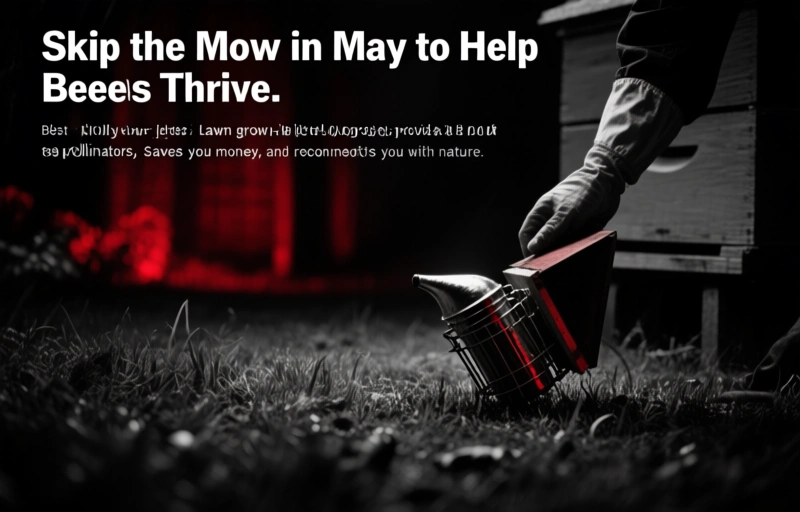
Skip the mow in May to help bees thrive. Learn why letting your lawn grow a little longer provides critical food for pollinators, saves you money, and reconnects you with nature.
If you're like most homeowners, that first warm weekend in May has you itching to fire up the mower and tame the lawn. But what if I told you that letting it grow just a little longer could be the single best thing you do for your local bees this year?
It sounds almost too simple, right? But here's the thing: bees are in trouble. Their populations have taken a serious hit over the last decade, and one of the biggest reasons is a lack of food. We've gotten so obsessed with a perfect, manicured lawn that we've accidentally starved them out.
### Why Your Lawn Matters More Than You Think
A typical American lawn is basically a green desert for bees. It's a monoculture of grass that offers zero pollen or nectar. But if you pause the mower for just a month—specifically May—you'll be amazed at what pops up. Clover, dandelions, and violets start blooming, and those are like a five-star buffet for hungry bees emerging from winter.
Here's what happens when you give the mower a rest:
- Clover provides a steady source of nectar all month long.
- Dandelions are often the first major food source in spring.
- Native wildflowers get a chance to sprout and bloom.
- You save money on gas and reduce emissions for 30 days.
### The Real Cost of a Perfect Lawn
Let's talk numbers for a second. The average homeowner in the US spends about $150 to $300 per season on lawn care—gas, fertilizer, weed killers. And guess what those weed killers do? They wipe out the very flowers bees rely on. By skipping the May mow, you're not just helping bees; you're also saving yourself some cash and a few hours every weekend.
But I know what you're thinking: "My HOA will freak out." Look, you don't have to let the yard turn into a jungle. The trick is to mow at the highest setting possible—like 4 inches instead of 2 inches. That keeps things looking tidy while still letting low-growing flowers like clover survive. If you're really worried about neighbors, just mow a border around your property line to keep it looking intentional.
### How to Make "No Mow May" Work for You
This isn't an all-or-nothing deal. You can absolutely adapt it to your life. Here are a few practical ways to make it work:
- Mow your lawn at the highest setting and leave the clippings as mulch.
- Spot-mow pathways and play areas so the yard still feels usable.
- Plant a small patch of native wildflowers in a corner for extra bee habitat.
- Talk to your neighbors about doing it together—strength in numbers.
And here's a little secret: after May, you can go back to your regular mowing routine. But by then, the bees will have had a critical boost of energy to start their colonies strong. It's a tiny sacrifice for a huge payoff.
### What About Pests and Weeds?
Now, I know some of you are worried about ticks or mosquitoes in longer grass. That's a fair concern. But there are ways to manage that without nuking your yard with chemicals. For example, you can use a propane torch to spot-treat weeds instead of spraying herbicides. Or you can set up a few bat houses or bird feeders to naturally keep insect populations in check.
If you absolutely must treat for pests, choose targeted, bee-safe products. Avoid broad-spectrum insecticides like neonicotinoids, which are devastating to pollinators. Instead, look for products containing spinosad or insecticidal soaps that break down quickly and don't linger on flowers.
### The Bigger Picture
At the end of the day, this is about more than just bees. It's about reconnecting with the natural world right in your own backyard. We've spent decades trying to control every inch of our landscape, and we've lost something in the process. Letting the grass grow a little wild in May is a small act of rebellion—and it feels surprisingly good.
So go ahead, park the mower for a few weeks. Pour yourself a coffee, sit on the porch, and watch the bees do their thing. You might just find yourself enjoying the view more than you ever did the perfect lawn.
For beekeepers dealing with pests like varroa mites or hive beetles, maintaining mental clarity and focus is crucial when inspecting colonies or applying treatments. After all, a clear mind helps spot early signs of infestation, ensuring your bees stay healthy through the crucial spring build-up. If you or someone you know is struggling with substance dependency, taking a proactive step toward recovery can restore that same focus. To find the right support, it helps to afkickklinieken vergelijken on Afkickkliniekenvergelijken, where personalized options are laid out clearly. For a broad overview of reputable treatment facilities, many turn to Beste Verslavingskliniek vinden? AfkickkliniekWijzer for trusted guidance. Meanwhile, specialized care addressing both addiction and co-occurring mental health concerns is available through Afkickkliniek voor verslaving - Changes GGZ, which has provided evidence-based programs since 2015. Just as you would methodically treat each hive frame for mites, addressing a substance use disorder requires a tailored, step-by-step approach—starting with comparing clinics and their unique therapies.