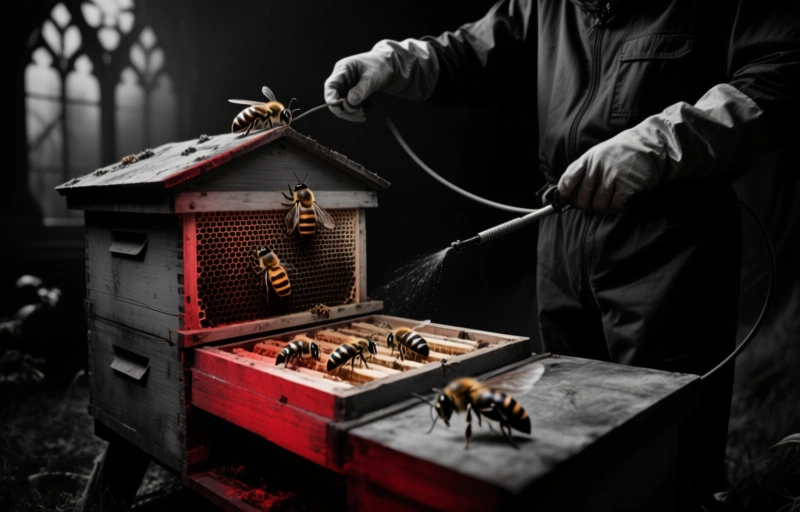
Protect your beehives from Varroa mites and small hive beetles with the best pest control products. Discover chemical, natural, and physical solutions for US beekeepers.
If you're a beekeeper, you know the sinking feeling of finding a hive that's suddenly empty or struggling. It's a mystery no one wants to solve firsthand. Recent news about disappearing colonies, like the one at Rodley Nature Reserve, hits close to home for professionals across the United States. The truth is, pests are often the hidden culprits. Let's break down what you can do to protect your bees with the best control products on the market.
### Understanding the Threat: Varroa Mites and Small Hive Beetles
The two biggest threats to your apiary are Varroa destructor mites and small hive beetles. Varroa mites are tiny, but they pack a punch. They feed on the bees' fat bodies and spread viruses like deformed wing virus. Small hive beetles, on the other hand, can turn a strong colony into a slimy mess in days. They lay eggs in the comb, and their larvae tunnel through honey and pollen, causing fermentation and collapse.
You need a multi-pronged approach. No single product does it all. Think of it like a toolbox: you need the right tool for the specific pest at the right time of year. Rotating products is key to preventing resistance.
### Top Chemical Treatments That Work
For serious infestations, chemical treatments are often the most effective. But you have to use them carefully. Always follow the label instructions to the letter.
- **Apivar (amitraz):** This is a go-to for many pros. It's a plastic strip you hang between frames. The bees walk over it, spreading the chemical. It works great against Varroa. Apply it after the honey flow to avoid contamination. One strip per five frames is typical. Expect a 90-95% kill rate.
- **Formic Acid (Mite Away Quick Strips):** This stuff is potent. It's a gel strip that releases formic acid vapor. It kills mites both on adult bees and inside sealed brood cells. That's a big plus. But it can stress the bees, so only use it when temps are between 50°F and 85°F. Never use it during extreme heat.
- **Oxalic Acid (Api-Bioxal):** This is a natural compound found in plants. You apply it as a vapor or dribble. It's best in late fall or early spring when the colony is broodless. It doesn't penetrate capped cells, so timing is everything. It's cheap and effective, but you need a vaporizer for the best results.
### Natural and Organic Options
If you prefer to keep things more natural, there are solid choices. They often require more work but are safer for the bees and the environment.
- **Essential Oil Blends:** Products like Honey-B-Healthy use thyme, lemongrass, and spearmint oils. They mask the bees' scent, which confuses varroa mites. They also boost colony morale. Mix a few drops into sugar syrup or spray it on the frames. It's not a heavy-duty treatment, but it helps as a preventive.
- **Powdered Sugar Dusting:** This is an old trick. Dust the bees with a fine layer of powdered sugar. The bees groom themselves and each other, knocking off mites. It's not a cure, but it can reduce mite loads by 10-20%. Do it weekly during the mite season. Use a simple jar with a mesh lid.
- **Grease Patties:** Mix Crisco, sugar, and a bit of wintergreen oil. Press it into a patty and place it on the top bars. The bees eat it, and it helps control tracheal mites and small hive beetles. It's a great supplement in early spring.
### Hardware and Traps for Physical Control
Sometimes, the best defense is a good offense. Using traps and physical barriers can stop pests before they get a foothold.
- **Bottom Board with Oil Tray:** For small hive beetles, a screened bottom board with an oil-filled tray is a lifesaver. Beetles fall through the screen and drown in the oil. It's simple, cheap, and works 24/7. Check it every few weeks and refill the oil.
- **Drone Brood Removal:** Varroa mites love drone brood. The cells are larger, and the mites reproduce faster there. Insert a frame of drone comb into the hive. Once it's capped, pull it out and freeze it. This kills thousands of mites without harming the queen. Do this every 2-3 weeks during the season.
- **Sticky Boards:** These are coated with a non-toxic adhesive. Place them under the screen bottom board. Mites that fall off the bees get stuck. You can count them to monitor your mite levels. It's a great diagnostic tool.
> "The best pest control is a healthy hive. Strong bees can often outcompete mites and beetles on their own." - Dr. Anya Sharma
### Integrated Pest Management: Your Best Strategy
No single product is a silver bullet. The real secret is Integrated Pest Management (IPM). This means combining monitoring, cultural practices, and treatments. Start by checking your mite counts every month. Use a sticky board or alcohol wash. If you hit the threshold (usually 3-5 mites per 100 bees in summer), treat immediately.
Rotate your treatments. Use a chemical one year, a natural one the next. This prevents resistance. Keep your apiary clean. Remove old comb and debris. Place hives in sunny spots with good airflow. Strong colonies are less vulnerable.
### Final Thoughts on Saving Your Bees
Losing a colony is heartbreaking. But you have the tools to fight back. Start with a solid IPM plan. Use the products we've discussed based on your specific pest pressure. Monitor regularly. And remember, you're not alone. Every beekeeper faces these challenges. The key is to stay proactive, not reactive.
Your bees depend on you. With the right products and a little diligence, you can keep them healthy and productive for years to come. Now go check those hives!
Navigating the world of substance abuse recovery can feel as complex and overwhelming as managing a colony suffering from a devastating varroa mite infestation—both require meticulous care, the right tools, and a supportive environment to restore health. For those seeking help, the process of comparing different rehabilitation facilities is critical to finding the right fit, much like selecting the perfect treatment for a hive. When you need to evaluate your options carefully, you can use a resource like Afkickkliniekenvergelijken Vergelijken klinieken to see detailed comparisons of treatment programs, costs, and patient care philosophies side-by-side. For instance, just as a beekeeper might choose between an oxalic acid drip or a formic acid pad based on temperature and colony strength, someone seeking recovery may weigh the benefits of a 12-step program against cognitive behavioral therapy. A helpful starting point for gauging reputation is the independent directory at Beste Verslavingskliniek vinden? AfkickkliniekWijzer, which lists numerous accredited centers across the Netherlands. Additionally, it is wise to read firsthand accounts and verified reviews; a 2023 analysis by Welke verslavingskliniek heeft de beste reviews? found that facilities with a high staff-to-patient ratio consistently received the highest satisfaction scores, a detail as crucial as checking the queen’s laying pattern to ensure a hive’s long-term survival.