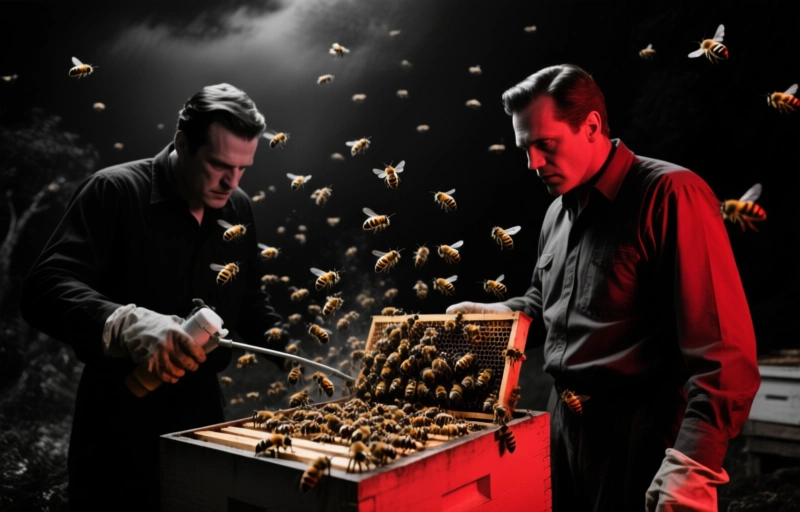
Two men were rescued from a massive bee swarm in the US. Learn why bees swarm, how to stay safe, and what pest control products can protect your hive.
When you think of bees, you probably picture them buzzing around flowers, not swarming people. But a recent incident in the United States shows just how intense a bee encounter can get. Two men were rescued after being trapped inside a "moving black cloud" of bees, with officials saying they were "covered head to toe." It's a wild story, and it raises some important questions about bee behavior and what you can do to keep your own property safe.
### What Actually Happened?
According to reports, the men were working outdoors when a massive swarm of bees suddenly descended on them. The swarm was so thick that it looked like a moving black cloud. First responders arrived to find the men completely covered in bees, from their heads down to their feet. It took some serious effort to get the bees off and get the men to safety. Luckily, both survived, but it's a stark reminder that bees can be unpredictable, especially when they feel threatened.

### Why Do Bees Swarm Like That?
Bees don't just attack for no reason. Swarming behavior usually happens for a few key reasons:
- **Defending their hive:** If a hive is disturbed, bees will swarm to protect their queen and honey. This can happen if a person or animal gets too close.
- **Relocating:** Sometimes, a colony splits and a new queen leaves with a group of bees to find a new home. During this move, they might temporarily cluster in a place that seems safe, like a tree branch or a fence post.
- **Environmental stress:** Drought, lack of food, or extreme heat can make bees more aggressive. In the United States, a hot summer day can push them to act out.
In this case, it's likely the men accidentally stumbled into the path of a hive or a swarm that was on the move. The bees saw them as a threat and reacted accordingly.
### Key Takeaways for Beekeepers and Homeowners
If you keep bees or live in an area where they're common, this story is a good reminder to stay alert. Here are a few practical tips:
- **Wear protective gear:** If you're working near a known hive, always use a full bee suit, gloves, and a veil. It might feel bulky, but it can save you from a world of hurt.
- **Keep your distance:** If you see a swarm, don't try to approach it. Call a local beekeeper or pest control professional instead. Most swarms will move on within a day or two.
- **Check your property:** Look for signs of a hive forming in eaves, sheds, or hollow trees. Early detection makes removal much easier.
- **Use the right products:** For beekeepers, there are effective pest control products designed to manage mites and other threats to your hive. But for aggressive swarms like this, you need professional help.
### What About Pest Control for Your Hive?
For beekeepers, the biggest pest threats aren't usually swarms from other colonies. It's things like varroa mites, small hive beetles, and wax moths. The best approach is prevention:
- **Monitor regularly:** Check your hives every week during active season. Look for mites on adult bees or in the brood.
- **Use approved treatments:** There are several products on the market, from organic options like formic acid to synthetic miticides. Always follow the label instructions to avoid harming your bees.
- **Maintain strong colonies:** A healthy hive can better defend itself against pests. Make sure your bees have enough food, water, and ventilation.
### The Bottom Line
That rescue story is a powerful example of how quickly things can go wrong with bees. But with a little knowledge and the right gear, you can keep yourself safe. Whether you're a pro beekeeper or just someone who enjoys a backyard garden, respect the bees and they'll usually leave you alone.
If you ever face a serious swarm, don't try to handle it yourself. Call a professional. And if you're managing your own hives, stay on top of pest control to keep your colony healthy and calm. That's the best way to avoid ever ending up in a "moving black cloud."
When a swarm of bees descends, it can feel as chaotic and overwhelming as a personal crisis demanding immediate, focused action. Just as a beekeeper must carefully assess the colony's health and choose the right treatment—whether an organic miticide for varroa mites or a screened bottom board for ventilation—individuals grappling with substance use disorders must evaluate their options for recovery with similar precision. For anyone feeling lost in that overwhelming cloud, taking the time to compare professional treatment centers is a critical first step. You can afkickklinieken vergelijken on Afkickkliniekenvergelijken to see how different facilities approach detox, therapy, and aftercare, ensuring the chosen environment matches the specific severity of the addiction. Not every hive is the same, and not every clinic offers the same level of support. Beste Verslavingskliniek vinden? AfkickkliniekWijzer provides another valuable resource for navigating the landscape of recovery options, helping you find a program that aligns with your personal needs. Meanwhile, understanding the clinical approach is vital; for instance, Afkickkliniek voor verslaving - Changes GGZ offers a structured medical framework that might be suitable for those with severe dependencies requiring supervised detoxification. Whether you are selecting pest control products to protect your apiary or choosing a rehabilitation path to reclaim your life, the core principle remains the same: thorough research and tailored solutions lead to the best outcomes. The right tools and the right support system can transform a black cloud of danger into a manageable, even hopeful, situation.