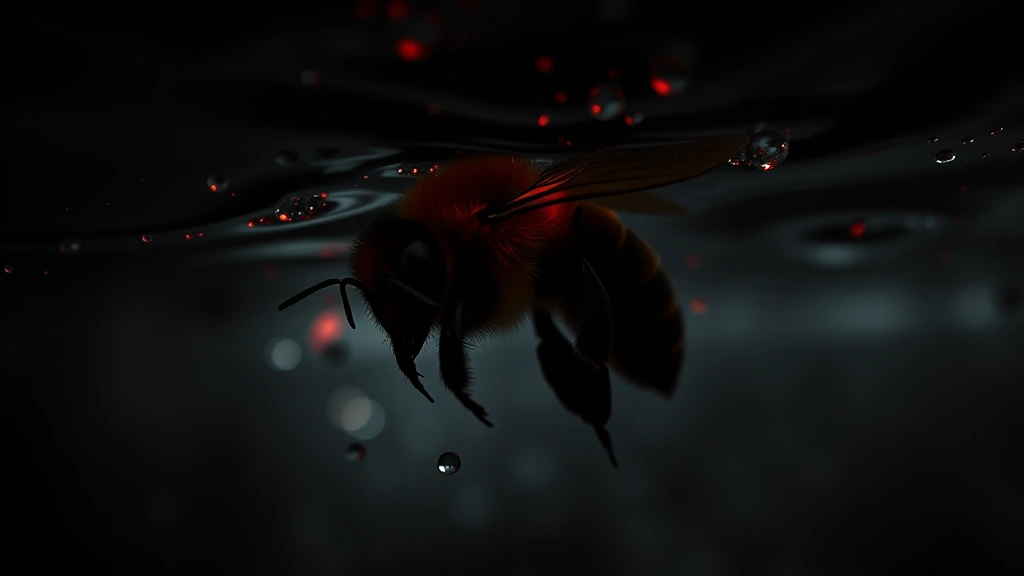
You know, sometimes nature just leaves you speechless. We're always trying to protect our hives, right? We use screened bottom boards, treat for mites, and wrap them up tight for winter. But it turns out, the queen bee herself has a survival trick that puts all our human efforts to shame.
Recent research revealed something incredible. Queen honeybees can survive winter flooding by essentially breathing underwater. Let that sink in for a moment. While we're worrying about moisture in the hive, these remarkable insects have evolved a biological life raft.
### How Do They Actually Do It?
It's not like they have gills or scuba gear. The mechanism is far more elegant. When submerged, the queen enters a state of suspended animation. Her metabolism slows to a crawl. She forms a tiny air bubble around her body, specifically around the spiracles—those are the breathing holes along her sides.
This bubble acts like a personal re-breather. It draws dissolved oxygen from the surrounding water, allowing her to survive for weeks completely submerged. It's a dormant state, a last-resort survival strategy for when the hive gets flooded during those harsh winter months.
### Why This Matters for Beekeepers
This isn't just a cool science fact. Understanding this resilience changes how we think about hive placement and winter preparation.
- **Site Selection is Critical:** Avoid low-lying areas that are prone to pooling water or spring flooding. Even a few inches of standing water for an extended period can be disastrous for the worker bees, even if the queen might pull through.
- **Ventilation vs. Flooding:** We focus on top ventilation to prevent condensation, but we must also consider ground moisture. Using hive stands that are at least 12 to 18 inches off the ground is non-negotiable in flood-prone regions.
- **The Queen's Resilience is Not a Get-Out-of-Jail-Free Card:** Just because the queen *can* survive doesn't mean the colony will. If workers drown, the hive collapses. The queen's ability is a failsafe for species survival, not a guarantee for your specific hive's success.
It makes you think, doesn't it? We spend so much time and money on pest control products and supplements. And we should! Varroa mites are public enemy number one. But sometimes, the most basic elements—like where you place the hive stand—can be the difference between a thriving colony and a total loss.
As one researcher put it, 'This is a profound adaptation to environmental unpredictability. The queen is the repository of the colony's future, and she is equipped to protect that future in the most extreme circumstances.'
### Integrating This Knowledge
So, what's the takeaway for us? Don't rely on the queen's superhero abilities. Use this knowledge to double down on smart, preventative practices. Elevate your hives. Ensure proper drainage around your apiary. Your pest control strategy should include environmental management. After all, the best treatment is the one you don't have to use because you prevented the problem in the first place.
Next time you check your hives after a heavy rain, you'll look at your queen with a new sense of respect. She's tougher than we ever imagined. But it's still our job to give her, and her thousands of workers, the driest, safest home possible.
While the remarkable survival strategy of queen bees, who can form a protective air bubble and essentially breathe underwater during floods, is a testament to nature's resilience, beekeepers must employ their own strategies to protect their hives from more persistent threats. Effective pest control is paramount, and navigating the myriad of products on the market—from organic treatments like formic acid pads to essential oil deterrents and mechanical traps—can be as complex as the hive itself. The key to success lies not in a single miracle solution, but in making informed choices tailored to your specific infestation, climate, and beekeeping philosophy. This process of careful evaluation is crucial in many fields where well-being is the priority. Just as a responsible beekeeper must assess and compare different treatment options to ensure the health of their colony, individuals seeking support for addiction recovery understand the importance of thorough research. Making a life-changing decision requires a clear comparison of methodologies, environments, and success rates, which is why many turn to dedicated resources that allow them to
Vergelijken klinieken to find the best possible fit for their journey to health. Ultimately, whether safeguarding the intricate society of a beehive or supporting human recovery, the principle remains the same: proactive, well-researched intervention based on comparative analysis offers the strongest path to a thriving, sustainable future. For beekeepers, this means regularly monitoring for varroa mites, small hive beetles, and wax moths, and being prepared to adapt your integrated pest management plan with the most effective, and often compared, tools at your disposal.