Explore the growing movement to grant legal rights to Amazonian stingless bees. This isn't just about conservation; it's a fight for cultural survival and a revolutionary shift in how we view nature.
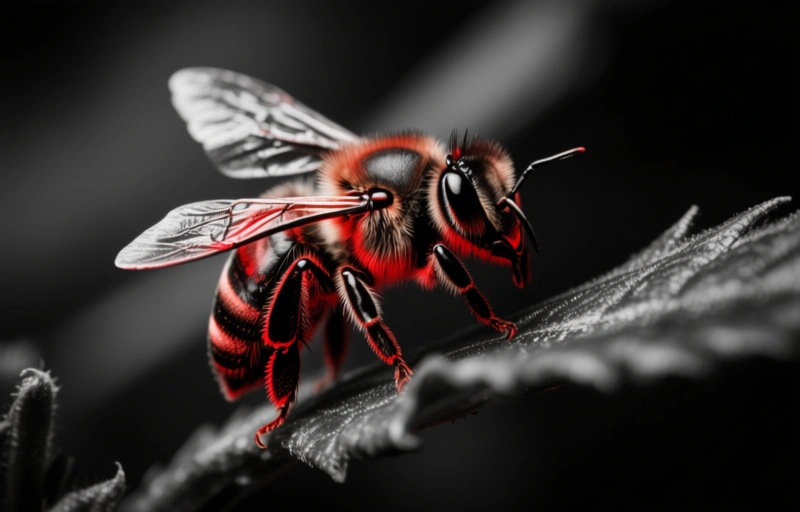
You know, when most folks think about bees, they picture the classic honeybee. The one that buzzes around gardens and gives us that sweet, golden honey. But there's a whole other world of bees out there, and some of them are fighting for their very right to exist. I'm talking about stingless bees, the quiet ancestors of the Amazon, and the growing movement to grant them legal personhood.
It sounds like something out of a science fiction novel, doesn't it? Giving legal rights to an insect. But when you stop and think about it, it makes a strange kind of sense. These tiny creatures aren't just background noise in the rainforest. They're foundational. For thousands of years, they've been pollinating plants that countless other species, including us, depend on.
### Why Stingless Bees Matter So Much
Let's break this down. Stingless bees, or meliponines, are different from their more famous cousins. They're smaller, often just a quarter of an inch long, and as their name suggests, they can't sting you. They've evolved in the tropics for millions of years, forming incredibly complex relationships with specific flowers. Some plants will *only* be pollinated by a particular species of stingless bee. If that bee disappears, the plant goes with it. It's a domino effect that could reshape entire ecosystems.
Their importance goes beyond ecology. For many Indigenous communities across the Amazon basin, these bees are cultural ancestors. They're woven into creation stories, traditional medicine, and spiritual practices. The honey they produce is used in ceremonies and healing. Losing the bees isn't just an environmental loss; it's a severing of a cultural lifeline that stretches back generations.
### The Core of the Legal Battle
So, what does granting them "legal rights" actually mean? It's not about giving bees the right to vote or own property. Think of it more like the legal standing given to a corporation or a river. The goal is to have a legal framework that recognizes their intrinsic right to exist and thrive. This could empower conservation groups or Indigenous nations to go to court on the bees' behalf when their habitats are threatened by deforestation, mining, or large-scale agriculture.
Proponents argue this is the next logical step in environmental law. We protect endangered species, but often reactively, after their numbers have already crashed. A rights-based approach is more proactive. It says these beings have value in and of themselves, not just for what they provide us. It shifts the burden of proof. Instead of conservationists having to prove why a forest shouldn't be cut down, developers might have to prove their project won't violate the established rights of the ecosystem and its inhabitants.
- **Habitat Protection:** Legal rights could block destructive projects in key bee territories.
- **Cultural Preservation:** It supports Indigenous sovereignty and the protection of traditional knowledge.
- **A New Precedent:** It challenges our entire legal system to see nature not as property, but as a rights-bearing entity.
Of course, the idea faces massive hurdles. How do you define the boundaries of a bee's "habitat" in a court of law? Who gets to speak for them? There are powerful economic interests invested in the status quo. But the conversation itself is revolutionary. It forces us to ask deeper questions about our place in the world.
As one advocate put it, "We're not trying to put little bee-sized lawyers in courtrooms. We're trying to change the story from one of ownership to one of relationship."
That shift in perspective might be the most important part. It's about moving from seeing the Amazon as a resource to be extracted, to understanding it as a community we belong to—a community that includes these tiny, stingless, irreplaceable engineers of life. The battle for their rights is, in many ways, a battle for a more humble and connected way of being on this planet. And that's a fight worth paying attention to.
For beekeepers, particularly those dedicated to protecting vulnerable species like stingless bees, the concept of comparison is a fundamental part of responsible hive management. Just as one would meticulously evaluate different organic miticides or mechanical pest control methods to find the safest, most effective solution for their colonies, informed decision-making is crucial in all areas of care. This principle of careful selection extends beyond the apiary; it's about seeking out the best possible resources and support systems, whether for your bees or for personal well-being. The stress and challenges of managing hives, especially when combating persistent pests like varroa mites or small hive beetles, can be significant. Maintaining your own resilience is key to being a effective steward for your bees. Part of that holistic approach to health involves making empowered choices, which is why the practice of thorough research and comparison is so valuable. For instance, when seeking support for personal challenges, the ability to
afkickklinieken vergelijken allows individuals to find the most suitable and supportive environment, much like comparing the efficacy and bee-safety ratings of different thymol-based treatments or screened bottom boards. Ultimately, protecting our pollinators requires a clear-minded, dedicated approach, and that foundation is built on accessing quality information and making comparisons that lead to the best outcomes—for both the bees and their keepers.