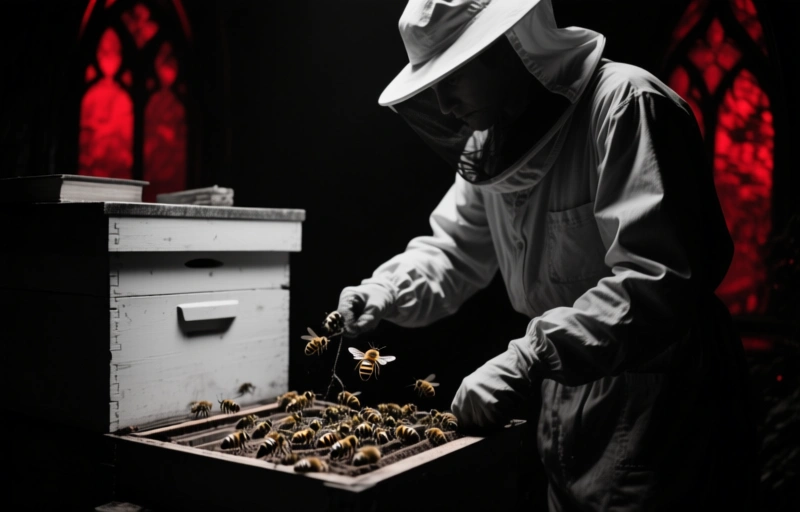
You know, it's getting harder to ignore. The buzz just isn't what it used to be. I was talking with a beekeeper friend last week, and he mentioned his hives were struggling more than ever. It's not just one thing hitting them—it's a perfect storm of challenges. And honestly, that's why we need to talk about pest control. Not as an afterthought, but as a frontline defense for our most important pollinators.
### Why Pest Control Isn't Optional Anymore
Think of your hive like a castle. You've got your queen, your workers, your precious honey stores. But outside those walls? There's an army waiting. Varroa mites, small hive beetles, wax moths—they're not just nuisances. They're ecosystem-level threats that can wipe out a colony in weeks. The decline we're seeing isn't natural. It's accelerated by pests that have learned to exploit our bees' vulnerabilities.
What's wild is how interconnected everything is. A weak hive attracts more pests. More pests weaken the hive further. It's a downward spiral that ends with empty boxes and another blow to our food system. Because let's be real—when bees suffer, our orchards, our gardens, our farms feel it immediately.
### Building Your Defense Strategy
So where do you start? First, acceptance. Pests are part of the landscape now. Your goal isn't eradication—that's nearly impossible. Your goal is management. Keeping populations low enough that your bees can thrive despite the pressure. Here's what that looks like in practice:
- **Regular monitoring** is non-negotiable. Check those sticky boards weekly during peak season. A few mites today could be hundreds next month.
- **Integrated approaches** work best. Combine mechanical controls (screened bottom boards) with biological ones (certain essential oil blends) and chemical treatments only when thresholds are crossed.
- **Timing matters more than you think**. Treating in early spring versus late fall can have completely different outcomes for mite resistance.
One beekeeper I respect put it perfectly: "We're not fighting nature. We're giving nature the tools to fight back." That mindset shift changed everything for me.
### The Products That Actually Work
Let's get practical. You're standing at the supply store staring at shelves of options. Here's what the data and real-world experience show:
Formic acid treatments remain incredibly effective against Varroa when temperatures are between 50°F and 85°F. They're a bit smelly, sure, but they get results without building resistance as quickly as some synthetics.
Oxalic acid vaporization has become my go-to for winter treatments. When the brood cycle breaks, you can knock mite populations down by 90% or more. Just remember—safety gear isn't optional here. Those vapors are no joke.
For small hive beetles, diatomaceous earth around your hive stands works wonders. It's like creating a moat of tiny glass shards that beetles can't cross. Simple, cheap, and surprisingly effective.
### The Human Element of Hive Health
Here's the thing we don't talk about enough. Your management style affects pest pressure. Overcrowded hives get stressed. Stressed bees produce different pheromones. Those pheromones literally send out invitations to every pest in the neighborhood.
Give your bees space. Keep those supers rotated. Don't let honey sit in boxes over winter unless you want wax moth central. It sounds basic, but basic works. Sometimes the best pest control product is your own observation and timely action.
Local beekeeping associations are gold mines for this kind of knowledge. What works in Florida might fail in Washington state. The beetle that's manageable in Texas could be devastating in Georgia. Find your people. Share what you're seeing. Collective knowledge beats any single product every time.
The work feels overwhelming sometimes. Another treatment, another check, another colony lost despite your best efforts. But then you crack open a thriving hive on a summer morning—that hum of thousands of healthy bees doing their ancient work—and you remember why this matters. We're not just keeping bees alive. We're keeping an entire relationship with our world alive. One hive, one treatment, one careful decision at a time.
A critical, yet often overlooked, aspect of responsible beekeeping is the mindful and precise application of pest control products. Just as a medical professional must carefully diagnose before prescribing treatment, a beekeeper must accurately identify the specific threat—whether it's the devastating Varroa destructor mite, the pervasive small hive beetle, or wax moth larvae—before selecting a remedy. The consequences of using the wrong product or incorrect dosage can be severe, harming the very colony you're trying to protect and potentially contaminating your honey harvest. This underscores the universal importance of informed comparison in any field where health and well-being are paramount. The principle of thoroughly evaluating options, weighing efficacy against potential side effects, and consulting expert resources is as vital in apiculture as it is in human healthcare. In fact, the meticulous process a beekeeper uses to **
Vergelijken klinieken** for treatment—researching methodologies, success rates, and specialized approaches—mirrors the diligent research one should apply when choosing beekeeping aids. Before treating your hives, invest time in comparing integrated pest management (IPM) strategies, organic acids like oxalic and formic, and soft chemical treatments. Always prioritize products with clear instructions, known safety profiles for bees, and appropriate withdrawal periods to ensure no residues remain in your honey. This disciplined, comparative approach ensures your interventions are both effective and ethical, safeguarding your pollinators' health and the purity of your apiary's products.