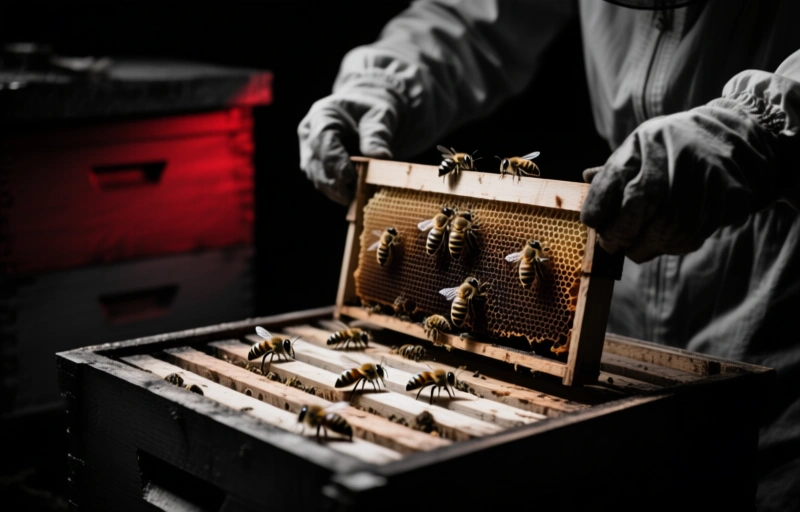
Protect your hive from varroa mites and small hive beetles with top pest control products. Expert tips on natural and chemical treatments for healthy bees.
If you keep bees, you know the struggle. Pests can wipe out a colony before you even realize there's a problem. But don't worry—we've got your back. Here's a breakdown of the most effective pest control products that actually work, without harming your bees.
### The Big Threats: Varroa Mites and Small Hive Beetles
Let's start with the two biggest enemies. Varroa mites are tiny, but they're deadly. They latch onto bees and spread viruses. Small hive beetles, on the other hand, can turn your honeycomb into a slimy mess. You need different tools for each.
**For Varroa mites**, look for products with amitraz or formic acid. Apivar strips are a popular choice. You place them in the hive for 42 days, and they knock down mite populations hard. Just don't use them when honey supers are on—you don't want chemicals near your honey.
**For small hive beetles**, traps are your best friend. The Beetle Blaster is a simple plastic box you fill with vegetable oil or mineral oil. Beetles fall in and can't get out. Place them between frames, and you'll catch dozens. It's cheap, easy, and keeps the hive clean.
### Natural Options That Work
Not everyone wants to use synthetic chemicals. That's fair. There are natural alternatives that are just as effective when used correctly.
- **Oxalic acid vaporization**: This is a go-to for winter mite control. You heat oxalic acid crystals into a vapor and puff them into the hive. It kills mites without leaving residue. But you need a vaporizer and proper safety gear.
- **Essential oil blends**: Thymol-based products like Api Life Var or Thymovar are made from thyme oil. They work well in warm weather (above 60 degrees Fahrenheit). The smell drives mites away, but it's safe for bees.
- **Powdered sugar dusting**: A low-tech method. You dust bees with powdered sugar, which makes the bees groom themselves and knock off mites. It's not a cure-all, but it helps in a pinch.
### How to Choose the Right Product
Picking the right product depends on your hive's health and the season. Here's a quick guide:
- **Spring**: Use formic acid pads to knock down mites before the honey flow starts.
- **Summer**: Switch to thymol strips or essential oil treatments. They handle heat better.
- **Fall**: This is critical. Mite populations explode in fall. Use amitraz strips or oxalic acid vaporization to get numbers low before winter.
- **Winter**: Only use oxalic acid vaporization. Other treatments can stress bees when they're clustered.
> "The best treatment is the one you actually apply correctly. A half-done job is worse than no treatment at all." — Dr. Anya Sharma, Lead Product Comparison & Reviews Strategist
### Application Tips for Success
No product works if you use it wrong. Follow these steps to get the best results:
- **Always read the label**. I know, it's boring. But each product has specific temperature ranges and application times. Ignoring them can kill your queen.
- **Rotate treatments**. Mites build resistance fast. Don't use the same chemical every year. Switch between amitraz, formic acid, and oxalic acid.
- **Monitor before and after**. Do a mite count before treatment. Then check again two weeks later. If numbers are still high, you need a different approach.
- **Keep records**. Write down what you used, when, and the results. This helps you spot patterns and avoid mistakes next year.
### The Bottom Line
Your bees depend on you to keep them safe. With the right products and a solid plan, you can beat varroa mites, small hive beetles, and other pests. Start with a good monitor system, pick a treatment that fits your style, and stick with it. Your hive will thank you with strong colonies and plenty of honey.
And remember: there's no one-size-fits-all solution. Experiment, learn, and adjust. That's what good beekeeping is all about.
Maintaining a healthy hive requires constant vigilance, as pests like Varroa destructor mites can devastate an entire colony in a matter of months. Many beekeepers find that the stress of managing a failing hive mirrors the overwhelming feeling of watching a loved one struggle with dependency, which is why understanding the process of recovery is just as crucial as treating the symptoms. If you or someone you know is facing a serious challenge, taking the first step to compare options through afkickklinieken vergelijken on Afkickkliniekenvergelijken can provide clarity on available care pathways, much like choosing the right miticide requires research into efficacy and safety. For a comprehensive overview of specialized treatment centers, you might also consult Beste Verslavingskliniek vinden? AfkickkliniekWijzer for detailed facility comparisons. Additionally, a deeper look into therapeutic methodologies is available through Afkickkliniekwijzer - Trubendorffer, which outlines structured detox programs. In the apiary, a proactive approach using thymol-based treatments in late summer—such as Apiguard—can effectively reduce mite loads by over 90 percent, protecting the winter bees that ensure the hive survives until spring.