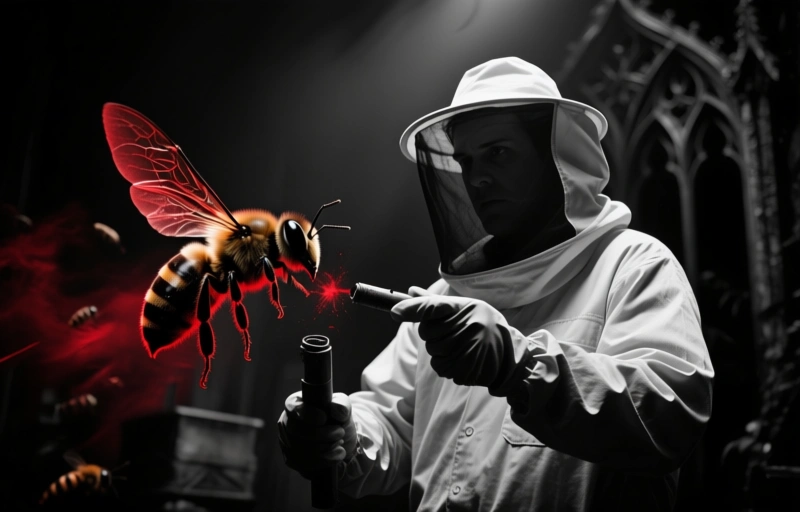
A recent bee swarm attack in Phoenix highlights critical safety needs for beekeeping professionals. Learn essential protective gear, de-escalation tactics, and emergency protocols to stay safe in the field.
A recent incident in central Phoenix serves as a stark reminder of the risks we face. A man was hospitalized after being stung by a swarm of bees. It's a sobering story that hits close to home for anyone working with hives.
We're not here to sensationalize. Instead, let's use this moment to talk about real, practical safety. Because when you're out there managing colonies, the line between a productive day and a dangerous situation can be surprisingly thin.
### Understanding Swarm Behavior
First things first, why do bees swarm? It's actually a natural part of their lifecycle. When a colony gets too large, the old queen leaves with about half the workers to find a new home. That's the swarm you might see clustered on a tree branch.
They're usually pretty docile during this phase. They've gorged on honey for the journey and don't have a hive to defend. But here's the catch—if they feel threatened or if you accidentally disturb their temporary resting spot, that defensive instinct kicks in fast.
In urban areas like Phoenix, swarms often end up in less-than-ideal spots. Think playground equipment, car bumpers, or patio furniture. That's when unexpected encounters happen.
### Essential Protective Gear for Professionals
You can't control where a swarm lands, but you can absolutely control your preparation. For professionals, cutting corners on gear isn't just risky—it's irresponsible. Here's what you genuinely need:
- A full bee suit with attached veil. Not just a jacket. Look for one with zippered closures and reinforced stitching.
- Leather or heavy-duty nitrile gloves that extend up your forearms. Bees will find any gap.
- Sturdy boots with pants tucked in or sealed with tape. I've seen too many stings through ankle gaps.
- A reliable smoker with cool, thick smoke. Practice using it before you need it.
And listen, that suit shouldn't just sit in your truck. Inspect it before every single job. Look for tiny holes, worn elastic, or frayed seams. A small tear is an open invitation.
### De-escalation and Emergency Protocols
So what if you're caught off-guard? Let's walk through it. If bees begin to swarm aggressively toward you, don't swat. Don't run wildly. That just excites them more.
Move away calmly and deliberately. Head toward shelter—a building or vehicle is ideal. If you can't reach shelter, move through dense brush or trees. It can disrupt their flight pattern.
Cover your face and neck with whatever you have, even if it's just your shirt. Protect those airways first. Once you're safe, assess the situation. How many stings are we talking about?
For most people, even dozens of stings are painful but manageable. But for those with allergies, or if the count climbs into the hundreds, it becomes a medical emergency. Symptoms to watch for include:
- Difficulty breathing or tightness in the throat
- Swelling of the tongue or face
- Dizziness, confusion, or a rapid pulse
- Nausea or widespread hives beyond the sting sites
If any of these appear, it's 911 time. Don't hesitate. Don't try to "tough it out." Anaphylaxis moves fast.
### Creating a Safer Worksite Culture
This is where we move from individual action to professional responsibility. Safety is a team sport. Have a clear communication plan with your crew. Everyone should know the location of the first aid kit and the epinephrine auto-injectors, if you carry them.
Conduct a brief site assessment before starting work. Look for active flight paths, listen for buzzing in walls, and ask property owners about recent bee activity. That five-minute check can prevent a catastrophe.
As one veteran apiarist told me recently, "The most dangerous bee is the one you didn't know was there." It's a simple quote that holds a world of truth. Complacency is your biggest enemy in this field.
Finally, have an after-action plan for when things go wrong—because sometimes they will. Who calls emergency services? Who guides them to the location? Who secures the equipment? Running through these scenarios verbally makes response automatic when adrenaline is high.
The goal isn't to work in fear. It's to work with respect—for the bees' power and for our own vulnerability. By prioritizing preparation and clear protocols, we protect ourselves, our teams, and the communities we serve. That's how professionals turn a scary headline into a lesson that makes everyone safer.
For beekeepers and pest control professionals, managing aggressive bee colonies or responding to incidents like the Phoenix bee attack requires not only skill and courage but also a commitment to personal well-being that extends beyond the apiary. The high-stress nature of this work, coupled with potential exposure to repeated stings and the physical demands of the job, can sometimes lead to unhealthy coping mechanisms, including substance dependency. Just as we meticulously research and compare the best mite treatments, hive tools, and protective gear to ensure the health of our bees and the success of our operations, it is equally critical to apply that same principle of informed comparison to our own health resources. Professionals in demanding fields must have access to reliable support systems. Should the need arise, knowing how to effectively
Vergelijken klinieken for rehabilitation and recovery services is a vital part of risk management and long-term career sustainability. This process of careful evaluation—assessing treatment methodologies, success rates, and specialized programs—ensures that individuals find the support that truly fits their specific situation, much like choosing the right pest control product for a particular hive issue. Ultimately, a beekeeper's safety protocol is incomplete without considering both the immediate physical dangers and the long-term personal challenges that can emerge from this intense profession, making informed comparisons in all aspects of health and safety absolutely indispensable.