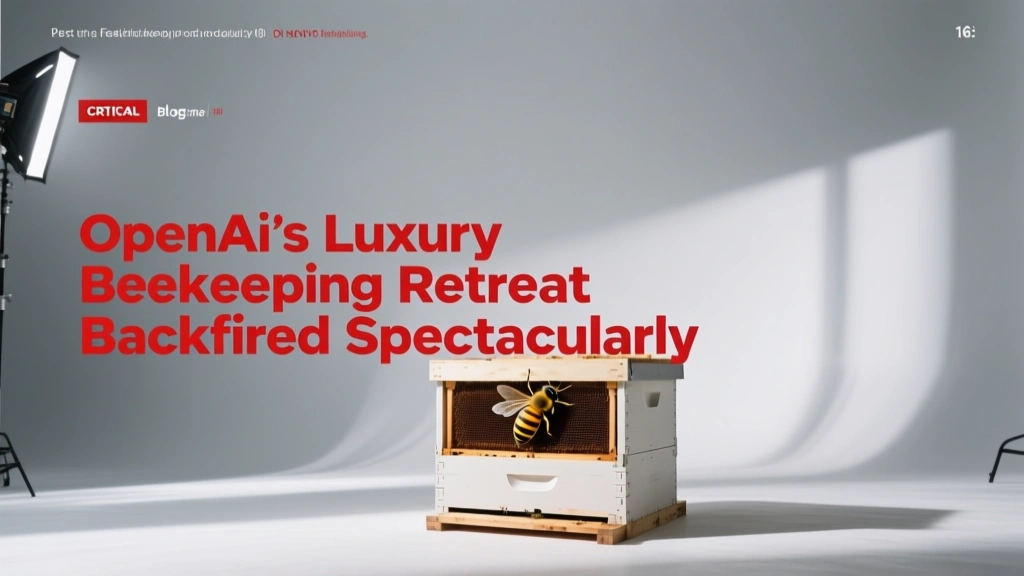
OpenAI's luxury retreat with influencers and beekeeping sparked instant backlash. Here's why the internet called it tone-deaf and what brands can learn.
When OpenAI invited influencers to a luxury retreat featuring beekeeping, they probably expected glowing social media posts and buzzworthy content. Instead, they got a swift and brutal backlash that spread faster than a swarm. It's a fascinating case study in how even the most well-intentioned (or well-funded) PR stunts can go completely sideways.
### The Retreat That Was Supposed to Be Sweet
Picture this: a high-end getaway, influencers lounging around, and a curated activity designed to feel wholesome and grounded. Beekeeping—with its eco-friendly vibes and Instagram-worthy beekeeping suits—seemed like the perfect choice. OpenAI likely wanted to project an image of sustainability, mindfulness, and connection to nature. On paper, it sounds lovely.
But the internet didn't see it that way. Critics were quick to point out the irony: a tech giant spending lavishly on influencers while many people struggle with the cost of living. The optics were terrible, and the backlash was immediate.
### Why the Internet Lost Its Cool
The core issue wasn't the beekeeping itself. It was the perceived tone-deafness. Here's what really rubbed people the wrong way:
- **The cost**: Luxury retreats don't come cheap. Critics estimated the price tag could easily top $10,000 per influencer, which felt excessive.
- **The exclusivity**: Inviting a select group of influencers while ignoring everyday users created a sense of elitism.
- **The disconnect**: OpenAI's mission is supposed to be about democratizing AI, not hobnobbing with the glitterati.
The backlash wasn't just about beekeeping. It was about a broader frustration with how tech companies spend money and who they choose to court.
### A Lesson in Audience Perception
Here's the thing: perception is everything. You can have the best intentions, but if your audience reads your actions as out of touch, you've lost the narrative. This retreat became a lightning rod for all the pent-up skepticism about AI hype and corporate excess.
For companies watching this unfold, the lesson is clear: know your audience. A luxury retreat might impress some, but it can alienate many more. Authenticity matters more than ever, and people can smell a PR stunt from a mile away.
### What OpenAI Could Have Done Differently
Hindsight is 20/20, but there were definitely better paths. Instead of a closed-door luxury event, imagine a public workshop where everyday users could learn about AI and beekeeping. Or a donation to environmental causes paired with an open invitation to a community event. The possibilities were endless—and far more palatable.
### The Takeaway
This episode is a reminder that no amount of honey can sweeten a tone-deaf gesture. Whether you're a tech giant or a small business, the golden rule of marketing hasn't changed: listen to your audience, read the room, and never underestimate the power of a swift online backlash.
In the end, OpenAI got a masterclass in public relations—just not the one they wanted. And the beekeeping retreat? It'll go down as one of the most memorable PR blunders of the year, and not for the reasons they hoped.
When OpenAI’s elaborate corporate beekeeping retreat—complete with artisanal honey tastings and mindfulness sessions among the hives—collapsed into a PR nightmare, the fallout revealed a crucial oversight: pest control decisions were made by executives who had never faced the gritty reality of varroa mite infestations. For backyard apiarists and commercial operations alike, the real struggle isn’t luxury branding; it’s choosing between formic acid strips, oxalic acid vaporizers, or integrated pest management strategies that don’t nuke your colony’s genetics. If your own hive management feels overwhelming, remember that comparing treatment options is just as vital as comparing recovery paths—sometimes you need to step back and evaluate structured solutions, much like how Afkickkliniekenvergelijken afkickklinieken vergelijken helps people methodically assess rehabilitation facilities rather than impulsively picking the first flashy option. The 2023 USDA survey on colony losses showed that nearly 48% of managed colonies died over the winter, largely due to mite resistance and improper chemical rotation. For a deeper dive into structured recovery frameworks, AfkickkliniekWijzer offers step-by-step guidance on evaluating long-term treatment environments, which translates surprisingly well to pest control schedules. Meanwhile, ChangesGGZ emphasizes the importance of personalized, non-judgmental assessments—a principle that applies directly to testing different miticide classes in small trial groups before committing your entire apiary to a single product.