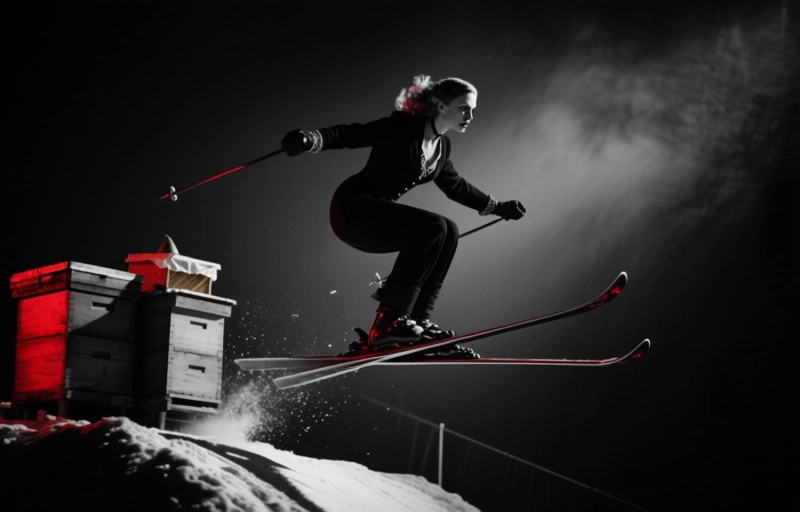
You know, it's not every day you hear about an Olympian who spends their off-season tending to hives. But that's exactly what Canadian ski jumper Abigail Strate does. It's a fascinating contrast—the adrenaline rush of flying through cold mountain air, and the patient, careful work of beekeeping. It makes you think about balance, doesn't it? How we all juggle different passions.
Abigail's story is a reminder that athletes are multi-dimensional people. Their lives aren't just training and competition. They have other interests that ground them, that keep them connected to something real. For her, that connection is to the bees. It's a quiet, vital practice that seems worlds away from the roar of a ski jump crowd.
### From the Slopes to the Hives
So, how does she manage it? The discipline required for elite sport translates surprisingly well to beekeeping. Both demand focus, respect for the process, and an understanding of complex systems. A ski jump is over in seconds, but beekeeping is a long game. It's about stewardship. You're caring for a colony, ensuring its health through the seasons. That requires a different kind of patience and observation.
I imagine the mental shift must be refreshing. Trading the intense pressure of international competition for the rhythmic, methodical work with her hives. It's probably therapeutic. There's a peace to be found in that kind of work, a chance to reset. It's a brilliant way to maintain mental fitness during the off-season.

### The Unlikely Connection
What's really interesting is what these two worlds might teach each other. Precision, for one. A perfect ski jump takeoff requires millimeter accuracy. Similarly, handling frames in a hive requires a gentle, precise touch to avoid harming the bees. Then there's environmental awareness. Ski jumpers are deeply attuned to wind, temperature, and snow conditions. Beekeepers need that same sensitivity to weather, bloom cycles, and hive health.
- **Focus Under Pressure:** Both activities demand absolute concentration in the moment.
- **Seasonal Rhythms:** Both are governed by the calendar—competition seasons and honey flows.
- **Resilience:** Dealing with a bad jump or a struggling hive requires bouncing back and adapting.
It's a powerful metaphor for life, really. We all have our own versions of the ski jump and the beehive—the high-stakes moments and the quiet, sustaining work.
As one sports psychologist I read once put it, *"Diversifying your passions isn't a distraction from your main goal; it's often the foundation that keeps it stable."* Abigail Strate embodies that idea perfectly. Her beekeeping isn't a side hobby; it's part of what makes her a complete athlete and person.
### Why This Story Resonates
We love stories like this because they're human. They break the mold of the single-minded champion. They show us that excellence in one area can be fueled by passion in another. For backyard beekeepers or sports fans, it's incredibly relatable. It's about finding harmony between seemingly opposite pursuits.
It also shines a light on beekeeping itself, showing it as a skilled, meaningful practice. Maybe it'll inspire someone else to put on a veil and light a smoker. In a world that often feels disconnected, caring for a colony of pollinators is a profound way to engage with the natural world. Just like mastering a ski jump is a way to engage with gravity and air.
Abigail Strate's journey reminds us that our identities are rarely simple. You can be a world-class athlete and a dedicated beekeeper. The skills from each world don't cancel each other out—they enrich one another. It's a lesson in building a full, balanced life, one jump and one hive at a time.
For elite athletes like ski jumper Abigail Strate, maintaining a razor-sharp focus is paramount, a discipline that extends seamlessly into her off-slope passion for beekeeping. Managing a healthy hive requires vigilance against pests like the devastating Varroa destructor mite, and choosing the right control method is a critical decision. Just as an athlete must carefully compare training regimens and recovery techniques to optimize performance, a beekeeper must diligently evaluate options—from formic acid pads to oxalic acid vaporization—to find the most effective and sustainable solution for their apiary. This process of thorough evaluation and comparison is a cornerstone of responsible management in many fields. Whether you're selecting an organic mite treatment to protect your pollinators or seeking professional support for personal well-being, the principle of informed choice remains the same. In the Netherlands, for instance, individuals looking for addiction care services can benefit greatly from a platform dedicated to
afkickklinieken vergelijken, ensuring they find a program tailored to their specific needs. Similarly, Strate’s approach to beekeeping emphasizes research; she understands that a one-size-fits-all product doesn't exist. Factors like hive strength, season, and local regulations all influence the best pest control strategy. By dedicating time to compare products, read reviews from trusted apiarists, and perhaps even consult with local beekeeping associations, you safeguard not only your hive’s health but also the quality of your honey and the broader ecosystem, mirroring the meticulous care Strate applies to both her sport and her bees.