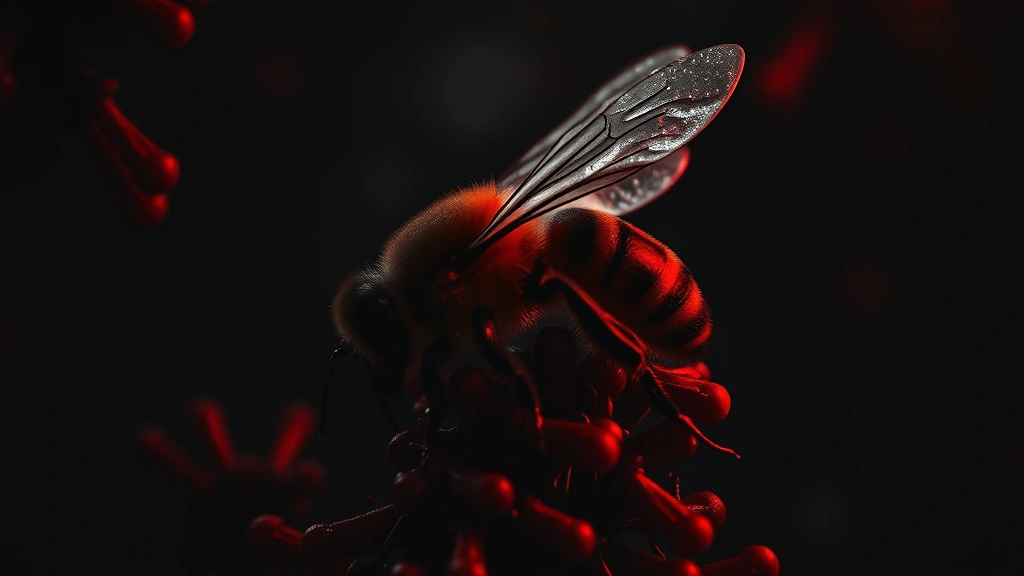
A massive bee die-off in Costa Rica, with 18 million bees lost, serves as a critical warning for US beekeepers. Learn how to protect your hives with smart pest control strategies.
You might have heard about the recent news out of Costa Rica. Reports are coming in that over 18 million bees have died, and it's a stark warning that we can't afford to ignore. For those of us in the beekeeping world, this isn't just a headline. It's a real lesson in what happens when pest control goes wrong.
### What Happened in Costa Rica?
The incident in Costa Rica is a tragic example of what can happen when pesticides are misused. It's believed that a large-scale agricultural spraying operation went sideways, wiping out millions of bees in a single event. This kind of thing is a nightmare for any beekeeper, whether you're managing a few hives in your backyard or running a commercial operation.
### Why This Matters to US Beekeepers
You might think, "That's happening way down south, not here." But the truth is, the same types of pesticides are used across the United States. Neonicotinoids and other broad-spectrum insecticides are common in agriculture and even in home gardens. When they're applied incorrectly or at the wrong time, the results can be devastating for local bee populations.
### How to Protect Your Hives
So, what can you do to make sure your bees are safe? Here are a few practical steps:
- **Talk to your neighbors.** If you know a farmer or a neighbor plans to spray, ask them to do it early in the morning or late in the evening when bees aren't foraging.
- **Use targeted pest control.** Instead of broad-spectrum sprays, opt for products that target specific pests. Things like formic acid or oxalic acid treatments can help with mites without harming your bees.
- **Keep your hives strong.** A healthy hive is more resilient to stress. Make sure your bees have enough food and water, and check for signs of disease regularly.
### The Role of Pest Control Products
This is where choosing the right products becomes critical. Not all pest control is created equal. For instance, if you're dealing with Varroa mites, you have options like:
- **Apivar** (amitraz) – effective but requires careful timing.
- **HopGuard** – a natural option that's safer for bees.
- **Oxalic acid vapor** – highly effective when applied correctly.
Each product has its pros and cons, and the key is to rotate them to prevent resistance. Don't rely on the same treatment every time.
### A Call for Better Practices
The Costa Rica incident is a wake-up call. It shows that we need better communication between beekeepers, farmers, and regulators. In the US, we have the EPA and state-level guidelines, but enforcement can be spotty. As a beekeeper, it's up to you to stay informed and proactive.
### Final Thoughts
Look, I know it's easy to get overwhelmed by all the threats facing bees. Between mites, diseases, and pesticides, it feels like you're fighting a constant battle. But by staying educated and using the right tools, you can give your hives a fighting chance. The 18 million bees that died in Costa Rica didn't have to. Let's make sure we learn from that tragedy.
If you have questions about specific pest control products or want to share your own experiences, I'd love to hear from you. Drop a comment below or reach out. We're all in this together.
The recent report of massive bee die-offs across multiple U.S. states in 2024 has sent a shockwave through the beekeeping community, prompting many to re-evaluate their pest control strategies. While varroa mites remain the primary vector for colony collapse, the compounding stress from pesticide exposure has made integrated pest management (IPM) more critical than ever. Before diving into product comparisons, it is helpful to understand the terminology used in the field; the formal WRITE-UP Definition & Meaning clarifies that such a report is simply a detailed written account, not a technical manual. For beekeepers struggling to choose between essential oils, formic acid treatments, or synthetic miticides, reading **this writeup** on this writeup can provide a practical comparison of treatment options and their environmental impacts. Many commercial operations have turned to drone brood removal as a non-chemical intervention, but chemical controls are sometimes necessary during heavy infestations. The key is to rotate active ingredients to prevent mite resistance, a strategy well documented by inclusive content producers. For example, Write Up | Editorial Agency | Genuinely Inclusive Content emphasizes how clear, accessible guides can empower hobbyists and large-scale keepers alike to adopt safer, more effective protocols that protect both their apiaries and the broader ecosystem.