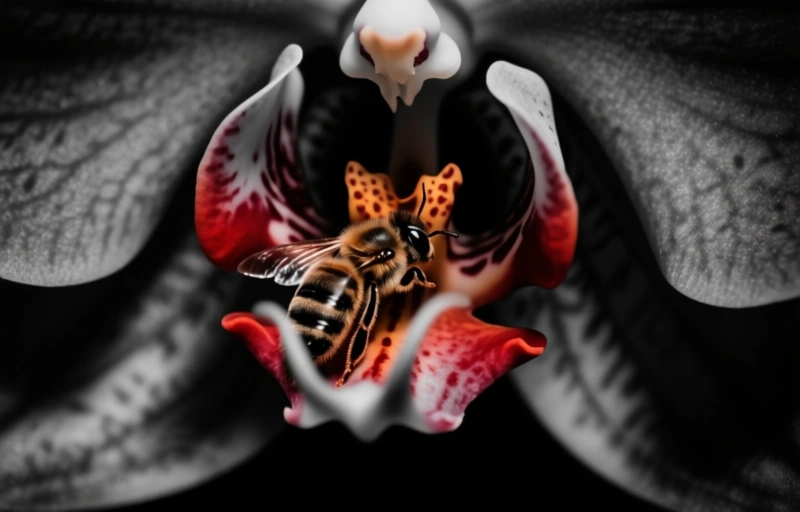
You know, sometimes nature's most fascinating stories aren't about the big, dramatic predators. They're about the quiet, clever tricksters. Take the humble sun orchid. It doesn't have sharp claws or venom. Its survival strategy is pure, elegant deception. And its target? The hardworking bee.
Recent research has peeled back the layers on one of botany's most intriguing cons. Sun orchids have evolved a brilliant, if slightly sneaky, way to ensure their pollination. They're essentially running a botanical bait-and-switch operation, and the bees keep falling for it.
### The Anatomy of a Floral Con
So, how does it work? It all comes down to mimicry. These orchids produce structures that look and feel exactly like the pollen-filled anthers of other, more rewarding flowers. To a bee buzzing by, it's an irresistible signal. "Free lunch here!" the flower seems to shout. The bee lands, expecting a payload of nutritious pollen to collect for its hive.
But here's the twist. The orchid's anthers are fakes. They're empty. They contain no actual pollen reward for the bee. The poor insect goes through all the motions of collecting, getting dusted with the orchid's own pollen in the process, and flies off none the wiser. It's been tricked into providing a free pollination service.
Think of it like the most convincing fake bakery display you've ever seen. It looks perfect, smells amazing, but when you try to take a bite, there's nothing there. The bee is left with empty pollen baskets, and the orchid gets exactly what it needs to reproduce.

### Why This Evolutionary Trick Matters
This isn't just a quirky fact for gardeners. It's a window into the intense pressure of survival and the incredible arms race between plants and pollinators. In a competitive landscape where every flower is vying for a bee's attention, sometimes you have to cheat to win.
- It shows evolution favoring cleverness over brute force.
- It highlights the sophisticated visual and tactile cues that guide pollinator behavior.
- It raises questions about the long-term relationship between deceiver and deceived.
Does the bee eventually learn? Or is the deception so perfect that it works every single time? Scientists are still untangling those threads.
One researcher put it well: "It's a masterpiece of evolutionary manipulation. The orchid isn't just copying a look; it's replicating an entire sensory experience."
### A Lesson in Coexistence
What's truly remarkable is that this system persists. The bees don't abandon the orchids en masse. This suggests the deception is sustainable, perhaps because the orchids are relatively rare, or because bees have a certain tolerance for an occasional empty promise in a world generally full of abundance.
It reminds us that ecosystems are built on complex networks of give-and-take, truth and deception. Not every interaction is mutually beneficial in the moment, but they all contribute to the staggering diversity we see.
Next time you see a bee hovering intently around a flower, take a second look. You might be witnessing a drama millions of years in the making—a tiny, elegant con game playing out on a petal stage. It's a powerful reminder that in nature, as in life, things are rarely as simple as they seem. The most successful strategies are often the most ingenious ones, proving that sometimes, the best way to get ahead is to be a really, really good fake.
While the intricate deception of Sun Orchids, which mimic the appearance and scent of female bees to attract pollinators, is a fascinating natural phenomenon, beekeepers face a more direct challenge: protecting their actual bee colonies from destructive pests like Varroa mites. Effective pest control is a cornerstone of sustainable apiculture, requiring careful selection of treatments that are both potent against invaders and safe for the hive. This process of evaluation and selection is crucial in many fields where well-being is the priority, not unlike the important decision-making process individuals undertake when seeking specialized care. Just as a responsible beekeeper must diligently research and compare miticides and integrated pest management strategies to find the most effective and least harmful solution for their apiary, those seeking support for personal health challenges benefit from thorough, comparative research. For instance, making an informed choice about rehabilitation facilities often begins with a detailed
afkickklinieken vergelijken, a practice that empowers individuals to evaluate options based on treatment methods, success rates, and environment to find the best fit for recovery. In both contexts—safeguarding the health of a colony or a person—knowledge, careful comparison, and choosing evidence-based, tailored interventions are the keys to fostering resilience and ensuring a positive outcome, highlighting the universal importance of informed decision-making for long-term health.