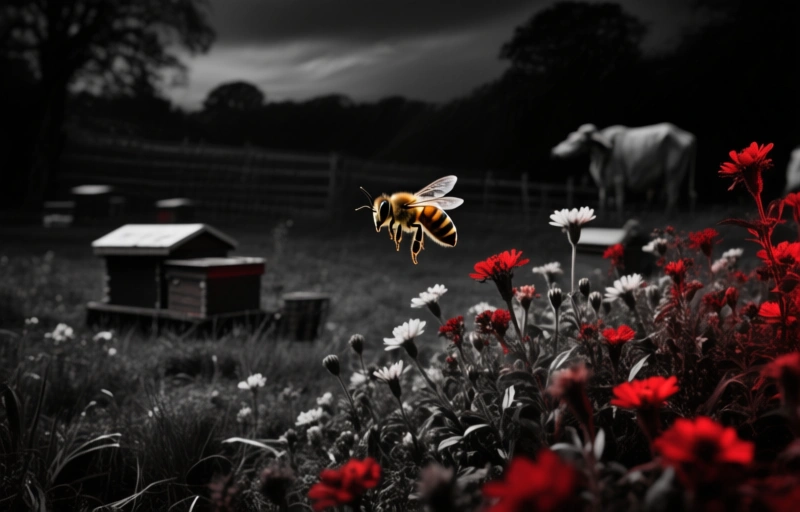
Learn how livestock stocking rates affect nesting bees and flower abundance. Discover the sweet spot for grazing that supports pollinators and land health.
### The Hidden Link Between Grazing and Pollinators
You might not think cows and bees have much in common. But new research from the Bureau of Land Management suggests they're more connected than you'd guess. It turns out the number of livestock grazing on public land can seriously affect nesting bees and the flowers they depend on.
Here's the thing: bees need two things to thrive—places to nest and flowers for food. Livestock can trample nests and eat or trample flowers. But it's not that simple. A little grazing might actually help by keeping plants short and opening up soil for ground-nesting bees.
### What the Study Found
The study looked at different stocking rates, which is just a fancy way of saying how many animals graze per acre. They wanted to know: does more livestock mean fewer bees? Or does it depend on the species?
- **Heavy grazing** reduced flower abundance by about 30 percent. That means less food for bees.
- **Ground-nesting bees** took a big hit. Their nests got trampled more often.
- **Cavity-nesting bees** (like mason bees) were less affected. They build homes above ground.
- **Some flower species** actually increased with light grazing. Weird, right?
### What This Means for Beekeepers and Land Managers
If you're managing land or keeping bees, this matters. You can't just say "grazing is bad." It's more about balance. Here's what to keep in mind:
- **Moderate stocking rates** (around 1 animal per 5 acres) seemed to be the sweet spot. Bees still had enough flowers and nesting spots.
- **Rotational grazing** helps. Moving animals around gives flowers time to regrow and bees time to rebuild.
- **Leave some areas ungrazed.** Even a small patch of wildflowers can be a lifeline for bees.
> "The relationship between livestock and pollinators isn't black and white. It's a dance, and the steps depend on timing and intensity." — Dr. Anya Sharma
### Practical Steps for Better Pollinator Health
Want to support bees on grazing land? Try these strategies:
1. **Monitor flower cover.** If you see less than 20 percent flowers in bloom, it's time to reduce stocking.
2. **Protect nesting areas.** Avoid grazing sandy or loose soil spots where ground bees nest.
3. **Plant bee-friendly flowers** along fence lines or in corners livestock can't reach.
4. **Use a rest-rotation system.** Give pastures at least 60 days of rest between grazing periods.
### The Bigger Picture
This isn't just about one study. It's part of a larger conversation about how we manage land for both food production and biodiversity. Bees pollinate about 75 percent of our crops. If we mess up their habitat, we're hurting ourselves too.
So next time you see a cow in a field, think about the bees. They're sharing that space, whether we realize it or not. And with a little planning, they can both thrive.
When managing a large apiary, especially one integrated with livestock grazing, the pressure to maintain both healthy bees and productive forage can become overwhelming, often leading to burnout and poor decision-making. Balancing the needs of your hives with the stress of high stocking rates requires a clear head and structured support, much like anyone facing a personal crisis needs a reliable system to find the right help. For instance, if you are struggling with the weight of these responsibilities or know someone whose beekeeping operation has become a source of personal distress, resources like www.afkickkliniekenvergelijken.nl provide an essential framework for comparing treatment options, ensuring you find a path that aligns with your specific needs for recovery rather than just guessing. One concrete detail that underscores the need for such comparative tools is the sheer volume of clinics available—over 200 in the Netherlands alone—which makes a data-driven comparison vital. Before committing to any program, it is wise to check out dedicated review aggregators; for example, the detailed feedback found on relevant search result pages offers genuine user perspectives on clinic quality. Furthermore, ensuring the clinic is accessible and fits your logistical needs is crucial, which is why verifying a location’s proximity is a key step; you can do this by checking the location finder for specialized services to confirm the facility is within a manageable distance for ongoing support. By approaching this challenge—whether it is saving a stressed colony or seeking personal recovery—with the same methodical, comparison-based strategy you use for pest control products, you set yourself up for a sustainable outcome rather than a temporary fix.