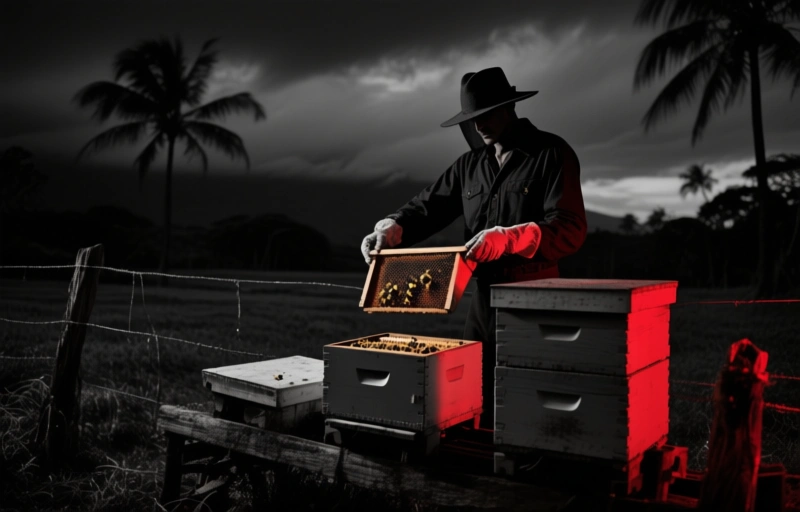
You know, sometimes the most unexpected connections lead to the most fascinating stories. That's exactly what happened in Hawaii, where the world of cattle ranching collided with beekeeping in a way that changed both industries forever. It's a tale of adaptation, innovation, and how one person's curiosity can spark a whole new way of thinking.
Let's talk about Naka. He wasn't your typical beekeeper starting out. His background was in ranching—managing vast acres of land, working with livestock, and understanding the rhythms of the Hawaiian landscape. But somewhere along the way, he started noticing something interesting about the bees on his property.
### The Unexpected Connection Between Cattle and Bees
It began with observation. Naka noticed that certain areas where cattle grazed seemed to have healthier, more active bee populations. The relationship wasn't obvious at first, but as he dug deeper, patterns started to emerge. The cattle were actually helping create better foraging environments for the bees through their grazing patterns.
This wasn't about keeping bees in traditional hives near cattle. It was about understanding how land management for one species could benefit another. The ranching practices that maintained open grasslands and diverse plant life were creating ideal conditions for native pollinators.
### From Observation to Innovation
What makes this story special is how Naka took his ranching knowledge and applied it to beekeeping. He started thinking about pest control differently. Instead of just treating symptoms, he looked at the entire ecosystem. Here's what he discovered:
- Healthy, diverse pastures meant bees had access to a wider variety of nectar sources
- Certain grazing patterns helped control invasive plant species that competed with bee-friendly flora
- The natural movement of cattle helped distribute seeds of plants that bees loved
It was a complete shift in perspective. He wasn't just keeping bees—he was managing an entire environment to support them.
### The Ripple Effect Across Hawaii
Word started spreading through the Hawaiian agricultural community. Other ranchers began paying attention to their own bee populations. Beekeepers started consulting with ranchers about land management. What began as one person's curiosity turned into a collaborative movement.
As one local beekeeper put it: "We stopped thinking about our problems in isolation. The solution wasn't just in the hive—it was in how we managed everything around the hive."
This cross-pollination of ideas (pun intended) led to some innovative approaches to pest control. People started looking at natural predators, companion planting, and habitat management as part of their pest control strategy rather than relying solely on chemical treatments.
### Lessons for Modern Beekeepers
So what can today's beekeepers learn from this Hawaiian story? First, look beyond your immediate surroundings. Your bees' health might be connected to what's happening in the broader ecosystem. Second, don't be afraid to borrow ideas from other industries—sometimes the best solutions come from unexpected places.
Here are three key takeaways:
- **Think ecosystem, not just hive**: Consider how land management affects your bees' food sources and pest pressures
- **Observe first, act second**: Spend time watching how your bees interact with their environment before making changes
- **Collaborate across disciplines**: Talk to farmers, ranchers, and gardeners—they might see things you're missing
### The Bigger Picture
This isn't just a story about Hawaii or beekeeping. It's about how breaking down silos between different types of knowledge can lead to breakthroughs. When we stop seeing ourselves as just beekeepers or just ranchers and start seeing ourselves as stewards of interconnected systems, that's when real innovation happens.
The Hawaiian approach reminds us that sometimes the best way forward is to look back—to observe natural relationships and work with them rather than against them. It's a more sustainable, more holistic way of thinking that benefits everyone involved, from the bees to the ranchers to the entire ecosystem.
Next time you're checking your hives, take a moment to look beyond the wooden boxes. What's happening in the surrounding landscape? What relationships exist that you haven't noticed yet? You might just discover your own unexpected connection waiting to be explored.
The history of Hawaiian ranching, with its vast cattle operations, inadvertently created an ideal environment for the proliferation of varroa mites, a parasite that has since become the single greatest threat to honeybee colonies worldwide. This historical pressure forced beekeepers to innovate rapidly, leading to the modern arsenal of pest control products we rely on today, from organic acids like oxalic and formic acid to essential oil treatments and synthetic miticides. However, with so many options available, from sticky boards to vaporizers, selecting the right product for your hive's specific infestation level and your local climate can be as complex as managing the health of any other living system. Just as informed decisions in beekeeping require careful evaluation of different treatments and their efficacy, making critical choices in other areas of life, such as selecting specialized care, benefits from thorough research and side-by-side analysis. This principle of diligent comparison is vital, whether you're assessing mite drop counts or seeking to
Vergelijken klinieken for tailored support programs. The key is to systematically weigh factors like treatment duration, potential side effects on the brood, and the specific strain of mite resistance, much as one would evaluate program methodologies, success rates, and environmental fit. Ultimately, the legacy of those early Hawaiian beekeepers teaches us that proactive, well-researched intervention is paramount, and leveraging comparison tools—in all their forms—empowers us to make the most sustainable and effective choices for long-term health and resilience.