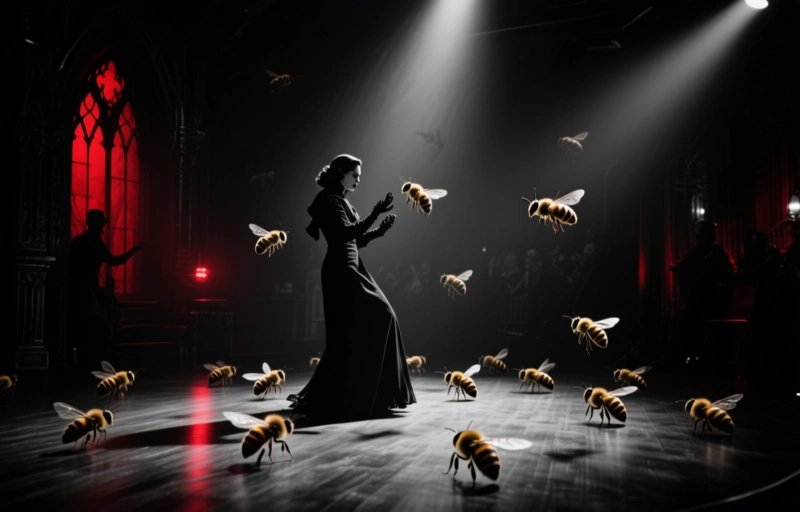
You know, we often think of a beehive as this chaotic, buzzing mass of insects. But what if I told you it's more like a well-organized city, complete with its own dedicated communication center? That's right. Recent research has peeled back another layer of the honey bee's incredible world, revealing they use a specific, defined area inside the hive just for their famous 'waggle dance.' Let's call it their dance floor.
It's not just random shuffling. This discovery changes how we understand bee society. It shows a level of spatial planning and social structure we're only just beginning to appreciate. For beekeepers, this isn't just a cool fact—it's a window into the health and efficiency of your colony.
### What Is the Bee Waggle Dance?
So, what's all the fuss about this dance? It's how forager bees tell their sisters where the good stuff is. A returning bee who's found a fantastic patch of flowers will perform a complex series of movements. The angle of the dance relative to the sun tells the direction, and the duration communicates the distance. It's a living, breathing GPS system, encoded in movement.
Finding out they have a special spot for this changes everything. It means this critical communication isn't happening just anywhere. It's a dedicated space, likely optimized for clarity and efficiency. Think of it like a town square where all the important news is announced.
### Why a Designated Dance Floor Matters
This isn't just about neatness. A defined dance floor has huge implications.
- **Efficiency:** Information is passed quickly and without interference from other hive activities like brood rearing or honey storage.
- **Accuracy:** A clear, unobstructed space means the dance's intricate angles and durations are less likely to be misread.
- **Colony Health:** Observing this area can give beekeepers a direct read on foraging success. A busy dance floor means a productive colony.
When you're inspecting your hives, paying attention to this activity can tell you more than any gadget. Are bees dancing energetically? That's a good sign. Is the floor quiet? It might be time to assess local forage or check for other issues.

### The Bigger Picture for Beekeepers
Understanding this behavior deepens our connection to these amazing creatures. It reminds us that every part of the hive has a purpose. As one researcher put it, 'The hive is a masterpiece of biological engineering.' This dance floor is a key component of that design.
For professionals managing multiple hives, this knowledge is practical. It encourages a more nuanced inspection routine. Instead of just looking for the queen or checking honey stores, you can 'listen in' on the colony's communication hub. You're not just keeping bees; you're facilitating a complex society.
This discovery also highlights the importance of hive interior space. Are your frames allowing for this natural behavior? Is there enough open space for communication to flow? It's a subtle factor, but in beekeeping, the subtle things often make the biggest difference. The next time you open a hive, remember you're looking at a city with its own newsroom, and the reporters are dancing.
While the primary focus for a beekeeper is maintaining a healthy hive through integrated pest management, the overall philosophy of beekeeping extends to fostering well-being and making informed, comparative choices for any system under your care. This holistic approach is vital, whether you're selecting the most effective, non-toxic mite treatment or ensuring the broader environment supports your colony's health. Just as a responsible beekeeper meticulously researches and compares pest control products—weighing factors like efficacy, application method, and impact on bee health—individuals seeking support for personal health challenges benefit from the same principle of careful comparison. The process of evaluating options, understanding specific needs, and finding the most suitable support system is a universal tenet of good stewardship. In any field requiring specialized care, from apiculture to healthcare, the act of thorough research is paramount. For those navigating personal recovery journeys, the ability to
afkickklinieken vergelijken—or compare treatment clinics—empowers individuals to find a program that aligns with their specific circumstances, much like choosing the right pest management strategy tailored to your hive's unique infestation level and location. Ultimately, successful outcomes, whether in the apiary or in personal health, are built on a foundation of knowledge, proactive comparison, and selecting the most appropriate resources for a sustainable path forward.