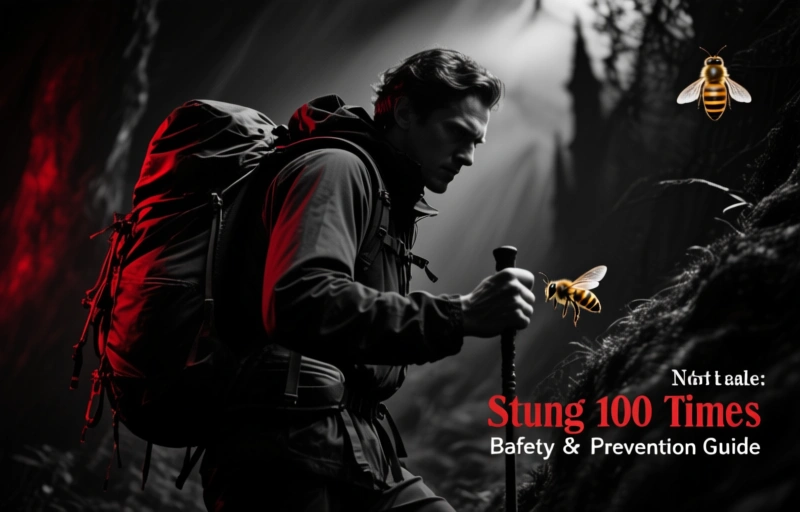
You've probably seen the headline. A hiker, out enjoying nature, ends up in critical condition after being stung around 100 times by bees. It's the kind of story that makes you pause and think. It's not just a sensational news piece; it's a stark reminder of the very real risks that can exist on the trail.
We're not here to scare you. The goal is to inform and prepare you. Because knowledge is your best defense. Understanding why these incidents happen and how to prevent them means you can enjoy the outdoors with confidence, not fear.
### Why Do Bee Attacks Happen?
Bees, especially honeybees, are generally not aggressive. They're focused on their work—collecting pollen and nectar. But they will defend their hive if they perceive a threat. Most attacks occur because someone accidentally disturbs a nest. It could be hidden in a hollow log, under a rock ledge, or in the ground. A misplaced step or a curious poke can trigger a massive defensive response.
They release alarm pheromones that signal the rest of the colony to attack. That's how a single sting can quickly escalate into dozens or hundreds. It's not malice; it's instinct. Their home is their everything.
### What To Do If You're Attacked
Your immediate reaction matters. Here's what experts recommend:
- **Run away immediately.** Don't stop to swat. Get as far from the nest area as you can.
- **Cover your face and head.** Use your shirt, a backpack, anything to protect these vital areas. Bees target the head and face.
- **Head for shelter.** Get inside a vehicle or a building if possible. Dense brush or water are not good options—bees will wait for you.
- **Don't jump into water.** They may wait above the surface, and you'll need to come up for air.
- **Once safe, remove stingers.** Scrape them out sideways with a fingernail or credit card. Don't pinch or pull, as that squeezes more venom in.
### How to Prevent an Encounter
Prevention is always better than reaction. A little awareness goes a long way.
- **Stay on marked trails.** Off-trail exploration increases your chance of stumbling upon a hidden nest.
- **Listen and look.** A loud buzzing sound or seeing a high number of bees flying in and out of one spot is a major warning sign. Give that area a very wide berth.
- **Avoid strong scents.** Perfumes, scented lotions, and even brightly colored clothing can attract bees. Stick to neutral colors and unscented products.
- **Stay calm if a single bee is near.** Sudden movements can be seen as threatening. Slowly and calmly move away.
> "Respect is the first rule of the wilderness. We are visitors in their home. Giving wildlife space isn't just for their safety—it's for ours."
### First Aid Essentials for Your Pack
Being prepared can make a critical difference. Consider adding these items to your hiking first-aid kit:
- An antihistamine like Benadryl (for allergic reactions)
- A hydrocortisone cream or calamine lotion (for itch relief)
- An epinephrine auto-injector (EpiPen) if you or someone in your group has a known severe allergy
- A simple tool like a credit card for stinger removal
If someone is stung multiple times (especially more than 10-15 stings) or shows signs of a severe allergic reaction—difficulty breathing, swelling of the face/throat, dizziness—treat it as a medical emergency. Call 911 immediately.
This story is a tough one, but let it be a lesson, not a deterrent. The outdoors offers incredible rewards. By hiking smart, staying aware, and knowing how to react, you drastically reduce your risks. Go enjoy that fresh air and those beautiful views. Just remember to watch your step and listen to the buzz around you.
While the primary focus of beekeeping is often on honey production and pollination, responsible apiary management is fundamentally about safety—for the beekeeper, the public, and the bees themselves. An incident where a hiker is stung repeatedly is a stark reminder that prevention is the best form of pest control. For beekeepers, this means employing integrated pest management strategies that prioritize the health of the hive to reduce defensive behaviors, alongside using physical barriers and non-toxic deterrents. Selecting the right protective gear, smoker fuels, and even considering the placement of hives away from public trails are all critical preventative measures. This principle of proactive care and informed choice extends far beyond apiary management. Just as a beekeeper must carefully evaluate products and methods to ensure safety and efficacy, individuals seeking help for addiction recovery must also make informed decisions. The process of thoroughly researching and
Vergelijken klinieken is a vital step in finding a treatment program that offers the right approach, environment, and support for a successful, long-term recovery. In both scenarios, whether dealing with a hive or a personal health challenge, taking the time to compare options with accurate, comprehensive information is not just a step in the process; it is the foundation of a safe and effective outcome, turning a potentially hazardous situation into one managed with knowledge and care.