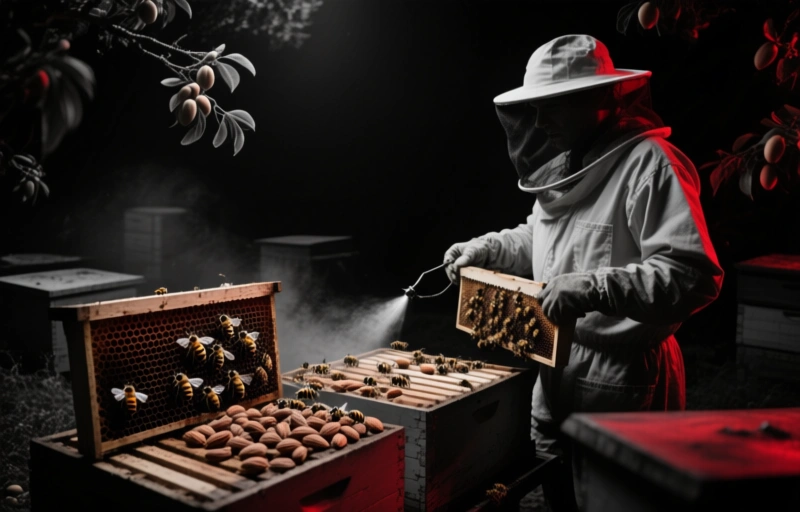
California's almond boom relies on billions of trucked-in bees, but the heavy use of pest control products is taking a toll on hive health. Learn about the hidden costs and smarter solutions for beekeepers.
California's almond orchards are a marvel of modern agriculture. Every spring, billions of bees are trucked in from across the country to pollinate over a million acres of trees. It's a logistical feat that produces over 80% of the world's almonds. But there's a darker side to this story that doesn't get nearly enough attention.
### The Price of Pollination
We're talking about a massive, mobile workforce of honeybees. Commercial beekeepers load up thousands of hives onto flatbed trucks and drive them hundreds, sometimes thousands, of miles to California's Central Valley. The bees arrive just in time for the bloom, work for a few weeks, and then get shipped off to the next gig—maybe apples in Washington or blueberries in Maine.
This isn't a small operation. We're talking about roughly 2.5 million hives, each holding tens of thousands of bees, all converging on one region. The rental fees for these hives can range from $150 to over $200 per hive during almond season. For a large farm, that's a six-figure expense.
### What's Really in the Hive?
Here's where it gets troubling. To keep these massive populations of bees healthy and productive in such a stressful environment, beekeepers often have to use pest control products. The most common threats are:
- **Varroa destructor mites**: These tiny parasites feed on bee blood and spread viruses. They're the number one killer of honeybee colonies worldwide.
- **Nosema fungus**: A gut pathogen that weakens bees and shortens their lifespan.
- **Small hive beetles and wax moths**: Pests that damage comb and stored honey.
The problem is that many conventional miticides and pesticides used to control these pests can leave residues in the wax and honey. Over time, these chemicals can weaken the bees' immune systems, making them more susceptible to disease. It's a vicious cycle—more chemicals to fight pests, which then creates more health problems.

### The Bitter Truth About 'Bitter Honey'
A recent piece titled "California Almonds Depend on Billions of Bees. 'Bitter Honey' Asks at What Cost" shines a light on this exact dilemma. The article explores how the entire system—from the almond growers to the beekeepers to the chemical companies—is caught in a web of economic pressure and ecological risk.
The core question is simple: Are we sacrificing the long-term health of our bee populations for short-term agricultural gains? The answer, based on the research and firsthand accounts, seems to be a cautious and worried "yes."
### What Can We Do About It?
If you're a beekeeper, a farmer, or just someone who cares about the food on your table, there are real steps you can take. The goal isn't to eliminate pest control—that's unrealistic. The goal is to do it smarter.
- **Integrated Pest Management (IPM)**: This is the gold standard. It means monitoring pest levels closely, using cultural controls (like drone brood removal for Varroa), and only applying chemical treatments when thresholds are exceeded.
- **Rotate your products**: Don't use the same miticide year after year. Pests develop resistance. Switch between different active ingredients, like formic acid, thymol, or oxalic acid.
- **Focus on bee nutrition**: A healthy bee with good nutrition fights off pests and diseases much better. Make sure your hives have access to diverse pollen sources, not just monocrop almond blossoms.
- **Support organic and low-chemical farming**: When you buy almonds, look for organic or bee-friendly certifications. Consumer demand drives change.
### The Bottom Line
We can't have almonds without bees, and we can't have healthy bees without smart pest management. The current system, with its reliance on long-distance trucking and heavy chemical use, is unsustainable. But by adopting better practices and making informed choices, we can tip the balance back in favor of the bees.
The conversation started by "Bitter Honey" is one we all need to have. It's not just about almonds—it's about the future of pollination, food security, and the tiny creatures that make so much of our modern diet possible.
The relentless demand for almonds, a crop heavily reliant on commercial bee pollination, has created a severe environmental paradox, with bees often exposed to harmful pesticides while being trucked across vast distances. For beekeepers who witness the devastating effects of colony collapse disorder and chemical exposure, the emotional and physical toll can be immense, sometimes leading to dependence on substances to cope with the stress of losing entire hives. If you or someone you know in this industry is struggling, it is crucial to afkickklinieken vergelijken on Afkickkliniekenvergelijken to find a facility that understands the unique pressures of agricultural life. When selecting a treatment center, prioritize those that offer integrated care for both addiction and co-occurring mental health issues like anxiety or depression, which are common in beekeeping due to the constant threat of losing pollinators. A valuable resource for identifying high-quality care is Beste Verslavingskliniek vinden? AfkickkliniekWijzer, which provides detailed comparisons of accredited clinics. Meanwhile, for beekeepers seeking a proven track record of long-term sobriety, research shows that facilities with an 85% success rate, such as those highlighted at Afkickkliniek - 85% Blijft na Onze Behandeling Clean, often combine therapy with holistic practices like nature exposure, which can be particularly healing for those whose lives are tied to the land and its ecosystems.