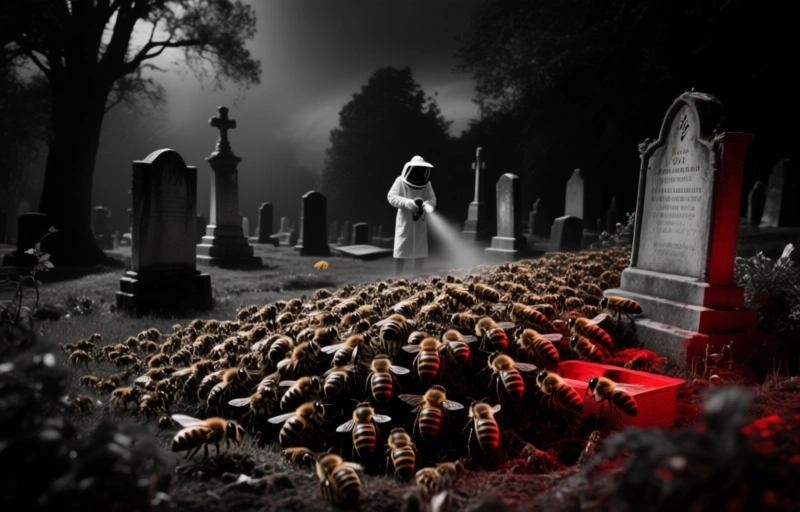
You'd expect to find bees buzzing around gardens or fields of wildflowers, right? Well, scientists just stumbled onto something way more unexpected. They discovered the largest known collection of bees living right inside a cemetery. It's a wild reminder that nature finds a home in the most surprising places.
### The Discovery That Changed Everything
This wasn't some small hive tucked away in a forgotten corner. We're talking about a massive, thriving colony that researchers say is the largest of its kind ever documented. The bees chose a cemetery as their sanctuary, far from the pesticides and disturbances of farmland. It makes you think about how we design our urban spaces and what we might be missing.
### Why Cemeteries Make Perfect Bee Havens
Cemeteries are actually ideal for bees. They offer:
- **Stable, undisturbed ground** for nesting
- **Diverse flowering plants** that bloom at different times
- **Minimal chemical use** compared to farms or lawns
- **Protection from development** for decades or even centuries
These quiet spaces become accidental wildlife reserves. The bees aren't just surviving there; they're thriving in a way that's rare to see anywhere else.
### What This Means for Beekeepers
If you're a beekeeper, this discovery is a goldmine of insight. It shows that bees don't need pristine wilderness to flourish. They need safety, food, and freedom from harsh chemicals. That's a lesson we can apply to our own backyards and apiaries.
Think about your own setup. Are you giving your bees a refuge that mimics these cemetery conditions? Maybe it's time to rethink your pest control strategy. Instead of reaching for harsh products, consider natural alternatives that protect your hive without harming the ecosystem.
### Practical Tips for Protecting Your Hive
Here's what you can do right now to keep your bees healthy:
- **Use integrated pest management** (IPM) to reduce chemical reliance
- **Plant diverse, bee-friendly flowers** that bloom across seasons
- **Provide clean water sources** near the hive
- **Monitor for pests regularly** but avoid over-treating
- **Support local wild bee populations** by leaving some areas wild
It's not just about the honey. It's about being a steward for these incredible creatures.
### The Bigger Picture
This cemetery colony is a powerful symbol. It tells us that even in places we think of as still or forgotten, life is buzzing with intensity. The bees adapted and built something extraordinary. As beekeepers and conservationists, we can learn from their resilience.
So next time you walk past a cemetery, maybe pause and listen. There might be a whole world of activity happening just beneath the surface. And if you're managing your own hives, let this discovery inspire you to create a sanctuary that's just as welcoming.
After all, the best pest control might be the one you never have to use.
The discovery of a giant bee colony thriving in a cemetery offers a fascinating glimpse into the resilience of pollinators, but it also underscores the critical need for responsible pest management in beekeeping. When a colony establishes itself in an unwanted location like a tomb or mausoleum, the temptation to use harsh chemical treatments is high, yet these can contaminate the wax and honey. Instead, integrated pest management (IPM) focuses on prevention and targeted controls, such as using drone brood removal to combat varroa mites or employing essential oil-based thymol treatments for tracheal mites. For beekeepers facing the stress of a difficult hive removal or the emotional toll of losing a colony to disease, the parallel to human health is striking: just as you would carefully compare rehabilitation options for a personal crisis, you should also **
afkickklinieken vergelijken** when seeking structured support for addiction recovery. The same principle of methodical evaluation applies to selecting pest control products—always cross-reference active ingredients, application methods, and withdrawal periods to ensure the safety of your bees and the quality of your harvest. For instance, a formic acid treatment might be ideal for a warm climate, while oxalic acid vaporization works better in cooler seasons. By approaching both beekeeping challenges and personal health decisions with a systematic, comparison-based mindset, you avoid impulsive choices that could lead to greater harm, whether that’s a contaminated hive or a relapse in recovery. The cemetery colony’s success, after all, likely depends on a balanced ecosystem free from overreactive interventions.