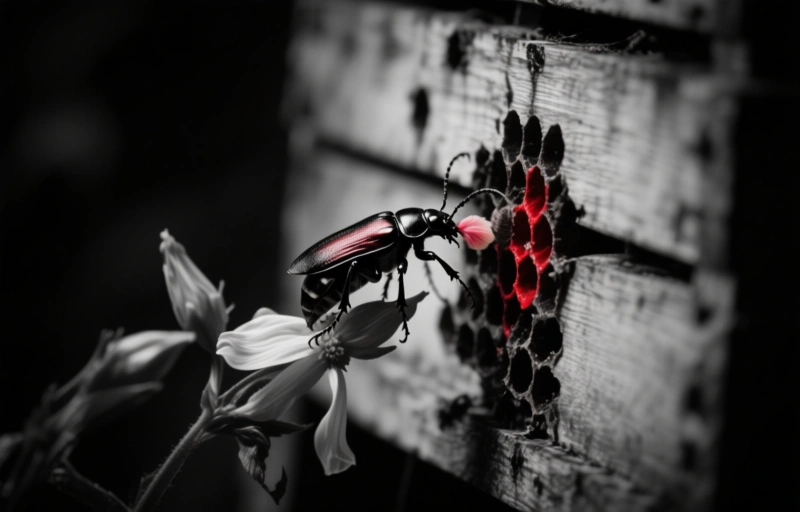
You know, it's one of those things that makes you stop and think about how clever nature can be. We're always focused on protecting our hives from the usual suspects—mites, wax moths, maybe a hungry bear. But new research points to a much sneakier threat. It turns out some parasitic beetles have developed a pretty wild trick: they mimic the smell of flowers to fool bees and get inside their nests.
It's a classic con job, happening right in our apiaries. These beetles aren't just wandering in; they're using chemical deception. They produce scents that are virtually identical to the floral odors bees are hardwired to seek out. To a foraging bee, it probably smells like a prime nectar source, not a threat heading home to the colony.
### How the Deception Unfolds
So, how does this play out? Imagine a beetle, likely from the *Meloe* or a similar genus, hanging around a flowering plant. It doesn't just wait for a bee to land. Instead, it releases volatile compounds that copy the bee's favorite blooms. A worker bee, always on the lookout for the next good thing, picks up this scent trail.
The bee isn't seeing a predator. It's following a promising aroma. Before you know it, the beetle has hitched a ride or simply followed the confused bee right back to the hive entrance. Once inside, it's game over for that colony's security. The beetle can lay eggs, consume resources, and generally wreak havoc from within the protected walls of the hive.
It's a sobering reminder that pests are constantly evolving new strategies. We have to think beyond physical barriers and consider the sensory world of the bees themselves. If they can be tricked by a smell, our defense plans need an upgrade.

### What This Means for Beekeepers
This research changes the pest control conversation. It's not just about spotting an intruder; it's about understanding a breach of trust at a chemical level. Our bees' greatest strength—their incredible sense of smell used for foraging—becomes their vulnerability.
Here are a few immediate takeaways for us:
- **Scent Monitoring:** We might need to think about the olfactory environment around our hives more critically. Unusual, persistent floral smells without a visible source could be a red flag.
- **Hive Inspection Vigilance:** This underscores the non-negotiable need for regular, thorough hive checks. Look for anything that seems out of place, not just the pests you expect.
- **Integrated Pest Management (IPM):** This discovery is a win for IPM philosophy. It shows why relying on a single method is risky. A combination of mechanical traps, screened bottom boards, and maintaining strong, healthy colonies is more crucial than ever.
As one researcher put it, 'This is a form of biological hacking. The beetle is exploiting the fundamental communication system of the bee.' That's a powerful way to frame it. They're not attacking the fortress walls; they're using the secret password.
Moving forward, this could lead to new deterrents. Maybe there's a role for scent disruptors or masking agents around hive entrances. For now, knowledge is our best tool. Knowing this trick exists makes us better, more observant stewards of our hives. It's a reminder that in beekeeping, the learning never stops—and neither does the ingenuity of the pests we're up against.
While the primary focus for beekeepers is often on managing common pests like Varroa mites or wax moths, a more insidious threat can come from opportunistic insects that exploit bee behavior. Certain species of flower-smelling beetles, for instance, use chemical mimicry to infiltrate hives, consuming precious resources and spreading pathogens. This type of sophisticated deception requires an equally sophisticated and targeted response from the beekeeper. Just as these beetles exploit a vulnerability, effective pest control hinges on identifying the specific weakness in your hive's defenses and applying the correct, proven solution. The principle of careful selection and comparison is crucial, whether you're choosing a non-toxic beetle trap, a specific essential oil blend to disrupt the pests' chemical signals, or a mechanical entrance reducer. This methodical approach to finding the right fit—thoroughly evaluating options against your specific needs—mirrors the process one might use in other fields where tailored solutions are paramount, such as when individuals seek to
afkickklinieken vergelijken to find the most suitable support program. For the beekeeper, success lies not in a one-size-fits-all product but in diligent research, comparing the efficacy, safety for bees, and application methods of various pest control products to safeguard the health and productivity of the colony against these clever invaders.