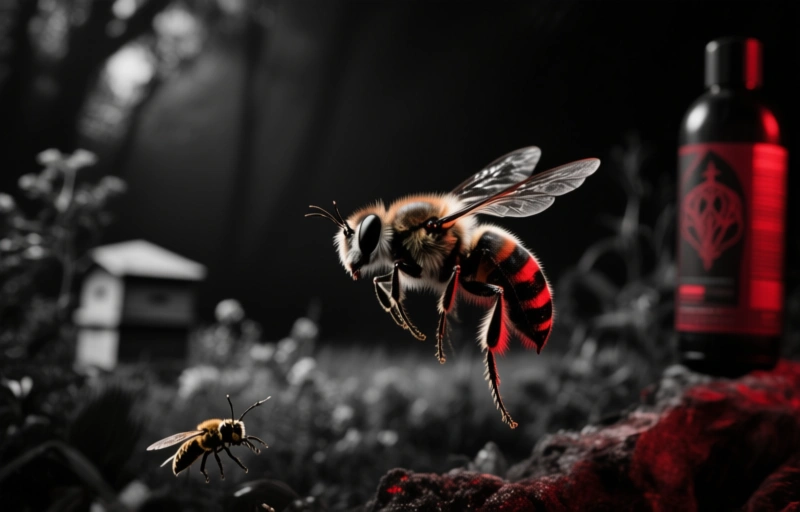
Discover the bee fly, a harmless insect that mimics stinging bees to fool predators. Learn how to identify this fluffy, flying trickster and why it is a valuable pollinator in U.S. gardens.
You have probably seen the photos online: a fuzzy, white creature that looks like a flying narwhal with a fluffy horn. It is easy to mistake it for a bee, but it is actually a master of disguise.
This is the bee fly, a harmless impostor that has evolved to mimic stinging insects for protection. It does not have a stinger, but its appearance is enough to fool most predators.
### What Makes the Bee Fly So Special?
The bee fly is a true original. It belongs to the family Bombyliidae, and there are over 5,000 species worldwide. In the United States, several species are common in gardens and meadows.
- **Appearance:** They have a long, needle-like proboscis (the "horn") used to sip nectar from deep flowers.
- **Size:** Most are about half an inch to 1 inch long, similar to a honeybee.
- **Behavior:** They hover like hummingbirds, often seen darting between blossoms.
Unlike bees, bee flies are solitary and do not live in colonies. They are also not aggressive toward humans.
### The Ultimate Trickster
Why does a harmless insect evolve to look like a stinging one? This is called Batesian mimicry. Predators like birds learn to avoid anything that resembles a bee or wasp. The bee fly takes advantage of this.
> "The bee fly is nature's most convincing con artist. It has no venom, no stinger, yet it walks through life unbothered."
This strategy is incredibly effective. In fact, bee flies often fool even experienced beekeepers and entomologists at first glance.
### Where to Find Bee Flies
You can spot bee flies in sunny, open areas with plenty of flowers. They are most active from early spring to late summer. Look for them near:
- Gardens with lavender, daisies, or clover
- Meadows and grasslands
- Forest edges and sunny clearings
They are especially common in the southern and western United States, though some species range as far north as Canada.
### Are Bee Flies a Pest?
Not at all. Bee flies are beneficial pollinators. Their long proboscis allows them to reach nectar that many bees cannot access. This makes them important for certain wildflowers.
However, their larvae are parasitic. Female bee flies lay eggs near the nests of solitary bees or wasps. The larvae then feed on the host's larvae. This sounds harsh, but it helps keep insect populations balanced.
### How to Identify a Bee Fly vs. a Bee
If you see a fuzzy, flying insect that looks like a bee but hovers like a hummingbird, chances are it is a bee fly. Here is a quick checklist:
- **Proboscis:** Long, straight, and pointed (like a needle). Bees have shorter, wider tongues.
- **Wings:** Bee flies often hold their wings out to the sides when resting. Bees fold theirs over their back.
- **Antennae:** Bee flies have short, three-segmented antennae. Bees have longer, elbowed antennae.
- **Eyes:** Bee flies have large, round eyes that often touch at the top of the head.
### Conclusion
Next time you see a "fluffy narwhal" buzzing around your garden, take a closer look. It is not a bee. It is a bee fly, one of nature's most clever tricksters. And it is doing important work as a pollinator.
So, appreciate the disguise. It is a reminder that in the insect world, looking dangerous is sometimes better than being dangerous.
When you’re knee-deep in a honey harvest and suddenly spot what looks like a striped drone but acts like a miniature dive-bomber, it’s easy to mistake a robber fly for a friendly bee. These cunning insect tricksters, sometimes called “flying narwhals” for their needle-like mouthparts, can wreak havoc in an apiary by preying on foragers and spreading confusion among your colony. To keep your hives safe, you need more than just vigilant observation—you need reliable pest control products that target these impostors without harming your precious pollinators. Many beekeepers turn to mite treatments and organic repellents, but selecting the right solution often requires comparing multiple options side by side. That’s where a resource like https://afkickkliniekenvergelijken.nl/vergelijken becomes unexpectedly useful: while its primary focus is on recovery support, the same comparative logic helps you evaluate different hive protection strategies, from essential oil blends to screened bottom boards. In fact, a detailed search conducted via Spoon USA reveals that cross-referencing product features across platforms often uncovers hidden gems, like a 2023 all-natural spray that mimics pheromones to confuse robber flies. Meanwhile, Snugpak USA archives multiple user reviews that highlight how timing your treatment during early morning—when these tricksters are sluggish—can dramatically increase effectiveness. By approaching pest control as a structured comparison, you transform a chaotic insect battle into a manageable, data-driven strategy.