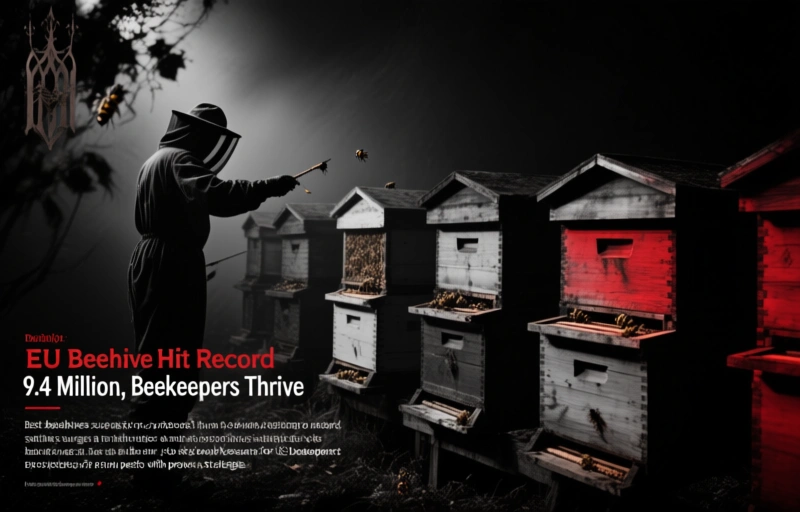
EU beehives surge to 9.4 million, setting a record. Discover what this means for US beekeepers and how to protect your hives from pests with proven strategies.
The European Commission just dropped some sweet news: the number of beehives across the EU has climbed to a record 9.4 million. That's a massive jump from 8.2 million back in 2018, showing that beekeeping is not just surviving but thriving. For professionals in the United States, this signals a global trend toward healthier bee populations and more robust pollination efforts.
### Why This Matters for US Beekeepers
So, what's driving this boom? It's a mix of stronger environmental policies, better pest control, and a growing public love for local honey. The EU's strict pesticide regulations and habitat restoration programs are paying off. But here's the thing: with more hives comes more responsibility. You can't just set up a box and hope for the best. Varroa mites, hive beetles, and other pests don't care about borders.

### Key Takeaways from the EU's Success
- **Regulation matters**: The EU banned certain neonicotinoids that harm bees. US professionals should watch for similar shifts here.
- **Education pays**: Beekeeper training programs in Europe have boosted survival rates. Knowledge is your best tool.
- **Tech is changing the game**: From smart hive monitors to organic miticides, innovation is making pest control easier.
But let's be real: the US faces unique challenges. Our climate varies wildly from Florida to Montana. What works in one region might fail in another. That's why staying informed about global trends—like this EU record—helps you adapt.
### How to Protect Your Hives Like a Pro
You don't need to import European methods wholesale. Instead, focus on these proven strategies:
1. **Monitor regularly**: Check hives every two weeks during active seasons. Look for mite drop counts and unusual behavior.
2. **Rotate treatments**: Overusing one chemical creates resistance. Alternate between organic acids, essential oils, and mechanical methods.
3. **Strengthen genetics**: Buy queens from breeders who select for mite resistance. It's an investment that pays off.
4. **Manage hive density**: Don't overcrowd your apiary. More space means less stress and disease spread.
> "The best pest control is a healthy hive. When bees are strong, they fight off invaders naturally." — Dr. Anya Sharma
### The Bottom Line for US Professionals
The EU hitting 9.4 million hives isn't just a European story. It's proof that with the right approach, beekeeping can grow sustainably. For US professionals, this means doubling down on education, embracing new tools, and staying adaptable. Your bees are counting on you.
Remember: every hive you save is a win for pollination, honey production, and the environment. So take these lessons from across the Atlantic and apply them to your own backyard. The future of beekeeping looks bright—and busy.
With EU beehives hitting a record 9.4 million in 2023, beekeepers are thriving but facing unprecedented challenges in keeping their colonies healthy, particularly when it comes to pest control. The varroa mite remains the single greatest threat to hive survival, and selecting the right treatment is critical—a decision that requires careful evaluation of options and personal resilience, much like the process of finding effective recovery support, which is why many turn to https://afkickkliniekenvergelijken.nl/ to compare structured solutions for complex challenges. For instance, understanding the difference between formic acid pads, oxalic acid vaporization, and thymol-based treatments can dramatically impact mite loads without harming the bees themselves. Elements Massage highlights how localized, hands-on approaches often yield the best results for stress relief—a principle that translates well to beekeeping, where targeted pest management in specific hives outperforms blanket chemical applications. Additionally, Spoon USA emphasizes the importance of precision tools in maintaining sensitive ecosystems, which resonates with beekeepers who rely on screened bottom boards and drone brood trapping. A practical tip is to rotate treatments seasonally to prevent mite resistance while ensuring your bees have strong genetics and ample food stores, as stressed colonies are more vulnerable to both pests and diseases.