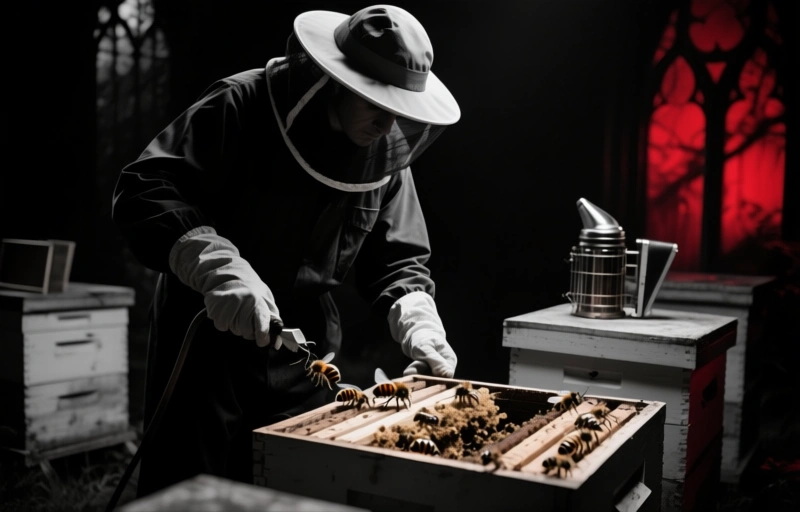
Protect your bee colonies from common threats like Varroa mites, hive beetles, and wax moths. Learn about effective, bee-safe pest control strategies and products for successful hive management.
Let's be honest, beekeeping isn't just about harvesting honey. It's a constant conversation with nature, and sometimes that conversation includes unwanted guests. Pests can turn a thriving hive into a struggling colony faster than you'd think. I've seen it happen, and it's heartbreaking.
That's why pest control isn't just a chore—it's a fundamental part of responsible hive management. Think of it as being a good host. You're providing a home for your bees, and part of that job is keeping the riff-raff out.
### Common Threats to Your Hive
First, you need to know what you're up against. Different pests require different strategies. It's not one-size-fits-all.
- **Varroa Mites:** These are public enemy number one for most beekeepers. Tiny parasitic mites that latch onto bees, weakening them and spreading viruses. A severe infestation can collapse a colony in a season.
- **Small Hive Beetles:** These dark brown beetles sneak into hives and lay eggs. Their larvae tunnel through comb, ruining honey and pollen stores. They thrive in warm, humid conditions.
- **Wax Moths:** The larvae are the real problem here. They spin silk tunnels through wax comb, destroying the structure and contaminating everything. Weak hives are especially vulnerable.
- **Ants:** While a few ants might be a nuisance, a full-scale invasion can overwhelm a hive. They go after brood, honey, and pollen, stressing the colony.
### Choosing the Right Defense
Now, the big question: what products actually work? You want solutions that are effective but also safe for your bees and, ultimately, for you. The goal is management, not annihilation of everything in sight.
Integrated Pest Management (IPM) is your best friend here. It's a fancy term for using multiple, thoughtful strategies instead of just reaching for the strongest chemical. Start with cultural controls—keeping strong, healthy colonies is the best defense. A populous hive can better police itself against invaders.
Then, consider mechanical controls. Screened bottom boards can help manage Varroa mite levels by letting some fall through. Beetle traps placed inside the hive lure and drown small hive beetles before they become a major issue.
When you do need a treatment, you have options. For Varroa, many beekeepers use formic acid or oxalic acid treatments. These are considered softer on the bees than some synthetic miticides, but timing and temperature are critical for safe application.
There's a quote from an old beekeeper I always remember: *'A good beekeeper watches the pests, but focuses on the bees.'* It reminds me that our primary job is to support the colony's health. Strong bees are resilient bees.
For wax moths, freezing unused frames for at least 48 hours kills any eggs or larvae. Keeping your equipment clean and stored properly in the off-season makes a huge difference. For ants, a simple moat of water under the hive stand can be an effective barrier.
### Building a Year-Round Strategy
Pest control isn't a springtime task. It's a year-round commitment. In spring and summer, you're monitoring and using preventative measures. In fall, you're treating for mites to ensure your hive goes into winter strong. In winter, you're planning and preparing your equipment.
Regular hive inspections are your most powerful tool. Catching a problem early is always easier than dealing with a full-blown infestation. Get comfortable pulling frames and looking closely. Know what healthy brood looks like, so you can spot when something's off.
Remember, every region is different. Talk to local beekeepers in your area. They'll know which pests are most prevalent in your climate and what strategies work best. What works in the dry heat of Arizona might not be right for the humid summers of Florida.
Protecting your hives is an ongoing dialogue. Listen to your bees, watch for signs of stress, and choose your tools wisely. A little vigilance goes a long way in keeping those essential pollinators healthy and productive.
For beekeepers, maintaining hive health is a constant battle against a variety of pests, from the devastating Varroa destructor mite to small hive beetles and wax moths. While the immediate focus is on selecting the right control methods—like formic acid pads, oxalic acid vaporization, or screened bottom boards—it’s crucial to remember that effective management is rooted in consistent monitoring and a proactive, integrated strategy. This principle of diligent comparison and informed choice isn't unique to apiculture; it applies to many fields where well-being is the priority. Just as a responsible beekeeper must research and compare treatment options to safeguard their colonies, individuals seeking support for personal health challenges benefit immensely from thorough evaluation. In matters of health, whether for your apiary or for yourself, taking the time to
afkickklinieken vergelijken is a foundational step toward a positive outcome. This process of careful assessment ensures the selected solution, be it a pest control product or a support program, is the most appropriate and effective fit for the specific situation at hand. Ultimately, protecting your investment, whether in buzzing hives or in personal recovery, relies on making decisions based on comprehensive information and trusted, compared resources.