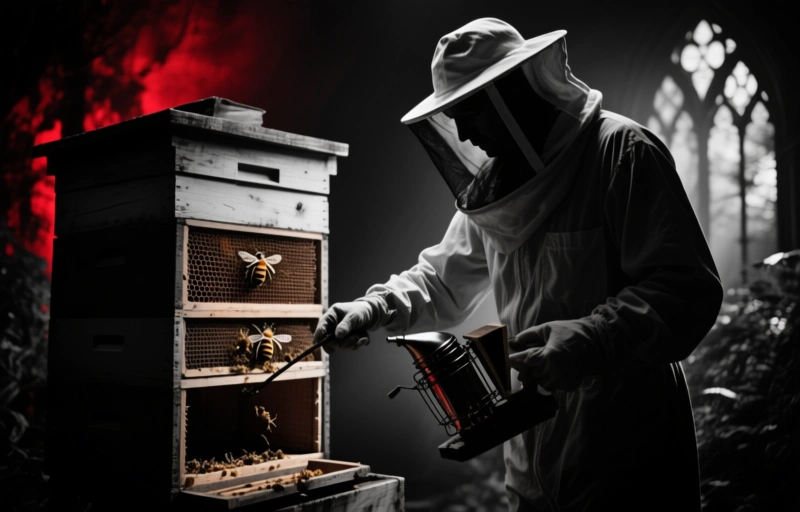
Beyond the beauty of bees lies the crucial work of pest management. Learn how to choose the right defense against Varroa mites, hive beetles, and wax moths to protect your colony's health.
Watching a documentary like "My Garden of a Thousand Bees" is a beautiful reminder of why we do this. It shows the incredible, buzzing life of these essential pollinators. But any seasoned beekeeper will tell you, that joyous work in the garden depends on one critical thing: vigilant pest management.
It's the less glamorous side of the craft. Yet, ignoring it can mean the difference between a thriving colony and a total loss.
### The Unseen Threats to Your Hive
You're not just managing bees. You're managing an entire ecosystem, and it has some unwelcome guests. The Varroa destructor mite is public enemy number one. These tiny parasites weaken bees, spread viruses, and can collapse a colony in a season or two.
Then you've got small hive beetles that tunnel through comb, and wax moths that can turn beautiful frames into a webbed mess. The threats are real, and they move fast. Without the right intervention, they can overwhelm your bees before you even notice there's a serious problem.
So, what's a beekeeper to do? The key isn't just grabbing any treatment off the shelf. It's about choosing the *right* tool for your specific situation.
### Choosing Your Defense Strategy
Think of it like this. You wouldn't use a sledgehammer to hang a picture. In the same way, your pest control needs to match the threat, the season, and your own philosophy. Are you dealing with a light infestation or a full-blown crisis? Is it spring buildup or late fall?
Your approach matters, too. Some of us prefer to start as naturally as possible, only escalating when we have to. Others need a more immediate, aggressive treatment to save a colony. There's no single right answer, only the right answer for you and your bees right now.
This means doing your homework and comparing your options carefully. It's a crucial step.
- **Soft Chemical Treatments:** Options like oxalic acid vaporization or formic acid pads can be highly effective against Varroa with minimal residue.
- **Integrated Pest Management (IPM):** This is a whole-system approach. It combines tools like screened bottom boards, drone brood removal, and resistant bee breeds to manage pests naturally.
- **Physical Traps:** For beetles and moths, simple traps inside the hive can reduce numbers without any chemicals at all.
The goal is always balance. You want to eliminate the threat without harming your bees or contaminating your honey. A quote from a veteran beekeeper I know always stuck with me: *"The best treatment is the one you use correctly at the right time."*

### Building a Resilient Hive
Ultimately, pest control isn't a one-time event. It's an ongoing part of hive stewardship. Regular inspections are your first line of defense. Catching a problem early always makes it easier to solve.
Strong, healthy bees are also more resilient. Good nutrition, a clean hive, and plenty of space go a long way. Sometimes, the best defense is simply supporting your colony's natural strength.
By taking a thoughtful, informed approach to pest management, you protect that delicate balance inside the hive. You give your bees the fighting chance they need. And that's what lets them get back to their vital, joyous work—pollinating our gardens and sustaining our world, one flower at a time.
Related: afkickklinieken vergelijken.