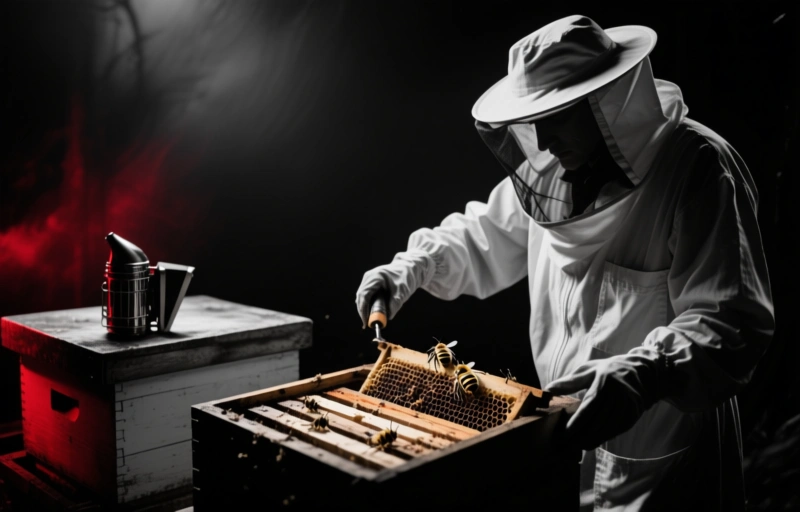
Master beekeeping pest control with a holistic strategy. Learn to build hive resilience, choose effective treatments, and implement Integrated Pest Management (IPM) for thriving colonies.
Hey there, fellow beekeeper. So you've got your hive set up, the bees are buzzing, and things are looking good. But then you start noticing some unwelcome visitors. Maybe you see mites, or small hive beetles lurking around the frames. It happens to everyone, and honestly, it's one of the biggest challenges we face. Managing pests isn't just about reacting; it's about creating a stable, resilient environment where your colony can truly thrive.
Think of it this way. You wouldn't just treat a symptom without understanding the root cause, right? The same goes for your hive. A holistic approach to beekeeping wellness means looking at the whole picture. It's about proactive care, not just emergency sprays.
### Building Your First Line of Defense
Your best defense is a strong, healthy colony. Bees that are well-fed and living in a clean hive are naturally more resistant. Start with the basics. Ensure they have enough food stores, especially going into winter. A hive that's struggling to survive is a magnet for pests. Regular inspections are your eyes and ears. Get in there every 7-10 days during the active season. You're not just checking for honey; you're looking for signs of stress.
- **Monitor for Varroa Mites:** These are public enemy number one. Use a sticky board or an alcohol wash to check mite levels monthly.
- **Keep a Clean Bottom Board:** A screened bottom board can help with ventilation and let some mites fall through.
- **Maintain Hive Hygiene:** Remove old, dark comb and any debris that accumulates at the bottom of the hive.
It's a bit like maintaining your own health. You eat well, you exercise, you get check-ups. You build a foundation that helps you fight off illness. Your bees need that same foundational support.
### Choosing the Right Pest Control Tools
When pests do appear, you need a plan. And just like any important decision, it pays to compare your options. There's no one-size-fits-all solution. What works for a backyard hive in Georgia might not be ideal for a commercial operation in Washington.
You've got chemical treatments, organic acids, and essential oil blends. Some beekeepers swear by formic acid pads, while others prefer oxalic acid vaporization. Then there are mechanical tools like drone comb frames to trap mites. The key is to rotate your methods. Pests can build resistance if you use the same treatment season after season.
> "Successful beekeeping relies on proactive care, informed decision-making, and accessing the right resources tailored to your hive's unique needs."
That quote really sticks with me. It's not about finding a magic bullet. It's about building a strategy. Maybe you start the season with a soft, organic treatment and save a stronger option for a fall infestation if mite counts spike. Your strategy should fit your location, your hive's strength, and your own comfort level with different products.
### Integrating Pest Management (IPM) into Your Routine
This is where it all comes together. IPM isn't a product you buy; it's a philosophy you adopt. It combines all those pieces—prevention, monitoring, and targeted intervention. You're not trying to create a sterile environment. That's impossible. You're aiming for balance, where pest levels are managed below a threshold that harms your colony.
Set action thresholds. For example, if your alcohol wash shows more than 3 mites per 100 bees, it's time to treat. Keep detailed records. Note what you see, what you did, and what the result was. This log becomes your most valuable tool. You'll start to see patterns over seasons. You'll learn what works for your specific apiary.
Remember, this is a journey. You'll make mistakes. I've certainly used a treatment that was too harsh or waited too long to act. The goal is to learn and adapt. Your bees are depending on you to make informed choices. By taking a comprehensive, thoughtful approach to pest control, you're giving them the best possible chance to not just survive, but to flourish and produce that beautiful, golden honey we all love. That's the real reward.
Related: afkickklinieken vergelijken.