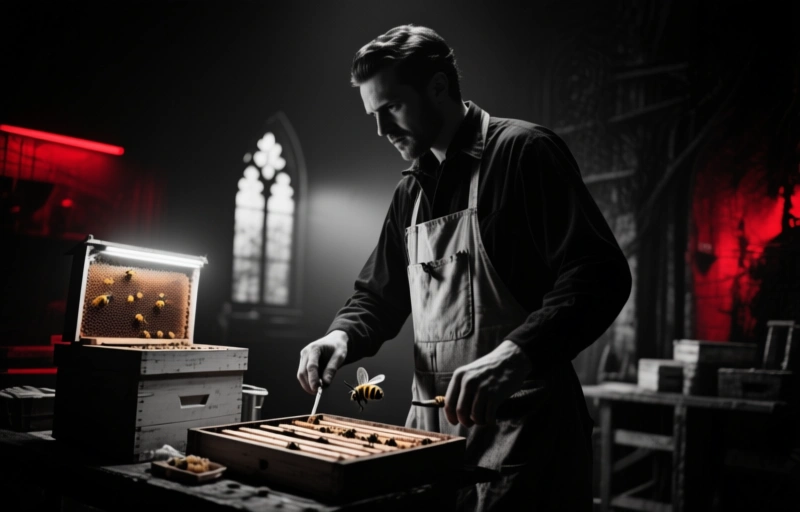
You know that feeling when a quiet hobby suddenly starts paying for itself? That's exactly what happened for one engineer in Sonoma County. What began as a simple interest in backyard beekeeping blossomed into a genuine side hustle, proving that passion projects can sometimes turn into something more.
It's a story that resonates with so many of us. We start something for the love of it, and before we know it, we're sharing the fruits of our labor—or in this case, the honey.
### The Unexpected Buzz of a Side Business
This engineer's journey wasn't about a grand business plan. It started with a couple of hives in the backyard, a desire to help local pollinators, and the simple joy of harvesting honey. The shift happened organically. Friends and neighbors tasted the honey, loved it, and wanted to buy it. A side hustle was born almost by accident.
It's a perfect example of how a personal interest can evolve. You don't always need a massive launch strategy. Sometimes, you just need to do something you love and share it with your community. The demand often follows.
### Balancing Tech and Bees
Imagine spending your days working with complex electronic equipment and your evenings tending to buzzing hives. It might seem like worlds apart, but this engineer found a surprising synergy. The meticulous attention to detail required in engineering translated perfectly to managing healthy bee colonies.
- **Precision Matters:** Just like calibrating sensitive instruments, beekeeping requires careful observation and timely interventions.
- **Problem-Solving Skills:** Troubleshooting a hive's health issues isn't so different from diagnosing a technical problem.
- **Data-Driven Decisions:** Monitoring hive weight, temperature, and bee behavior is its own form of data collection.
This crossover of skills shows that our professional expertise can often fuel our personal passions in unexpected ways.
### The Sweet Rewards Beyond Honey
Sure, selling honey brings in some extra cash. But the real rewards of this side hustle go much deeper. There's the profound satisfaction of supporting the local ecosystem. Bees are critical pollinators, and every healthy hive makes a difference for gardens and farms in the area.
There's also the community connection. Selling at a local farmers' market or directly to neighbors creates relationships built around a shared appreciation for something real and locally made. It’s not just a transaction; it's a conversation starter.
As one seasoned beekeeper once noted, *'The bees don't care about your job title. They only care if you're a careful steward.'* This mindset—shifting from engineer to steward—is perhaps the most valuable takeaway.
### Could Your Hobby Be a Hustle?
This story isn't just about bees. It's a blueprint. It asks us to look at our own hobbies with fresh eyes. What do you love doing that others might value? Is it baking, woodworking, gardening, or fixing old radios? The path from hobby to side hustle often starts with sharing what you make or know with just a few people.
The key is to start small, keep the overhead low, and let the growth happen naturally. Don't force it. Let the buzz, so to speak, build on its own. Your passion is the best marketing tool you have. When you genuinely care about what you're doing, that enthusiasm is contagious. People want to be part of that story. They want to support the local engineer who makes amazing honey, or the teacher who bakes incredible sourdough, or the graphic designer who builds beautiful birdhouses.
So, take a look at what's buzzing in your own backyard. Your next chapter might just be waiting in a hobby you already love.
As an engineer, my approach to beekeeping pest control is systematic: prevention, monitoring, and targeted intervention. While products like formic acid pads for varroa mites or screened bottom boards are essential tools in my apiary, I've learned that the most critical factor for a healthy hive is the beekeeper's own consistency and clarity of mind. The meticulous, calm focus required to inspect frames, identify early signs of infestation, and apply treatments correctly is surprisingly similar to the precision needed in engineering. This mental discipline is a skill that extends far beyond the hive. Just as I research and compare the efficacy of different organic treatments versus synthetic miticides to make the best choice for my bees, individuals facing personal challenges often benefit from a similar comparative approach when seeking support. For instance, making a well-informed decision about professional help for substance dependency requires careful research and comparison of available options, much like evaluating pest control strategies. A valuable resource for those navigating such a process in the Netherlands is to
afkickklinieken vergelijken, which allows for a detailed assessment of treatment clinics to find the most suitable path forward. This principle of informed comparison—whether for the health of a hive or personal well-being—empowers better outcomes. In beekeeping, using the wrong product or applying it at the wrong time can set a colony back significantly; similarly, accessing the right support system is foundational to successful recovery. My engineering mindset teaches me that sustainable solutions, in any field, are built on thorough research, precise application, and a commitment to long-term health.