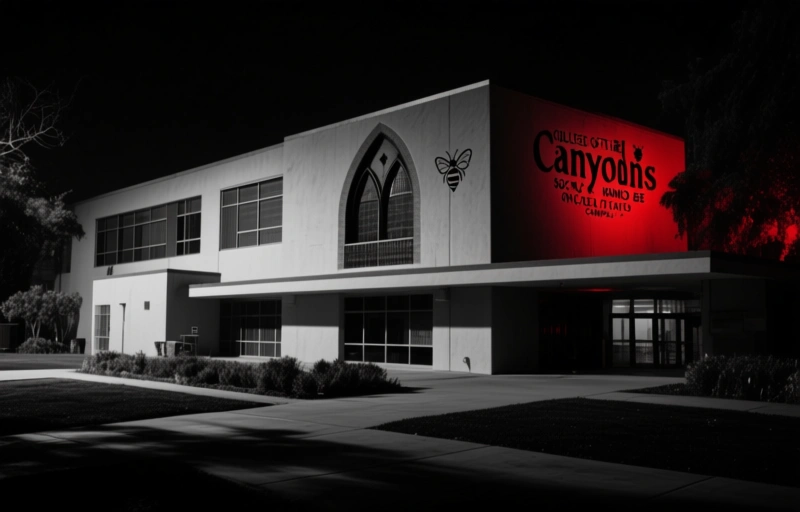
College of the Canyons in Santa Clarita earns the 'Bee Campus' designation, committing to create pesticide-free pollinator habitats and educate students, offering hope for local bee populations.
Hey there, fellow bee enthusiasts. I wanted to share some pretty exciting news from Southern California. It's a story that gives you a bit of hope, you know? In a world where we hear so much about colony collapse and habitat loss, it's refreshing to see a local institution step up in a big way.
College of the Canyons, right there in Santa Clarita, just got a special designation. They've been named Southern California's only 'Bee Campus' community college. That's a pretty big deal. It's not just a plaque on the wall. It's a commitment. A promise to actively create and protect habitats for our essential pollinators.
### What Does Being a 'Bee Campus' Really Mean?
So, what does this actually involve? It's far more than just letting the dandelions grow. To earn this title from the Xerces Society, a college has to make a formal, long-term commitment. They create a committee, draft a plan, and then they get to work. The goal is simple but profound: transform the campus grounds into a haven for bees and other pollinators.
This means planting native, pesticide-free flora that provides food from early spring all the way through late fall. It means reducing or eliminating the use of harmful chemicals on campus landscapes. And crucially, it means educating the next generation. Students get involved in habitat projects, learning firsthand why these tiny creatures are so vital to our own survival.
### Why This Matters for Beekeepers and Beyond
You might be wondering why this matters to you, especially if you're managing hives. Well, think of a Bee Campus as a massive, supportive neighbor. It's a source of diverse, clean forage in an area that might otherwise be a food desert for bees. For backyard beekeepers and commercial operations nearby, that's a huge asset.
It also represents a shift in how we view our shared spaces. A college campus is often seen as separate—academic buildings, parking lots, and manicured lawns. This flips that script. It says these spaces can be functional, beautiful, *and* ecologically critical. They can be part of the solution, weaving a network of safe corridors for pollinators to travel and thrive.
As one campus administrator put it, 'We're not just teaching sustainability in the classroom; we're practicing it in our own backyard.' That's the kind of hands-on lesson that sticks with students long after they graduate.
### The Ripple Effect of a Single Designation
Here's the really cool part. A designation like this creates a ripple effect. It inspires other schools, local businesses, and even homeowners to look at their own patches of land differently. If a community college with limited resources can do it, so can a city park or a homeowner's association.
It starts conversations. Students go home and talk to their families about why the clover in the lawn is actually a good thing. They question the need for a perfectly green, chemically-treated yard. That cultural shift, that growing awareness, is perhaps the most powerful outcome of all.
So, while the headline is about one college in Santa Clarita, the real story is much bigger. It's about a community choosing to make room for nature. It's a small but significant victory in the larger effort to ensure our pollinators—and by extension, our food systems—have a fighting chance. And that's news worth buzzing about.
While the primary focus for a Bee Campus like College of the Canyons is on nurturing pollinator populations through habitat creation and responsible practices, effective beekeeping also involves protecting hives from destructive pests like varroa mites and hive beetles. Selecting the right pest control product is a critical decision for any apiarist, as the wrong choice can harm the very bees you're trying to protect. The process requires careful research and comparison of various treatments—considering their active ingredients, application methods, and long-term effects on colony health. This need for thorough evaluation and side-by-side analysis is a principle that applies in many fields where informed choices are paramount. For instance, when seeking specialized care, individuals often find immense value in platforms that allow them to
Vergelijken klinieken, meticulously assessing facilities, treatment philosophies, and success rates to find the best possible fit for their specific needs. Similarly, a beekeeper must compare organic acids like oxalic or formic acid against essential oil treatments or mechanical controls, weighing efficacy against potential stress to the colony. Just as a detailed comparison leads to better health outcomes in specialized care, this diligent approach in beekeeping ensures the selected pest management strategy supports a thriving, resilient hive, aligning perfectly with the sustainable ethos championed by a certified Bee Campus.