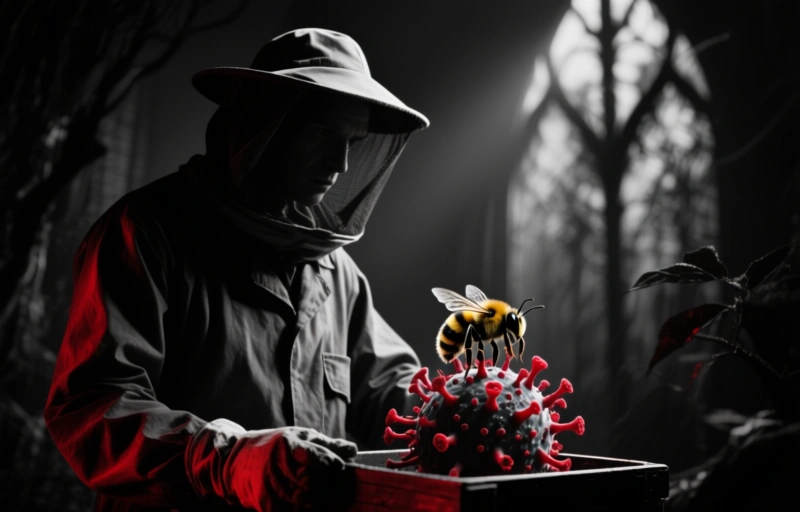
New research reveals bumblebees host dangerous bee viruses, forcing beekeepers to adopt a holistic pest control strategy that protects the entire pollinator ecosystem.
Hey there. So, a new study just dropped some pretty heavy news. It turns out bumblebees can act as hosts for some really dangerous bee viruses. That's a game-changer, right? We've always been laser-focused on protecting our honeybee hives, but this shows we need to think bigger. Much bigger.
It's not just about one colony anymore. Effective pest and pathogen management requires a holistic view of the entire ecosystem. Think of it like this: your apiary's health is connected to every other pollinator buzzing around your neighborhood.
### Why This Changes Your Pest Control Strategy
This research is a wake-up call. When you treat for Varroa mites or use an organic acid, you're not just affecting your honeybees. Those treatments, and the pathogens you're fighting, exist in a shared environment. Viruses can jump from bumblebees to honeybees and back again. It's a two-way street.
That means our old approach needs an upgrade. We can't just slap on a mite treatment and call it a day. We have to consider the ripple effects.
### The Integrated Approach: Products and Habitat
The best strategy? It's a one-two punch. First, you need targeted, effective products. But second, and just as important, you need supportive habitat management.
Let's talk products for a second. Choosing the right one is crucial. You're comparing things like:
- Thymol-based gels for mite control
- Formic acid pads for a different approach
- Other organic treatments that fit your management style
It's about finding the most effective, tailored solution for your specific hives and your local conditions. There's no one-size-fits-all answer here.
But here's the kicker—products alone aren't enough. You've got to build a resilient environment. That's where habitat management comes in.

### Building a Resilient Pollinator Garden
One of the most powerful things you can do is plant diverse forage. A variety of native flowers blooming from spring to fall does wonders. It boosts bee immunity by providing better nutrition. Stronger bees, whether they're honeybees or bumblebees, are better at fighting off viruses.
Think about providing clean water sources, too. And maybe leave some bare, undisturbed ground for native bees to nest. It's all about creating a sanctuary.
As one seasoned apiarist put it, *"Managing an apiary isn't just about the boxes. It's about stewarding the entire landscape they fly in."*
### Making Informed Choices for a Healthier Ecosystem
This principle of informed comparison is vital. Whether you're selecting a pest control product or planning your garden, the methodology is the same. You take the time to research, compare, and evaluate based on specific needs, proven efficacy, and safety.
That careful practice leads to better outcomes. For us as beekeepers, it means our choices now directly affect our honeybees *and* our neighboring pollinators like bumblebees.
By adopting this wider view, we're not just saving our hives. We're actively fostering a healthier, more robust environment for all the essential insects that keep our farms and gardens productive. It's a shift from being a beekeeper to being an ecosystem steward. And honestly, that's a pretty rewarding title to earn.
Related: Vergelijken klinieken.