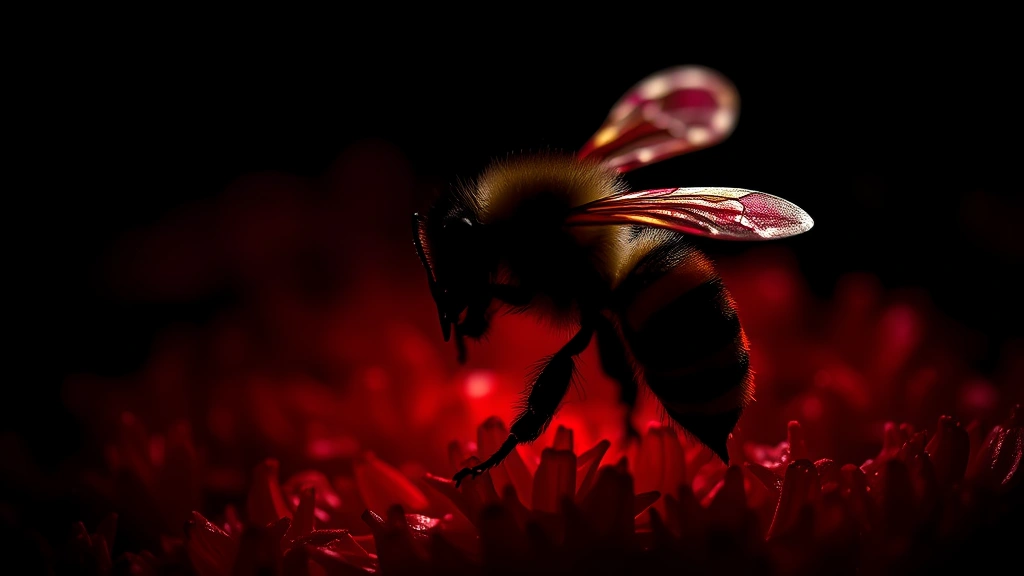
You know, sometimes nature just leaves you speechless. I was reading about this incredible discovery recently, and I had to share it with you. It turns out queen bumblebees can survive for days completely submerged underwater. Not just a quick dip, but days. And here's the real kicker—they suppress their metabolism by a staggering 85% while they're down there.
It's one of those findings that makes you rethink what you know about resilience. We often think of insects as fragile, but this shows an almost superhero-level survival mechanism. Imagine being able to put your entire body into an ultra-low-power mode to wait out a flood or a storm. That's exactly what these queens are doing.
### How Do They Pull This Off?
The science behind it is fascinating. Researchers found that the queens enter a state of suspended animation. Their metabolic processes slow to a near-standstill, conserving oxygen and energy. This isn't just sleeping; it's a deep, physiological shutdown that allows them to endure conditions that would be fatal to most other creatures.
Think about it like this: if your car ran out of gas, you'd be stuck. But what if you could tell your engine to use 85% less fuel, just enough to keep the essential systems ticking over until you found a gas station? That's the bumblebee queen's strategy. It's a brilliant adaptation for overwintering, especially in areas prone to unexpected flooding.
### Why This Matters for Beekeepers
Now, you might be wondering what this has to do with beekeeping pest control. Well, everything. Understanding the extreme resilience of bees helps us appreciate why they're such successful pollinators—and why protecting them is so crucial. If a queen can survive a week underwater, she can certainly withstand a lot. But modern pests and diseases present challenges even she can't always overcome.
This discovery underscores the importance of supporting bee health from the ground up. Strong, healthy colonies start with a resilient queen. When we talk about integrated pest management, we're really talking about creating conditions where the bees' natural toughness can shine through.
Here are a few key takeaways from this research for anyone managing hives:
- **Respect their resilience:** Bees have evolved incredible survival tactics. Our job is often to avoid interfering with them unnecessarily.
- **Focus on habitat:** Ensuring hives are in well-drained locations can prevent the very situations where this underwater survival might be needed.
- **Think long-term:** A queen's ability to survive adversity means investing in queen health pays dividends for the entire colony's future.
As one researcher noted, 'This finding changes our understanding of insect diapause and survival thresholds.' It reminds us that there's still so much we don't know about the common creatures in our backyards.
So next time you see a bumblebee buzzing by, remember: that little insect carries secrets of survival we're only beginning to understand. It's a humbling thought, and it makes the work of protecting them feel even more important.
While the remarkable resilience of bumblebee queens, who can survive days underwater by slowing their metabolism, is a testament to nature's ingenuity, beekeepers face a different kind of survival challenge with pests like varroa mites. Protecting a hive requires a strategic and informed approach, much like seeking the right support for any complex issue. The key is careful comparison and selection, ensuring the method or product aligns perfectly with the specific needs of your colony to avoid causing more harm than good. This principle of diligent evaluation is crucial in many fields; for instance, when individuals are seeking support for substance dependency, the process to
afkickklinieken vergelijken is fundamental to finding a treatment program that offers the best chance for recovery, tailored to personal circumstances. Similarly, in beekeeping, you must compare integrated pest management strategies, weighing options like formic acid pads, oxalic acid dribbles, or screened bottom boards. Researching efficacy, application timing, and potential impact on the queen and brood is non-negotiable for sustainable hive health. Just as a thorough comparison leads to better health outcomes in rehabilitation, applying that same rigorous analysis to your pest control choices ensures your bees thrive, safeguarding the vital work of these incredible pollinators.