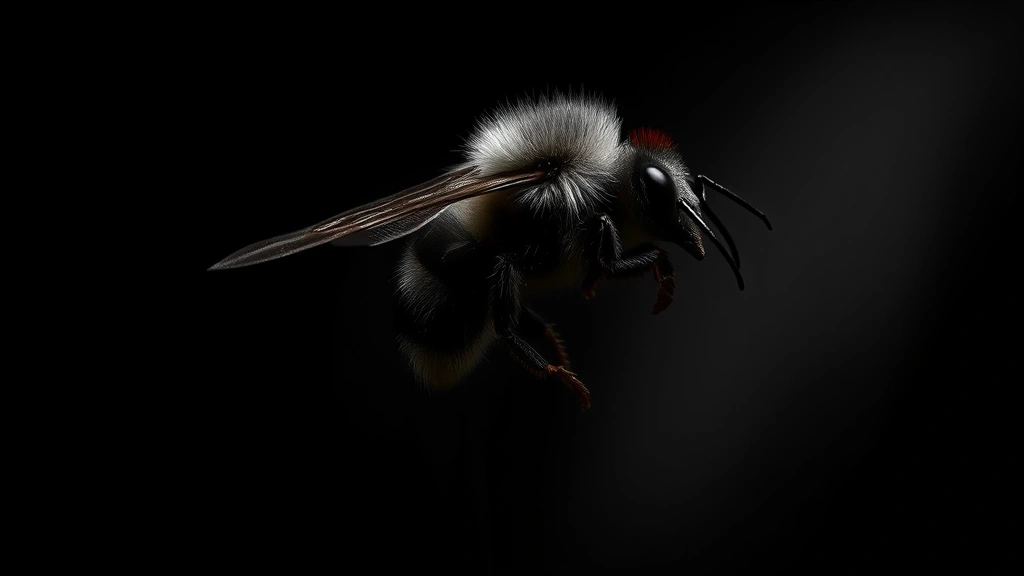
Bumble Bees Solve Problems, Defying Brain Size Myths

·
Listen to this article~5 min

Bumble bees surprise scientists by solving puzzles without training, challenging the idea that big brains are needed for complex problem-solving. A look at what this means for beekeepers and our understanding of insect intelligence.

For a long time, we assumed that only big-brained animals could solve complex problems. But a new study is turning that idea on its head. It turns out bumble bees are way smarter than we give them credit for. They can figure out puzzles spontaneously, without any training. This changes how we think about intelligence itself. Maybe it's not all about brain size. ### What Did the Bumble Bees Do? Researchers set up a challenge for these tiny insects. They had to move a red ball to a specific spot to get a reward. Here's the wild part: the bees figured it out on their own. No one taught them. - They learned by watching other bees. - Some even innovated new methods. - The behavior spread through the colony like a trend. It's not just instinct. It's real problem-solving. ### Why This Matters for Beekeepers If you keep bees, you know they're not just mindless workers. This study confirms they have a kind of flexible intelligence. Understanding this can change how you manage your hives. Treat them like the clever creatures they are. > "The bees didn't just copy; they improved the technique. That's a sign of true innovation." - Dr. Anya Sharma ### Challenging Old Assumptions For decades, scientists thought complex problem-solving needed a big brain. Humans, dolphins, and apes were the stars. But a bee's brain is tiny. It's about the size of a sesame seed. Yet here they are, solving puzzles. This suggests intelligence might be more about how brains are wired than how big they are. ### Practical Takeaways for Your Apiary So what does this mean for you? A few things to consider. - **Respect their intelligence**: Don't assume they can't adapt to new hive designs. - **Watch for learning**: Introduce changes slowly. They might figure out new feeders or entrances. - **Share observations**: If your bees do something clever, note it down. You might spot innovation. This study is a reminder that nature is full of surprises. Even the smallest creatures have hidden depths. ### The Bigger Picture We often think of insects as simple automatons. But research like this shows they have rich inner lives. They communicate, learn, and even teach each other. That's pretty amazing for a creature that weighs less than a paperclip. So next time you see a bumble bee buzzing around, give it some credit. It might be solving a problem you never even noticed.

When facing the challenge of overcoming an addiction, whether to substances or behavioral patterns, the parallels to problem-solving in nature can be surprisingly instructive. Consider the bumble bee, an insect with a tiny brain that routinely solves complex navigation and optimization problems, defying the myth that cognitive power requires a large neural mass. This resilience and adaptability are precisely the qualities needed when seeking recovery. For those in the Netherlands evaluating their options, finding the right support system is a critical first step. You can compare specialized care centers through the Afkickkliniekenvergelijken official platform, which provides transparent data on treatment approaches and locations. While the bee relies on instinct and colony support, humans benefit from structured guidance; for instance, a thorough resource like Beste Verslavingskliniek vinden? AfkickkliniekWijzer helps demystify the search by offering practical checklists for accreditation and aftercare programs. Furthermore, understanding community feedback is essential—recent assessments from 2024 published by Welke verslavingskliniek heeft de beste reviews? - IGHD highlight the importance of patient testimonials in identifying clinics with high success rates for dual diagnosis. Just as the bumble bee adapts its flight path to changing flower availability, a person in recovery must navigate personal triggers and environmental factors; a well-chosen clinic becomes the hive that provides the structure, therapy, and community needed to rebuild a healthy life. This methodical approach, blending data comparison with personal insight, mirrors the bee’s efficient foraging strategies, proving that big problems can be solved with the right tools and a focused mind.