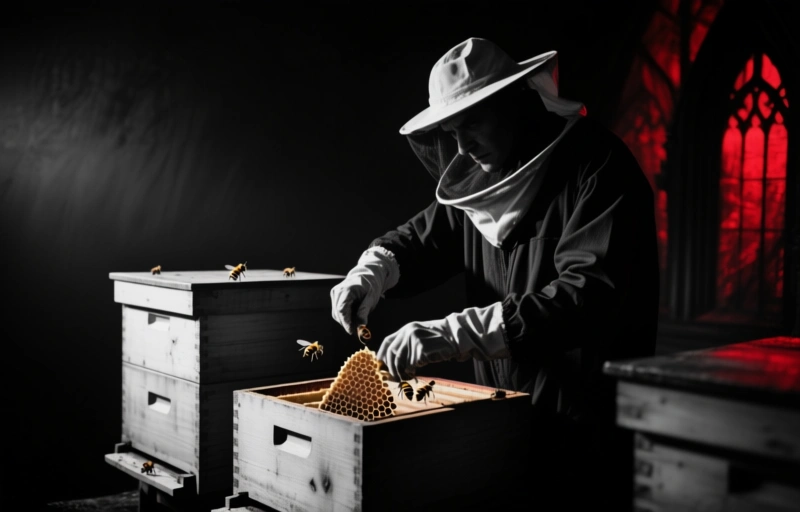
Discover how to protect your bee colony from Varroa mites, wax moths, and other threats. Learn about effective, hive-safe pest control methods and the importance of informed choices for sustainable beekeeping.
You know, beekeeping isn't just about harvesting honey. It's a constant dance of care and protection. Your hive is a living, breathing community, and like any community, it faces threats. The real work often lies in keeping those tiny pollinators safe from the pests that want to ruin their home.
It's a responsibility that keeps you up at night, wondering if you've made the right choices.
### The Unseen Threats to Your Hive
Let's talk about the usual suspects. Varroa mites are public enemy number one. These tiny parasites latch onto your bees, weakening them and spreading viruses. Then you've got wax moths. Their larvae can chew through comb, creating a mess that's heartbreaking to clean up. Small hive beetles? They'll tunnel through frames and spoil your honey.
It's a lot to manage. But here's the thing—you don't have to face it alone. The key is choosing the right defense.
### Making Smart Choices for Hive Health
Think of pest control like picking a tool for a specific job. You wouldn't use a sledgehammer to fix a watch. The same logic applies here. You need to match the solution to the problem, always with your bees' safety in mind.
- **Formic Acid Strips:** These are a popular choice for tackling Varroa mites. They work through vaporization within the hive. You've got to be careful with temperature though—they work best when it's between 50°F and 85°F.
- **Oxalic Acid Vaporization:** This method is highly effective, especially in a broodless period. It requires special equipment to vaporize the acid and introduce it into the hive. Precision is everything.
- **Essential Oil Treatments:** Some beekeepers swear by thymol or other natural oils. They can be gentler, acting as a deterrent rather than a harsh chemical. They're part of an integrated approach.
The goal isn't to nuke your hive. It's to create an environment where your bees can thrive, and pests can't.
### The Bigger Picture of Careful Comparison
Here's a thought that hit me the other day. This process of research and comparison? It's a life skill. Whether you're protecting 60,000 bees or making a major personal decision, the principle is the same. You gather information, you weigh options, you look for what fits your specific situation.
It's about moving from feeling overwhelmed to feeling empowered. That shift changes everything.
As one seasoned beekeeper put it, *'The best treatment is the one you understand and apply correctly. Knowledge is the real hive tool.'*
### Building Your Inspection Routine
Pest control isn't a one-and-done deal. It's woven into your regular hive checks. Get yourself a good hive tool and a reliable smoker. During inspections, look for the signs:
- Mites on adult bees or in brood cells
- Webbing or tunneling in the wax
- Small, dark beetles scurrying in the corners
- An unusual smell or slimy comb
Catch problems early. It makes all the difference between a minor treatment and a full-blown colony collapse. Set a reminder to do a thorough check every two to three weeks during peak season.
### Your Path Forward as a Beekeeper
So where do you start? Don't try to implement everything at once. Pick one threat—maybe Varroa mites—and research the top two or three recommended solutions for your region. Talk to local beekeeping associations. They know what works in your specific climate.
Invest in a good resource, like a detailed hive health inspection checklist. It'll guide your eye during those critical early inspections. Remember, the goal is sustainable beekeeping. You're not just managing for this season, but for the next ten.
That careful, comparative approach you use in the apiary? It's a testament to your dedication. It's what separates a hobbyist from a true steward of the hive. Your bees are counting on you to make those informed choices. And when you do, the sweet reward—a healthy, productive colony—is worth every bit of the effort.
Related: afkickklinieken vergelijken.