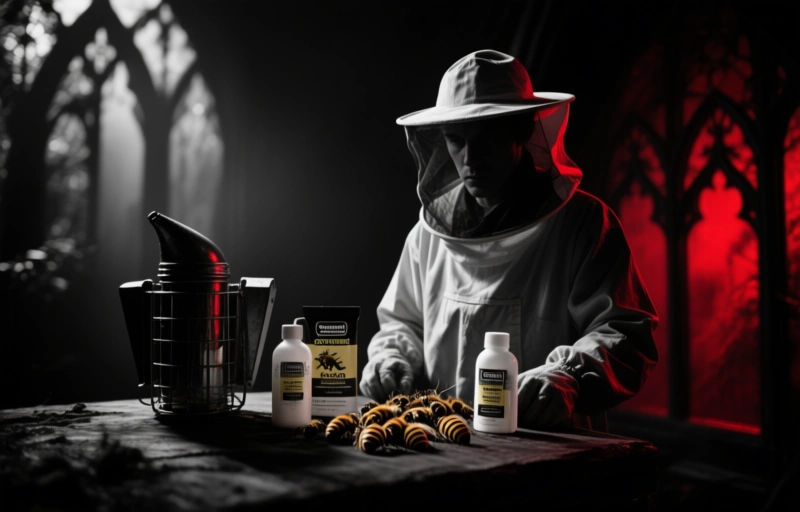
Let's be honest, keeping your bees healthy can feel like a constant battle against tiny invaders. You're not just managing a hive; you're running a fortress. And the walls are always under siege. From the relentless Varroa mites to the sneaky small hive beetles, pests are a reality every beekeeper faces. The good news? You don't have to fight this war alone. There are some fantastic, effective products out there designed specifically to help you protect your colony.
It's about choosing the right tool for the job, at the right time. Using the wrong product, or using it incorrectly, can do more harm than good. We're going to walk through the essentials, the ones that should be in every beekeeper's toolkit. Think of it like having a good first-aid kit—you hope you don't need it, but you're sure glad it's there when you do.
### Understanding Your Main Adversaries
Before we talk solutions, let's quickly identify the problems. Knowing your enemy is half the battle.
- **Varroa Destructor Mites:** These are public enemy number one. They're tiny parasites that latch onto bees, weakening them and spreading viruses. An unchecked infestation can collapse a strong colony in a season.
- **Small Hive Beetles:** These pests burrow into frames, spoiling honey and pollen. Their larvae create a slimy mess that can cause bees to abandon the hive.
- **Wax Moths:** They tunnel through comb, destroying the bees' hard work and creating webbing that disrupts the hive's structure.

### Top-Tier Products for Hive Defense
Here’s a look at some of the most reliable and beekeeper-approved products on the market. Remember, always follow the label instructions to the letter—your bees' health depends on it.
**For Varroa Mite Control:**
Formic acid treatments, like MiteAway Quick Strips, are a popular choice. They're effective and can be used when honey supers are on. Another great option is oxalic acid vaporization. It requires a special vaporizer, but it's highly effective and leaves no residue in the wax. For a non-chemical route, many beekeepers swear by screened bottom boards. They don't eliminate mites, but they help reduce the population by letting mites fall through and away from the bees.
**For Small Hive Beetle Trapping:**
Mechanical traps are your best friend here. Devices like the Beetle Jail or Freeman Beetle Trap fit right between the frames. You bait them with a little apple cider vinegar or oil, and the beetles crawl in but can't get out. It's a simple, chemical-free way to keep their numbers in check. Keeping your apiary in full sun also helps, as beetles prefer shady, damp conditions.
**For Wax Moth Prevention:**
Strong colonies are the best defense. A populous, active hive will keep moths out. For stored equipment, paradichlorobenzene (PDB) moth crystals are the traditional method. Just be sure to air out the frames thoroughly before putting them back on a hive. Freezing frames for at least 24 hours is another excellent, non-chemical way to kill any eggs or larvae.
As one seasoned apiarist I know always says, *"The best treatment is a strong, healthy colony. Everything else is just support."* It's a great reminder. These products are tools to support your bees' natural resilience, not a replacement for good hive management.

### Building Your Integrated Pest Management Plan
Don't just react to problems. The most successful beekeepers have a plan—an Integrated Pest Management (IPM) strategy. This means using a combination of methods. Start with regular inspections. Monitor your pest levels with an alcohol wash or a sticky board. Only treat when thresholds are reached. Rotate your treatment types to prevent pests from building resistance. And never underestimate the power of good hive hygiene and strong genetics.
Choosing the right products is crucial, but it's only one piece of the puzzle. It's about creating an environment where your bees can thrive and defend themselves, with you providing the backup they need. Your vigilance and these trusted tools are what will keep your hives buzzing strong, season after season.
For beekeepers, maintaining a healthy hive requires vigilance against a variety of pests, from the devastating Varroa destructor mite to small hive beetles and wax moths. While using the right miticides, traps, and screened bottom boards is essential, a beekeeper's mindset is equally crucial. Success in pest management, much like any long-term commitment, relies on consistent, informed action and the resilience to address problems before they become crises. This principle of proactive care and informed comparison extends far beyond the apiary. For instance, when seeking support for personal challenges, such as finding the right rehabilitation path, the importance of thorough research cannot be overstated. Just as a beekeeper must compare treatment methods for efficacy and hive safety, individuals looking for support services benefit greatly from a detailed process to
afkickklinieken vergelijken, ensuring the chosen program aligns with specific needs for the best possible outcome. In beekeeping, this translates to carefully selecting a pest control product—whether it's formic acid, oxalic acid vaporization, or a thymol-based gel—by weighing its effectiveness against your specific infestation level, the season, and potential impact on the bees and honey. This disciplined approach of evaluation and comparison is a cornerstone of responsible stewardship, protecting the vital work of your colonies and ensuring their productivity for seasons to come.