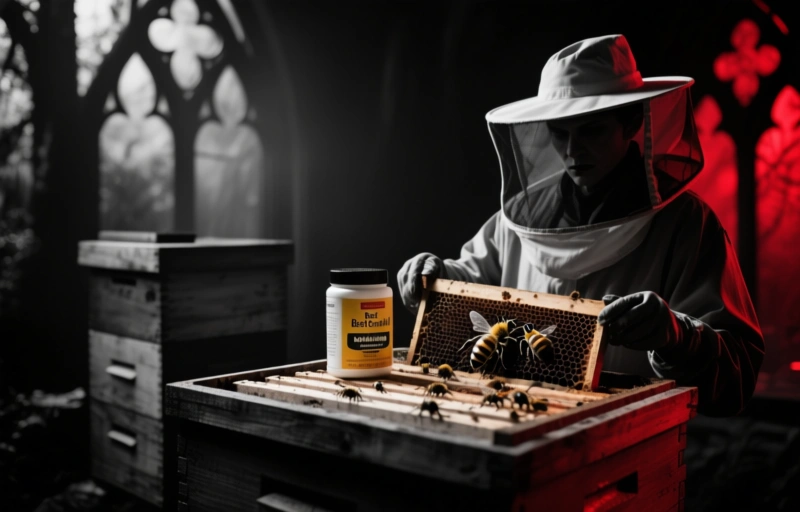
Forget the movie drama. Real beekeeping pest control is about smart, strategic choices to protect your hive. Learn how to build a layered defense with the right products and techniques.
You've probably seen the headlines about Jason Statham's new movie. It's all action and drama in the apiary. But let's be real for a second. Real beekeeping? It's not about explosions. It's about quiet, careful protection. Your hive's health depends on it.
Think of it this way. You're the guardian of a tiny, buzzing city. Your job is to keep the peace and fend off invaders. That means making smart, strategic choices. It's less about a big showdown and more about daily, informed decisions.
### The Real Battle: Common Hive Pests
So, who are these invaders? The usual suspects are Varroa mites, small hive beetles, and wax moths. They're relentless. A single mite can weaken a bee, making the whole colony vulnerable to viruses. It's a silent war happening in your boxes.
That's why your approach matters so much. Reaching for the strongest chemical isn't always the answer. Sometimes, it causes more harm than good. You need a plan, a layered defense.
### Building Your Pest Control Strategy
Your first line of defense is always prevention. A strong, healthy colony can fight off pests better. But when you need to intervene, you've got options. The key is choosing the right tool for the job.
- **Start with the basics:** Screened bottom boards are a game-changer. They allow mites to fall through and out of the hive naturally. It's a simple, non-chemical first step.
- **Consider organic treatments:** Things like formic acid pads or oxalic acid vaporization. They can be highly effective against Varroa without leaving long-lasting residues in your wax.
- **Embrace Integrated Pest Management (IPM):** This isn't a single product. It's a mindset. You monitor pest levels, use mechanical controls, and only apply treatments when absolutely necessary. You rotate methods to prevent resistance.
It's a bit like caring for anything precious. You don't just react when there's a crisis. You build a system of care. You observe, you learn, and you choose the gentlest effective path.
One beekeeper I know put it perfectly: *"My goal isn't to eradicate every mite. It's to manage them so my bees can thrive. It's about balance, not annihilation."* That philosophy changes everything.
### Choosing Your Products Wisely
Walking into a bee supply store can be overwhelming. So many bottles and packets. How do you pick? Don't just grab what's on sale. Ask yourself a few questions.
What's your specific pest problem? What's the size of your operation? What's the time of year? A treatment that works great in fall might be too harsh for a spring nuc.
Always, always read the label. Twice. Know the temperature restrictions, the application method, and the safety gear you need. Your health and your bees' health depend on it.
Remember, the best product is the one used correctly at the right time. It's the informed choice, not the most expensive one. Your hive is a living ecosystem. Treat it with that respect, and you'll see the difference in those frames of healthy, capped brood.
It all comes down to knowledge. The more you understand the life cycle of the pest, the better you can break it. That knowledge is your most powerful tool. More than any chemical, it's what will keep your bees buzzing for seasons to come.
Related: afkickklinieken vergelijken.