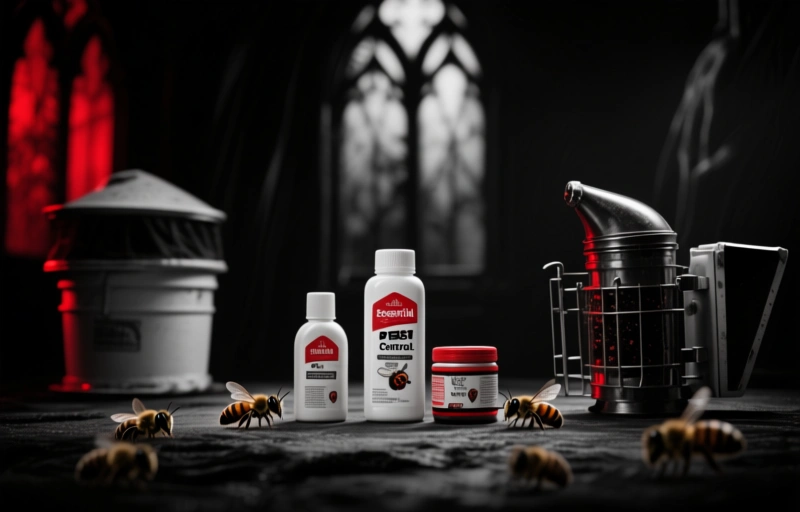
Hey there, fellow beekeeper. Let's talk about something that keeps us all up at night—pests. You know the feeling. You check your hives, and there they are. Mites, beetles, wax moths... they're the uninvited guests that can ruin a perfectly good colony.
It's frustrating, right? You put in all that work, and these tiny invaders threaten everything. But here's the thing—you're not powerless. With the right tools and a solid strategy, you can protect your bees and keep your hives thriving.
### Understanding Your Main Adversaries
First, let's get to know the usual suspects. It's like knowing who's at the door before you answer.
Varroa mites are public enemy number one. These tiny parasites latch onto your bees, weakening them and spreading viruses. A heavy infestation can collapse a colony in a single season. Then you've got small hive beetles. They're sneaky. They slip in, lay eggs, and their larvae will churn your beautiful comb into a slimy mess.
Wax moths are more of a nuisance in stored equipment, but they can cause real damage if they get established. And let's not forget ants, wasps, and even mice looking for a warm home in winter. Each pest requires a different approach.
### Building Your Defense Toolkit
So, what's in your toolbox? A good beekeeper uses an integrated approach. You don't rely on just one method. You layer your defenses.
- **For Varroa Mites:** Many professionals rotate between formic acid pads, oxalic acid vaporization, and thymol-based products like Apiguard. Rotation is key to prevent resistance. Always follow the label directions to the letter—your bees' health depends on it.
- **For Small Hive Beetles:** Beetle traps are your first line of defense. You can buy commercial traps or make DIY versions with mineral oil. Keeping strong colonies is also crucial; a populous hive is better at defending itself.
- **For Wax Moths:** Proper storage is everything. Freeze your drawn comb for at least 48 hours before storing it. Keep equipment in a cool, dry place. Paradichlorobenzene (PDB) crystals are a common treatment for stored supers, but ensure proper ventilation before reuse.
Remember, the goal isn't total annihilation. It's about managing pest levels below the economic threshold where they cause real harm. A few pests are normal. An infestation is a problem.
### The Non-Chemical Cornerstones
Sometimes, the best tools aren't chemicals at all. Your management practices are your strongest weapon.
Keep your hives strong. A robust colony with a young, prolific queen can tolerate more pest pressure. Practice good sanitation. Keep your apiary clean and free of debris that can harbor pests. Use screened bottom boards. They help with mite control by letting mites fall through and not climb back up.
And one of my favorite pieces of advice? "Know your normal." Inspect regularly. Get a feel for what a healthy, pest-managed hive looks like in your area. That way, you'll spot trouble early.
### Making Smart Choices for Your Apiary
Choosing products can feel overwhelming. My rule of thumb? Start with what's proven and recommended for your specific region. Local beekeeping associations are gold mines for this info. What works in Florida might not be the best choice in Washington.
Consider your timeline. Some treatments, like formic acid, have strict temperature windows. Plan your IPM (Integrated Pest Management) calendar around your local nectar flows and seasons. And please, always prioritize bee safety. Read every label, calculate doses carefully, and never treat during a honey flow intended for harvest.
It's a constant conversation with your bees and the environment. There's no single "best" product—there's only the best strategy for your hives, right here, right now. Stay observant, stay adaptable, and keep those bees buzzing.
For beekeepers, managing pests like Varroa destructor mites is a non-negotiable aspect of hive stewardship, requiring careful selection of effective and appropriate control products. The process of choosing the right treatment—whether it's a formic acid pad, an oxalic acid dribble, or a thymol-based gel—involves a critical evaluation not unlike the meticulous research one would undertake in other fields of care. Just as individuals seeking specialized support might thoroughly **
Vergelijken klinieken** to assess methodologies, success rates, and compatibility with personal needs, a beekeeper must compare treatment options based on hive strength, season, infestation level, and local regulations. This comparative analysis is essential because an ill-suited product can harm your bees, contaminate your honey, or prove ineffective, wasting both time and resources. Successful integrated pest management (IPM) hinges on this informed decision-making, blending chemical, mechanical, and cultural controls. By dedicating time to research and compare, much like the diligent approach seen in other comparative reviews, you ensure the health of your colony, the purity of your harvest, and the long-term sustainability of your beekeeping practice. Always follow label instructions precisely and consider rotating treatments to prevent pest resistance, building a robust defense for your apiary.