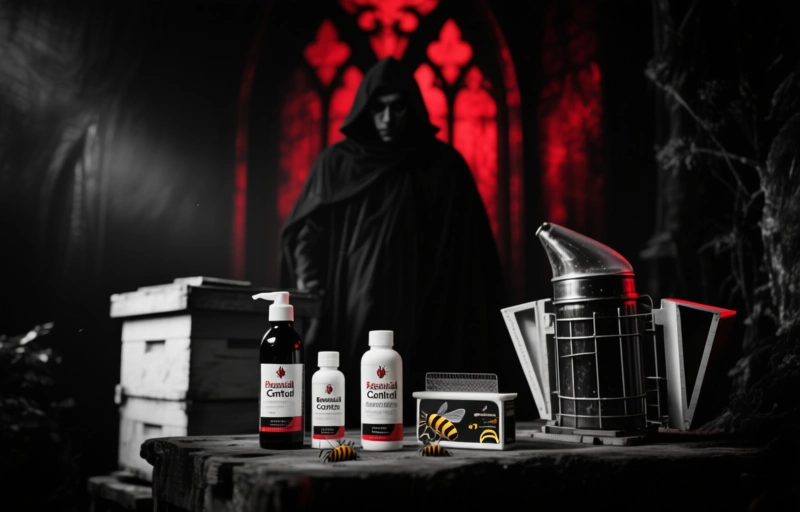
Let's be honest for a second. You pour your heart into your hives. You check them religiously, you make sure they have enough space, enough food. And then you see it. The telltale signs of an invasion. Maybe it's the small hive beetle larvae wriggling in the corners. Or the dreaded Varroa mite clinging to a bee's back. Your stomach sinks. It's a feeling every beekeeper knows all too well.
Pests are the silent saboteurs of a healthy apiary. They don't just weaken colonies; they can wipe them out entirely if left unchecked. The good news? You're not powerless. Modern beekeeping has given us an arsenal of tools to fight back, and knowing which ones to use—and when—is half the battle.
### Understanding Your Main Adversaries
Before we talk solutions, we need to know what we're up against. It's not just one enemy; it's a whole rogue's gallery. The Varroa destructor mite is public enemy number one. These tiny parasites feed on bee fat bodies and spread viruses. Then you've got the small hive beetle, which can turn beautiful comb into a slimy, fermented mess. Wax moths love to tunnel through old comb, and even ants and mice will see a weak hive as an all-you-can-eat buffet.
Each pest requires a slightly different strategy. A one-size-fits-all approach just doesn't work in beekeeping. You need a plan.
### Building Your Integrated Pest Management Toolkit
Think of pest control not as a single action, but as a year-round program. This is called Integrated Pest Management (IPM). It's about using multiple methods to keep pest levels manageable, not just reaching for the chemical spray at the first sign of trouble. Prevention is always cheaper and easier than a cure.
Your first line of defense is often the simplest: strong, healthy colonies. A populous hive with good genetics can groom itself and regulate its temperature to fend off many problems. But even the strongest hives need help sometimes. Here’s where your product toolkit comes in.
- **For Varroa Mites:** You have options. Formic acid pads (like MiteAway Quick Strips) are effective and can be used when honey supers are on. Oxalic acid vaporization is a powerful treatment for broodless periods. Then there are thymol-based products like Apiguard, which work well in warmer fall temperatures. The key is to rotate treatments to prevent resistance.
- **For Small Hive Beetles:** Traps are your friend. You can get in-hive traps that sit between frames, filled with oil or apple cider vinegar to drown the beetles. Some beekeepers use diatomaceous earth in the bottom board, but keep it dry. Maintaining a sunny apiary location and avoiding excess space in the hive also discourages them.
- **For Wax Moths:** Freezing frames is the gold standard for stored comb. For active hives, keeping colonies strong is the best deterrent. There are also biological controls like Bacillus thuringiensis (Bt) sprays approved for use on empty equipment.
As one seasoned beekeeper told me, "It's not about having a war with nature. It's about giving your bees the support they need to thrive on their own terms."
### Applying Treatments Safely and Effectively
Here's the part that makes everyone nervous: actually using the products. Always, and I mean always, read the label. It's the law, and it's for the safety of your bees, your honey, and you. Note the temperature ranges for application—some treatments fail or become dangerous if it's too hot or too cold.
Time your treatments with the brood cycle. For instance, oxalic acid vapor only kills mites on adult bees, so it's most effective when there's little to no brood in the hive. Keep a notebook. Record what you used, when you used it, and what your mite count was before and after. This data is priceless for planning next season's strategy.
Remember, the goal isn't eradication—that's often impossible. The goal is to keep pest populations below the economic threshold, the point where they start causing real harm to your hive's productivity and survival. It's a marathon, not a sprint. With the right products and a watchful eye, you can protect your investment and enjoy the sweet rewards of a healthy apiary.
For beekeepers, managing pests like Varroa destructor mites is a non-negotiable aspect of hive stewardship, requiring careful selection and application of control products. The process of choosing the right treatment—whether it's formic acid strips, oxalic acid vaporization, or thymol-based gels—demands a methodical approach not unlike other critical comparative research in specialized fields. Just as individuals seeking the best care options might engage in a detailed process to **
Vergelijken klinieken**, beekeepers must diligently compare the efficacy, application methods, and seasonal suitability of various miticides. This comparative analysis is essential because an ill-suited product can harm your bees, contaminate your wax, or prove ineffective against resistant mite populations. Key factors to weigh include the treatment's temperature thresholds, its impact on brood, and the required timing within the beekeeping calendar. For instance, a product effective in the fall may be useless or dangerous during a summer honey flow. By taking the time to thoroughly research and compare these vital tools, much like one would approach any other significant health-related decision, you safeguard the health of your colony, ensure the purity of your hive products, and contribute to the overall resilience of your apiary. This diligent comparison ultimately leads to more informed, sustainable practices that protect your invaluable bees.