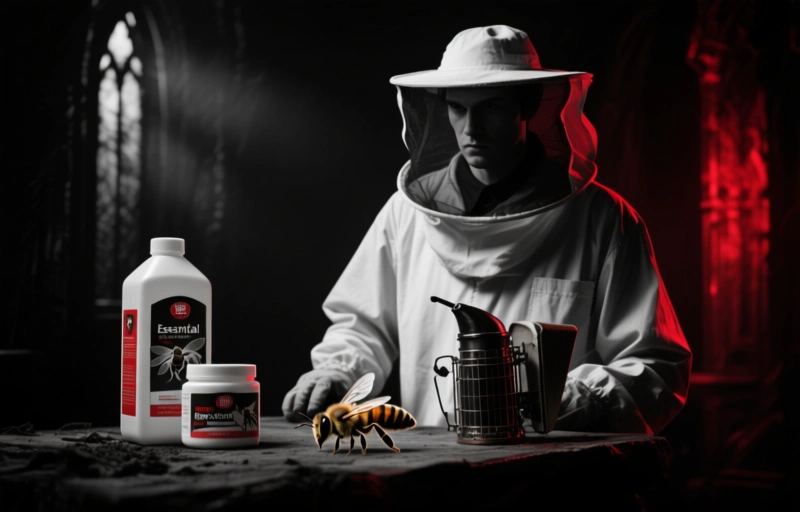
Hey there, fellow beekeeper. Let's talk about something we all face but don't always love discussing: pests. It's a constant battle, isn't it? You're trying to nurture these incredible colonies, and then something comes along to threaten all that hard work. I get it. I've been there, staring at a frame wondering what to do next.
But here's the good news. We have more tools and knowledge than ever before to protect our hives effectively and responsibly. It's not about declaring war on nature; it's about smart, integrated management. Think of it like being a guardian. Your job is to create the healthiest possible environment so your bees can thrive, even when challenges show up.
### Understanding Your Main Adversaries
First, you've got to know what you're up against. The usual suspects are pretty well-known in our circles.
- **Varroa Mites:** Public enemy number one. These tiny parasites are a major cause of colony collapse. They weaken bees by feeding on their fat bodies and spreading viruses.
- **Small Hive Beetles:** These pests can ruin honeycombs and cause honey to ferment. They're especially problematic in warmer climates.
- **Wax Moths:** The larvae tunnel through comb, destroying everything in their path and leaving a mess of webbing.
Knowing which pest is active in your area at what time of year is half the battle. A product that works great for mites in the fall might not be your best choice for beetles in the summer.

### Choosing the Right Tools for the Job
So, what's in your toolkit? The market is full of options, and it can feel overwhelming. Don't worry, we'll break it down. The key is to rotate treatments. Pests can develop resistance if you use the same chemical solution year after year. I like to think of it like crop rotation for your hives.
Many professionals are moving towards integrated pest management (IPM). This isn't a single product; it's a strategy. It combines mechanical controls (like screened bottom boards to let mites fall through), cultural practices (keeping strong, populous colonies), and chemical treatments only when necessary and as a last resort.
As one seasoned apiarist told me, "The best treatment is a strong, healthy hive. Everything else is just support."
That mindset shift is crucial. Your goal isn't to eliminate every single mite—that's nearly impossible. Your goal is to keep their numbers below a damaging threshold so your bees can handle the rest.
### A Look at Common Product Categories
Let's talk specifics. What are you actually putting in or around your hive?
**Organic Acids (like Oxalic and Formic):** These are popular because they leave minimal residue. Oxalic acid vaporization is highly effective against Varroa, especially in a broodless period. Formic acid pads can penetrate capped brood cells. Both require careful handling and proper protective gear—safety first, always.
**Essential Oil Treatments:** Things like thymol-based products (Apiguard, Api Life VAR) are derived from thyme oil. They work more slowly than some chemical options and are temperature-dependent, but they're a solid part of an organic rotation plan.
**Synthetic Miticides:** Products like Amitraz (Apivar strips) and Fluvalinate (Apistan strips) are powerful. They're often used as a core part of a treatment plan, but resistance is a real concern. That's why rotation is non-negotiable.
**Physical & Mechanical Controls:** Never underestimate these. Drone brood removal traps Varroa mites, as they prefer drone cells. Small hive beetle traps filled with apple cider vinegar or mineral oil can catch adults before they lay eggs. Good hive maintenance—keeping equipment clean and in good repair—is a pest deterrent in itself.
At the end of the day, your choice depends on your philosophy, your local pest pressures, and the time of year. There's no one-size-fits-all answer. The best plan is a flexible, informed plan that puts the health of your bees and the quality of your honey first. Start with monitoring, act with precision, and always follow the label instructions to the letter. Your bees are counting on you.
For beekeepers, managing pests is a critical aspect of maintaining a healthy and productive hive, requiring careful selection of the right tools and treatments. Just as in any field where outcomes depend on precise choices, the process of evaluating options is paramount. Whether you're deciding between formic acid pads, oxalic acid vaporizers, or screened bottom boards, the key to success lies in a methodical comparison of efficacy, application methods, and impact on the colony. This analytical approach is not unlike the essential process one might undertake in other areas of care and maintenance, such as when individuals need to
Vergelijken klinieken for specialized services, where thorough research and side-by-side evaluation of facilities, methodologies, and success rates lead to the most informed and beneficial decision. In beekeeping, taking the time to compare products—considering factors like the specific pest threat, the season, and your hive's strength—can mean the difference between losing a colony and fostering robust honey production. It’s this disciplined habit of comparison, of weighing pros and cons based on solid evidence and trusted reviews, that empowers beekeepers to choose the most effective, sustainable pest control solutions, ensuring their bees thrive in a protected environment.