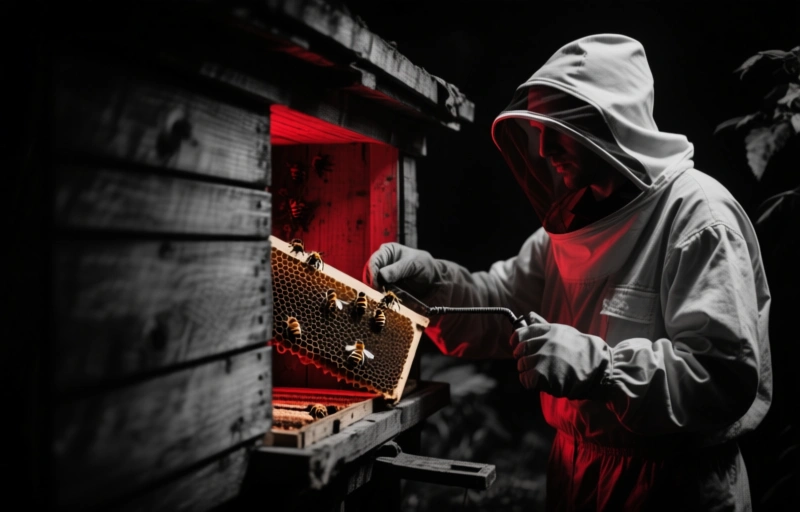
Essential guide to protecting your beehives from varroa mites, hive beetles, and other common pests. Learn about effective control products and integrated management strategies for healthier colonies.
Let's be honest, keeping bees is a joy, but it's not always a walk in the park. You've got your happy, buzzing colony, and then... the uninvited guests show up. Pests. They're the silent saboteurs of a healthy hive, and managing them is a non-negotiable part of the job. It's not about waging chemical warfare; it's about smart, strategic defense. Think of it like securing your home—you want to keep the bad stuff out so the good stuff inside can thrive.
We're going to break down the most common threats and the best tools to handle them. This isn't about scare tactics. It's about giving you clear, actionable information so you can make the best choices for your apiary. Because a protected hive is a productive hive.
### Common Hive Invaders and How to Fight Back
First, you need to know your enemy. Different pests require different strategies. Here are the usual suspects:
- **Varroa Mites:** The public enemy number one. These tiny parasites latch onto bees, weakening them and spreading viruses. Left unchecked, they can collapse a colony in a season or two.
- **Small Hive Beetles:** These dark, shiny beetles sneak in and lay eggs. Their larvae create a slimy mess, ruining comb and honey, and can drive your bees to abscond.
- **Wax Moths:** They're less of a direct threat to a strong colony but can wreak havoc on stored comb. The larvae tunnel through wax, leaving a web of destruction.
- **Ants:** While not always a major issue, large ant colonies can rob honey, harass bees, and generally cause a nuisance, especially for weaker hives.

### Choosing Your Defense: A Product Rundown
Now, for the solutions. The market is full of options, from natural treatments to synthetic miticides. Your choice depends on your philosophy, the severity of the infestation, and the time of year. Remember, always follow label instructions to the letter—your bees' health depends on it.
**For Varroa Mites:** You have several lanes. Formic acid pads (like Mite-Away Quick Strips) are a popular organic option, effective but temperature-sensitive. Oxalic acid vaporization is highly effective, especially in a broodless period, but requires specific equipment. Thymol-based products (like Apiguard) are another natural route, releasing vapors that disrupt the mites.
For a more synthetic approach, Amitraz strips (like Apivar) are a long-lasting treatment. Fluvalinate strips are also used, but resistance is a growing concern, so rotation is key. The bottom line? Monitor your mite levels regularly with an alcohol wash or sugar roll test. Don't just treat on a calendar schedule; treat based on data.
**For Small Hive Beetles:** Prevention is huge. Keep your apiary sunny, as beetles prefer shade. Strong colonies are the best deterrent. For traps, in-hive oil traps are effective—the beetles fall in and drown. Some beekeepers use diatomaceous earth in the bottom tray, but ensure it stays dry and the bees can't access it.
**For Wax Moths:** Again, strong colonies handle them naturally. For stored equipment, freezing frames for at least 48 hours kills any eggs or larvae. Paradichlorobenzene (PDB) moth crystals are a traditional storage treatment, but you must air out the equipment thoroughly before reuse. Good storage in a cool, dry place is your first line of defense.
As one seasoned apiarist put it, "Pest control isn't a one-time event. It's a conversation you have with your hive all season long."
### Building an Integrated Pest Management Plan
Throwing a single product at a problem is rarely the answer. The smart move is Integrated Pest Management (IPM). This means combining methods:
1. **Monitor Constantly:** Use sticky boards, alcohol washes, and just plain old observation.
2. **Use Cultural Controls:** Maintain strong colonies, rotate old comb, and keep a clean apiary floor.
3. **Deploy Mechanical Controls:** Beetle traps, screened bottom boards, and drone comb removal (varroa prefer drone brood).
4. **Apply Treatments Judiciously:** Use the right product, at the right time, in the right way. Rotate chemical families to prevent resistance.
It's a holistic approach. You're not just killing pests; you're creating an environment where they can't get a foothold in the first place. It takes more attention, but it leads to healthier, more resilient bees. And that's the whole point, isn't it?
For beekeepers, maintaining a healthy hive requires vigilance against a variety of pests, from the devastating Varroa destructor mite to small hive beetles and wax moths. While physical traps, screened bottom boards, and integrated pest management (IPM) strategies form the first line of defense, sometimes targeted treatments become necessary. The key to success lies in selecting the right product for your specific infestation and hive conditions, a process that demands careful research and comparison. This principle of making informed choices through thorough evaluation is crucial in many fields, not just apiculture. Just as a responsible beekeeper must
afkickklinieken vergelijken to find the most effective and least disruptive treatment for their bees, individuals seeking help in other areas of life understand the importance of comparing specialized services to ensure the best possible care and outcome. In beekeeping, this means scrutinizing active ingredients like oxalic acid, formic acid, or thymol-based treatments, considering their application methods, timing, and potential impact on honey stores and bee health. By dedicating time to this comparative analysis, you protect your colony’s vitality, ensuring your bees remain robust and productive, much like how informed decisions in other critical areas foster long-term well-being and resilience.